
Historical · U.S. House · U.S. Virgin Islands · At-Large
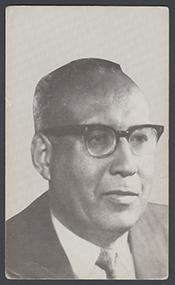
Melvin Evans
Former U.S. Representative · U.S. Virgin Islands At-Large · 1979–1981 · Republican
Melvin Evans represented U.S. Virgin Islands's At-Large in the United States House of Representatives (1979–1981) for the Republican party. The page below collects sourced biographical facts, term history, committee roles, and provenance for Evans.
Bioguide ID: E000254
Key facts
- Full name
- Melvin Evans
- State
- U.S. Virgin Islands
- District
- At-Large
- Party
- Republican
- House service
- 1979–1981
- First House term
- 1979
- Status
- Left office
- Current term ends
- —
- Born
- 1917
- Bioguide ID
- E000254
- Committee assignments
- —
- Dataset version
- 1.20260605
Biographical narrative
963 words · sourced from the Wikipedia REST extract
Melvin H. Evans was an American politician who served as the first elected governor of the United States Virgin Islands and later as the territory's at-large delegate to the United States House of Representatives. He made history as the first black person elected governor in the United States, holding office during a significant period of development in the Virgin Islands. His political career also included a role as an ambassador to Trinidad and Tobago following his tenure in the House of Representatives.
Early life and career
Melvin Herbert Evans was born on August 7, 1917, in Christiansted, U.S. Virgin Islands, to Charles Herbert Evans and Maude Rogiers. After his father relocated to New York City, Evans was raised primarily by his mother and grandparents. He demonstrated academic excellence early on, graduating as valedictorian from Charlotte Amalie High School in Saint Thomas in 1935. Following high school, he pursued higher education at Howard University, where he earned a Bachelor of Science degree, graduating magna cum laude in 1940. He continued his studies in medicine, obtaining a Doctor of Medicine degree in 1944. Later, he completed a Master of Public Health at the University of California, Berkeley in 1967.
Evans's professional journey began in the medical field. He served as a second lieutenant in the United States Army Medical Corps from 1942 to 1945. After his military service, he interned at Harlem Hospital in New York City. Upon returning to the Virgin Islands, he took on various roles in the medical community, including serving as physician-in-charge at Frederiksted Municipal Hospital from 1945 to 1948 and later as chief municipal physician until 1959. His tenure as health commissioner for the U.S. Virgin Islands from 1959 to 1967 was marked by significant public health achievements, including a notable decline in infant mortality rates and the elimination of Anopheles mosquitoes, which are known vectors for malaria.
In addition to his medical career, Evans was actively involved in various civic and professional organizations. He was the first chair of the board of trustees for the University of the Virgin Islands and served as president of the Virgin Islands Medical Association. His commitment to public service and health care laid the groundwork for his future political endeavors.
House tenure
Evans's political career advanced significantly when he was appointed governor of the U.S. Virgin Islands by President Richard Nixon on June 13, 1969. He was the last governor to be appointed rather than elected and was confirmed by the Senate shortly thereafter. His governorship was historic, as he became the first native-born black man to hold this position. Following the passage of the Elective Governor Acts of 1968, Evans became the first elected governor of the Virgin Islands in 1970, defeating the Democratic nominee in a runoff election. His governorship was characterized by a focus on infrastructure development, including a substantial increase in road construction and the expansion of the Virgin Islands Police Department.
After serving as governor, Evans transitioned to a role in the U.S. House of Representatives. He was elected to represent the at-large district of the U.S. Virgin Islands in 1978, succeeding Ron de Lugo, who chose to run for governor instead. Evans's term in the House began in 1979 and concluded on January 3, 1981. During his time in Congress, he was the only black member of the Republican caucus and was notable for being the first Republican to join the Congressional Black Caucus.
Evans's tenure in the House was relatively brief, as he lost his bid for reelection in 1980 to de Lugo, who returned to the House after his gubernatorial campaign. Despite the loss, Evans's time in Congress was marked by his active participation in various committees, including the Armed Services Committee, the Interior and Insular Affairs Committee, and the Merchant Marine and Fisheries Committee. His involvement in these committees reflected his ongoing commitment to addressing issues pertinent to the Virgin Islands and the broader national context.
Legislative focus and committees
During his time in the House of Representatives, Evans focused on a range of issues that were significant to his constituents in the U.S. Virgin Islands. His legislative priorities included matters related to health care, infrastructure, and the unique challenges faced by insular territories. As a member of the Armed Services Committee, he was involved in discussions regarding military and defense issues, which were particularly relevant given the strategic location of the Virgin Islands.
Evans's role on the Interior and Insular Affairs Committee allowed him to advocate for the interests of U.S. territories, addressing concerns related to governance, economic development, and federal support. His participation in the Merchant Marine and Fisheries Committee highlighted his interest in maritime issues, which are crucial for the economy of the Virgin Islands, given its reliance on tourism and shipping.
In addition to his committee work, Evans was a liberal Republican who actively participated in the Republican National Committee as the U.S. Virgin Islands' representative from 1976 to 1980. He attended the 1972 and 1976 Republican National Conventions as a delegate, where he contributed to the party's platform and direction during a time of significant political change in the United States.
After his congressional tenure, Evans continued his public service when he was appointed by President Ronald Reagan as the United States ambassador to Trinidad and Tobago in 1981. He was confirmed for this role and presented his credentials in early 1982. His diplomatic career further exemplified his commitment to serving the interests of the Virgin Islands and the broader Caribbean region.
Melvin H. Evans passed away on November 27, 1984, in Christiansted, U.S. Virgin Islands, after suffering a heart attack. His legacy includes his groundbreaking role as a political leader in the Virgin Islands and his contributions to public health and governance in the territory.
Notable legislation
Sponsored and co-sponsored legislation for Melvin Evans is pending operator curation. The biographical narrative above carries the same provenance trail until per-bill rows are written.
Sources
- [1]https://en.wikipedia.org/wiki/Melvin_H._EvansWikipedia · retrieved 2026-06-05
Notable quotes
Sourced quotes for Melvin Evans are pending operator curation. Narrative-scope provenance remains attached below.
Sources
- [1]https://en.wikipedia.org/wiki/Melvin_H._EvansWikipedia · retrieved 2026-06-05
Key positions
Curated policy positions for Melvin Evans are pending operator review. The biographical narrative above carries the same provenance trail until per-topic positions are written.
Sources
- [1]https://en.wikipedia.org/wiki/Melvin_H._EvansWikipedia · retrieved 2026-06-05
Terms served
- 1979–1981U.S. House · Term 1 · Republican
Sources & provenance
Every attributable claim above carries a per-section [N] marker that resolves to the corresponding URL below. Each entry records the upstream provider, the canonical URL, and the timestamp at which the source was retrieved by the ingest pipeline.
Key facts
- https://bioguide.congress.gov/search/bio/E000254bioguide · retrieved 2026-06-05
- https://www.govtrack.us/congress/members/403936govtrack · retrieved 2026-06-05
Biographical narrative
- https://en.wikipedia.org/wiki/Melvin_H._Evanswikipedia · retrieved 2026-06-05
Find your representative
Every U.S. state elects representatives by district. Browse U.S. Virgin Islands’s delegation, the full former-representative roster, or explore the role and term length.
Related on The Candidate
- Succeeded by Victor FrazerLater holder of the U.S. Virgin Islands At-Large House seat · Independent.Open
- Donna ChristensenFormer U.S. Representative · U.S. Virgin Islands At-Large · DemocraticOpen
- Ron De LugoFormer U.S. Representative · U.S. Virgin Islands At-Large · DemocraticOpen
- Republican PartyFederal candidates and office holders on the Republican line.Open
- Representatives from U.S. Virgin IslandsEvery former U.S. Representative who has represented U.S. Virgin Islands.Open
- All former U.S. RepresentativesEvery individual who has served in the U.S. House and since left office.Open