
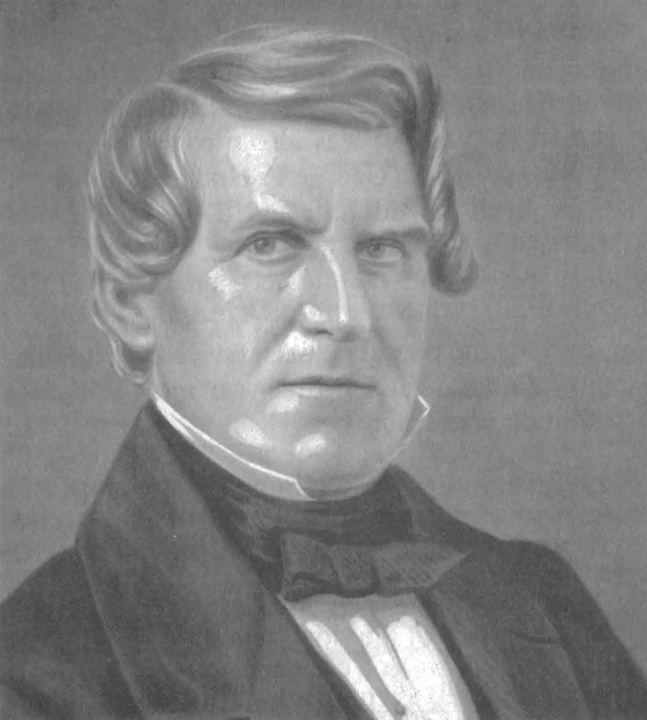
Historical · U.S. House · Vermont · District 1
George Hodges
Former U.S. Representative · Vermont District 1 · 1855–1857 · Republican
George Hodges represented Vermont's District 1 in the United States House of Representatives (1855–1857) for the Republican party. The page below collects sourced biographical facts, term history, committee roles, and provenance for Hodges.
Bioguide ID: H000673
Key facts
- Full name
- George Hodges
- State
- Vermont
- District
- District 1
- Party
- Republican
- House service
- 1855–1857
- First House term
- 1855
- Status
- Left office
- Current term ends
- —
- Born
- 1789
- Bioguide ID
- H000673
- Committee assignments
- —
- Dataset version
- 1.20260606
Biographical narrative
946 words · sourced from the Wikipedia REST extract
George Hodges was an American politician who served as a U.S. Representative for Vermont's 1st congressional district. A member of the Republican Party, he is noted for being the first Republican to hold a seat in the United States House of Representatives, a significant milestone in the political landscape of the time. His congressional career was brief, spanning only a few months, but it occurred during a pivotal period in American history marked by the rise of the Republican Party and the growing tensions surrounding issues such as slavery and states' rights.
Early life and career
George Hodges was born on July 4, 1789, in Clarendon, a town in the Vermont Republic. His early education took place in the common schools of the region, which provided him with a foundational understanding of reading, writing, and arithmetic. The significance of his birth date aligns him with the founding of the United States, as it coincides with the adoption of the Declaration of Independence, which may have influenced his later political aspirations.
Following his education, Hodges became involved in the banking sector, establishing a notable career in finance. He served as the president of the Bank of Rutland for over twenty-five years, a position that not only underscored his leadership skills but also his influence in the local economy. His experience in banking likely provided him with insights into fiscal policy and economic issues, which would later inform his political career.
Hodges's political career began at the state level, where he was elected to the Vermont House of Representatives. His service in this legislative body spanned several terms, including the years 1827 to 1829, and again in 1839 and 1840. This early involvement in state politics allowed him to gain valuable experience in governance and public service. Subsequently, he served in the Vermont State Senate from 1845 to 1847, where he held the position of President pro tempore in both 1846 and 1847. This role further solidified his standing as a prominent figure in Vermont politics.
In addition to his legislative roles, Hodges was active in national politics as well. He served as a Whig Presidential Elector for Vermont in the 1848 election, a role that demonstrated his engagement with the national political scene. However, as the political landscape shifted in the 1850s, Hodges transitioned from the Whig Party to the newly formed Republican Party, which emerged in response to the growing divisions within the country, particularly regarding slavery and its expansion into new territories.
House tenure
George Hodges's tenure in the U.S. House of Representatives was brief but historically significant. He was elected to the Thirty-fourth Congress in 1856 to fill the vacancy left by the death of James Meacham. His election marked a critical moment for the Republican Party, as Hodges became the first member of this party to serve in the House of Representatives. This was a time of considerable political upheaval in the United States, as the Republican Party was still in its formative years, seeking to establish itself as a major political force.
Hodges took office on December 1, 1856, and served until March 3, 1857. During this short period, he participated in the legislative processes of the House, contributing to discussions and decisions that would shape the future of the nation. However, he did not seek renomination for the subsequent election in 1856, which indicates that his time in Congress was not intended to be a long-term career but rather a response to the immediate political needs of his party and state.
The political context of Hodges's service was marked by the intensifying debates over slavery and sectionalism, which would soon lead to the Civil War. The Republican Party, founded on principles opposing the expansion of slavery, was gaining traction, and Hodges's election was part of this broader movement. His role in Congress, albeit short, was part of the larger narrative of the Republican Party's rise and the shifting dynamics of American politics during this tumultuous period.
Legislative focus and committees
While specific details regarding Hodges's legislative focus and committee assignments during his time in the House are not extensively documented, it is reasonable to infer that his background in banking and finance likely influenced his interests in fiscal matters and economic policy. Given the era's pressing issues, including debates over tariffs, infrastructure, and the economic implications of slavery, Hodges may have engaged with these topics during his congressional service.
As a member of the Republican Party, Hodges would have aligned himself with the party's platform, which emphasized opposition to the expansion of slavery into new territories, support for internal improvements, and a commitment to the principles of free labor. The Republican Party was also focused on issues such as land grants for railroads and the promotion of economic development, which were vital for the growth of the nation.
Hodges's brief congressional career occurred during a time when the House was grappling with significant national issues, including the Kansas-Nebraska Act and the Dred Scott decision, both of which heightened tensions between the North and South. While there is no detailed record of his specific contributions to legislation or committee work, his presence in the House as a Republican representative was emblematic of the party's emerging influence in American politics.
After his term in Congress, Hodges returned to Vermont, where he continued to be involved in local affairs. He passed away on August 9, 1860, in Rutland, Vermont, and was interred at Evergreen Cemetery in the same city. His legacy as the first Republican member of the House of Representatives remains a notable aspect of his biography, reflecting the shifting political landscape of the United States during the mid-19th century.
Notable legislation
Sponsored and co-sponsored legislation for George Hodges is pending operator curation. The biographical narrative above carries the same provenance trail until per-bill rows are written.
Sources
- [1]https://en.wikipedia.org/wiki/George_T._HodgesWikipedia · retrieved 2026-06-06
Notable quotes
Sourced quotes for George Hodges are pending operator curation. Narrative-scope provenance remains attached below.
Sources
- [1]https://en.wikipedia.org/wiki/George_T._HodgesWikipedia · retrieved 2026-06-06
Key positions
Curated policy positions for George Hodges are pending operator review. The biographical narrative above carries the same provenance trail until per-topic positions are written.
Sources
- [1]https://en.wikipedia.org/wiki/George_T._HodgesWikipedia · retrieved 2026-06-06
Terms served
- 1855–1857U.S. House · Term 1 · Republican
Sources & provenance
Every attributable claim above carries a per-section [N] marker that resolves to the corresponding URL below. Each entry records the upstream provider, the canonical URL, and the timestamp at which the source was retrieved by the ingest pipeline.
Key facts
- https://bioguide.congress.gov/search/bio/H000673bioguide · retrieved 2026-06-06
- https://www.govtrack.us/congress/members/405527govtrack · retrieved 2026-06-06
Biographical narrative
- https://en.wikipedia.org/wiki/George_T._Hodgeswikipedia · retrieved 2026-06-06
Find your representative
Every U.S. state elects representatives by district. Browse Vermont’s delegation, the full former-representative roster, or explore the role and term length.
Related on The Candidate
- Preceded by Ahiman MinerEarlier holder of the Vermont District 1 House seat · Whig.Open
- Succeeded by Eliakim WaltonLater holder of the Vermont District 1 House seat · Republican.Open
- Charles JoyceFormer U.S. Representative · Vermont District 1 · RepublicanOpen
- Charles WillardFormer U.S. Representative · Vermont District 1 · RepublicanOpen
- David FosterFormer U.S. Representative · Vermont District 1 · RepublicanOpen
- Republican PartyFederal candidates and office holders on the Republican line.Open