
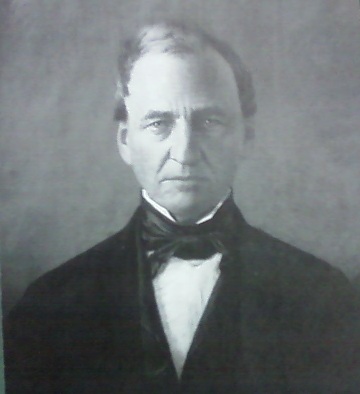
Historical · U.S. House · Vermont · District 4
John Smith
Former U.S. Representative · Vermont District 4 · 1839–1841 · Democratic
John Smith represented Vermont's District 4 in the United States House of Representatives (1839–1841) for the Democratic party. The page below collects sourced biographical facts, term history, committee roles, and provenance for Smith.
Bioguide ID: S000565
Key facts
- Full name
- John Smith
- State
- Vermont
- District
- District 4
- Party
- Democratic
- House service
- 1839–1841
- First House term
- 1839
- Status
- Left office
- Current term ends
- —
- Born
- 1789
- Bioguide ID
- S000565
- Committee assignments
- —
- Dataset version
- 1.20260606
Biographical narrative
956 words · sourced from the Wikipedia REST extract
John Smith was an American lawyer, businessman, and politician who served as a U.S. Representative for Vermont's fourth congressional district from 1839 to 1841. A member of the Democratic Party, Smith's political career included significant roles in state government prior to his election to Congress. His contributions to the legal and political landscape of Vermont were notable, particularly during his tenure as Speaker of the Vermont House of Representatives. Following his time in Congress, he continued to engage in business ventures, particularly in the railroad sector, and remained an influential figure in his community until his death in 1858.
Early life and career
John Smith was born on August 12, 1789, in Barre, Massachusetts, to Deacon Samuel Smith and Patience Gregory Smith. His early life was marked by a significant move when his family relocated to St. Albans, Vermont, in 1800. This transition was pivotal, as it placed Smith in a region that would become central to his future career in law and politics. He received his education through the local common schools, which laid the groundwork for his later academic pursuits.
In his pursuit of a legal career, Smith initially studied law under the guidance of his brother-in-law, Roswell Hutchins. He furthered his legal education by studying with Benjamin Swift, a prominent lawyer in the area. After completing his studies, Smith was admitted to the bar in 1810, marking the beginning of his professional legal practice in St. Albans, where he partnered with Swift. His legal career flourished, and he gained recognition in the community for his expertise and dedication.
Smith's involvement in public service began in earnest when he was appointed as the State's Attorney for Franklin County, a position he held from 1826 until 1832. This role allowed him to engage deeply with legal matters affecting the community and provided him with valuable experience in the workings of the legal system. His commitment to public service continued as he was elected to the Vermont House of Representatives, where he served from 1827 to 1837. During this period, he was elected Speaker of the House from 1831 to 1833, a position that underscored his leadership abilities and influence within the state legislature.
House tenure
John Smith's congressional career began when he was elected as a Democrat to the Twenty-sixth Congress, serving from March 4, 1839, until March 3, 1841. His election to the U.S. House of Representatives marked a significant step in his political journey, as he transitioned from state-level politics to the national stage. During his time in Congress, Smith was involved in various legislative discussions and debates, contributing to the broader political discourse of the time.
One of the highlights of Smith's congressional tenure was his delivery of a speech titled "The Defense of the Independent Treasury Idea." This speech garnered national attention and was regarded as one of the most compelling arguments on the subject. It showcased Smith's oratorical skills and his ability to articulate complex economic ideas to his peers and the public. His advocacy for the Independent Treasury System reflected the economic challenges of the era and the ongoing debates regarding fiscal policy in the United States.
Despite his contributions and the recognition he received during his time in office, Smith faced challenges in securing re-election. He ran for a second term in the Twenty-seventh Congress but was ultimately unsuccessful in his bid. His single term in Congress, while brief, was marked by significant engagement in legislative matters and a commitment to the principles of his party.
Legislative focus and committees
During his time in the House of Representatives, John Smith's legislative focus was primarily on economic issues, particularly those related to banking and fiscal policy. His notable speech on the Independent Treasury System illustrated his deep interest in the financial mechanisms that governed the nation. This topic was particularly relevant during the late 1830s, a period marked by economic instability and debates over the role of government in managing the economy.
In addition to his focus on economic issues, Smith's background as a lawyer and his experience in state government likely informed his approach to various legislative matters. His legal expertise would have provided him with a unique perspective on the implications of proposed legislation and the importance of sound legal frameworks in governance. While specific committee assignments during his congressional tenure are not detailed, it can be inferred that his legal background and experience in state politics would have positioned him well to contribute meaningfully to discussions on law and policy.
After concluding his term in Congress, Smith did not retreat from public life. Instead, he became actively involved in railroad enterprises, reflecting the growing importance of transportation infrastructure in the United States during the 19th century. He played a role in establishing the Vermont and Canada Railroad, which was significant for enhancing connectivity and economic development in the region.
In his personal life, John Smith married Maria Waitstill Curtis in 1814, and together they had several children, including Harriet Maria, J. Gregory, Edward Curtis, Worthington Curtis, Julia Pierpont, Francis Curtis, and Louisa Ten Broeck. His family connections extended beyond his immediate household, as he was related by marriage to notable figures such as Lawrence Brainerd and Amaziah Bailey James. Smith's legacy continued through his descendants, including his grandson Edward Curtis Smith and great-great-grandson William Scranton, who served as both Governor and Congressman in Pennsylvania.
John Smith passed away on November 26, 1858, in St. Albans, Vermont. His contributions to the legal and political landscape of Vermont, as well as his involvement in the railroad industry, left a lasting impact on the community. He was interred at Greenwood Cemetery in St. Albans, where his legacy as a public servant and community leader is remembered.
Notable legislation
Sponsored and co-sponsored legislation for John Smith is pending operator curation. The biographical narrative above carries the same provenance trail until per-bill rows are written.
Sources
- [1]https://en.wikipedia.org/wiki/John_Smith_(Vermont_politician)Wikipedia · retrieved 2026-06-06
Notable quotes
Sourced quotes for John Smith are pending operator curation. Narrative-scope provenance remains attached below.
Sources
- [1]https://en.wikipedia.org/wiki/John_Smith_(Vermont_politician)Wikipedia · retrieved 2026-06-06
Key positions
Curated policy positions for John Smith are pending operator review. The biographical narrative above carries the same provenance trail until per-topic positions are written.
Sources
- [1]https://en.wikipedia.org/wiki/John_Smith_(Vermont_politician)Wikipedia · retrieved 2026-06-06
Terms served
- 1839–1841U.S. House · Term 1 · Democratic
Sources & provenance
Every attributable claim above carries a per-section [N] marker that resolves to the corresponding URL below. Each entry records the upstream provider, the canonical URL, and the timestamp at which the source was retrieved by the ingest pipeline.
Key facts
- https://bioguide.congress.gov/search/bio/S000565bioguide · retrieved 2026-06-06
- https://www.govtrack.us/congress/members/410049govtrack · retrieved 2026-06-06
Biographical narrative
- https://en.wikipedia.org/wiki/John_Smith_(Vermont_politician)wikipedia · retrieved 2026-06-06
Find your representative
Every U.S. state elects representatives by district. Browse Vermont’s delegation, the full former-representative roster, or explore the role and term length.
Related on The Candidate
- Preceded by Heman AllenEarlier holder of the Vermont District 4 House seat · Whig.Open
- Succeeded by Augustus YoungLater holder of the Vermont District 4 House seat · Whig.Open
- Ahiman MinerFormer U.S. Representative · Vermont District 1 · WhigOpen
- Charles JoyceFormer U.S. Representative · Vermont District 1 · RepublicanOpen
- Charles WillardFormer U.S. Representative · Vermont District 1 · RepublicanOpen
- David FosterFormer U.S. Representative · Vermont District 1 · RepublicanOpen