
Historical · U.S. House · Washington · District 1
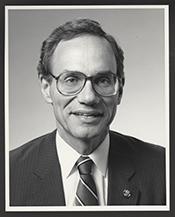
John Miller
Former U.S. Representative · Washington District 1 · 1985–1993 · Republican
John Miller represented Washington's District 1 in the United States House of Representatives (1985–1993) for the Republican party. The page below collects sourced biographical facts, term history, committee roles, and provenance for Miller.
Bioguide ID: M000736
Key facts
- Full name
- John Miller
- State
- Washington
- District
- District 1
- Party
- Republican
- House service
- 1985–1993
- First House term
- 1985
- Status
- Left office
- Current term ends
- —
- Born
- 1938
- Bioguide ID
- M000736
- Committee assignments
- —
- Dataset version
- 1.20260605
Biographical narrative
919 words · sourced from the Wikipedia REST extract
John R. Miller was an American politician who served as a U.S. Representative for Washington's 1st congressional district from 1985 until 1993. A member of the Republican Party, Miller was known for his advocacy on human rights issues, particularly concerning the Soviet Union, China, and South Africa. His career spanned various roles in public service, including positions in local government and the federal government, where he focused on issues related to human trafficking and modern slavery.
Early life and career
John R. Miller was born on May 23, 1938. He pursued higher education at Bucknell University, where he earned a Bachelor of Arts degree in 1959. Following his undergraduate studies, Miller attended Yale Law School, obtaining his Bachelor of Laws (LL.B.) degree in 1964. He also completed a Master of Arts in Economics from Yale's Graduate School in the same year. His academic background laid a strong foundation for his future career in law and public service.
Miller's early professional life included military service; he served as an Army Infantry officer on active duty in 1960 and later participated in the U.S. Army Reserves. His legal career began in earnest when he became involved in state and municipal government. He served as an assistant attorney general for Washington, where he gained experience in legal matters pertinent to state governance. Additionally, he held the position of vice president and legal counsel for the Washington Environmental Council, which focused on environmental advocacy and policy.
Miller's political career took a significant turn when he was elected to the Seattle City Council, serving from 1972 to 1979. His campaign for the City Council was notably linked to efforts to preserve the historic Pike Place Market, a key cultural and economic site in Seattle. During his tenure on the Council, he played a crucial role in the rehabilitation of the Market, ensuring its continued significance to the community. Furthermore, he was instrumental in founding Seattle's urban P-Patch program, a pioneering gardening allotment initiative that provided residents with access to gardening spaces. This program has grown to include numerous sites across the city.
Miller's tenure on the City Council also included significant decisions regarding energy policy. He led efforts to reject Seattle's participation in the Washington Public Power Supply System's nuclear plants, specifically the Satsop nuclear power plant, which ultimately faced bankruptcy. He also advocated for the demolition of the Alaska Way Viaduct, a project aimed at reconnecting Seattle's downtown with its waterfront, although this effort was not successful.
House tenure
Miller's congressional career began when he was elected to the U.S. House of Representatives in 1985, representing Washington's 1st congressional district. Over the course of his four terms in office, he focused on various legislative issues, particularly those related to human rights. His advocacy extended to international matters, where he sought to address human rights violations in countries such as the Soviet Union, China, and South Africa. This focus on human rights distinguished his legislative agenda and aligned with broader national and international movements advocating for social justice.
During his time in Congress, Miller participated in numerous debates and discussions that shaped policy on human rights and international relations. He was part of a legislative body that was increasingly attentive to global human rights issues, reflecting a growing awareness and commitment to these concerns among U.S. lawmakers. His work in Congress contributed to the dialogue surrounding the United States' role in promoting human rights abroad.
Miller did not seek re-election in 1992, concluding his congressional career on January 3, 1993. His decision not to run again marked the end of a significant chapter in his public service, during which he had established a reputation as a dedicated advocate for human rights.
Legislative focus and committees
Throughout his tenure in the House of Representatives, Miller was actively engaged in various committees and legislative initiatives. His focus on human rights issues was a hallmark of his congressional work, and he sought to elevate these concerns within the broader legislative agenda. Miller's commitment to advocating for human rights was evident in his efforts to raise awareness about the plight of individuals facing oppression in different parts of the world.
In addition to his work on human rights, Miller's legislative focus included environmental issues, reflecting his earlier experiences in local government and advocacy. His background in environmental law and policy informed his approach to legislation concerning natural resources and conservation efforts. This dual focus on human rights and environmental issues underscored his belief in the interconnectedness of social justice and ecological sustainability.
After leaving Congress, Miller continued his public service in various capacities. He served as the director of the Office to Monitor and Combat Trafficking in Persons for the U.S. State Department, holding the rank of Ambassador-at-Large. In this role, he aimed to increase public awareness of modern-day slavery and foster a global abolitionist movement, positioning the United States as a leader in this critical area.
Miller's commitment to education and advocacy extended beyond his government service. He transitioned to academia, joining the faculty at George Washington University and later teaching at Yale University. His involvement in educational institutions allowed him to share his expertise and experiences with students, furthering the discourse on human rights and public policy.
John R. Miller passed away on October 4, 2017, in Corte Madera, California, after a battle with cancer. His legacy includes his contributions to human rights advocacy, environmental policy, and public service, reflecting a career dedicated to addressing critical issues at both local and international levels.
Notable legislation
Sponsored and co-sponsored legislation for John Miller is pending operator curation. The biographical narrative above carries the same provenance trail until per-bill rows are written.
Sources
- [1]https://en.wikipedia.org/wiki/John_Miller_(Washington_politician)Wikipedia · retrieved 2026-06-05
Notable quotes
Sourced quotes for John Miller are pending operator curation. Narrative-scope provenance remains attached below.
Sources
- [1]https://en.wikipedia.org/wiki/John_Miller_(Washington_politician)Wikipedia · retrieved 2026-06-05
Key positions
Curated policy positions for John Miller are pending operator review. The biographical narrative above carries the same provenance trail until per-topic positions are written.
Sources
- [1]https://en.wikipedia.org/wiki/John_Miller_(Washington_politician)Wikipedia · retrieved 2026-06-05
Terms served
- 1985–1987U.S. House · Term 1 · Republican
- 1987–1989U.S. House · Term 2 · Republican
- 1989–1991U.S. House · Term 3 · Republican
- 1991–1993U.S. House · Term 4 · Republican
Sources & provenance
Every attributable claim above carries a per-section [N] marker that resolves to the corresponding URL below. Each entry records the upstream provider, the canonical URL, and the timestamp at which the source was retrieved by the ingest pipeline.
Key facts
- https://bioguide.congress.gov/search/bio/M000736bioguide · retrieved 2026-06-05
- https://www.govtrack.us/congress/members/407721govtrack · retrieved 2026-06-05
Biographical narrative
- https://en.wikipedia.org/wiki/John_Miller_(Washington_politician)wikipedia · retrieved 2026-06-05
Find your representative
Every U.S. state elects representatives by district. Browse Washington’s delegation, the full former-representative roster, or explore the role and term length.
Related on The Candidate
- Preceded by Joel PritchardEarlier holder of the Washington District 1 House seat · Republican.Open
- Succeeded by Jay InsleeLater holder of the Washington District 1 House seat · Democratic.Open
- Emerson De LacyFormer U.S. Representative · Washington District 1 · DemocraticOpen
- Homer JonesFormer U.S. Representative · Washington District 1 · RepublicanOpen
- Republican PartyFederal candidates and office holders on the Republican line.Open
- Representatives from WashingtonEvery former U.S. Representative who has represented Washington.Open