
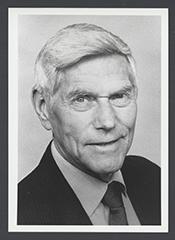
Historical · U.S. House · Washington · District 2
Jack Metcalf
Former U.S. Representative · Washington District 2 · 1995–2001 · Republican
Jack Metcalf represented Washington's District 2 in the United States House of Representatives (1995–2001) for the Republican party. The page below collects sourced biographical facts, term history, committee roles, and provenance for Metcalf.
Bioguide ID: M000669
Key facts
- Full name
- Jack Metcalf
- State
- Washington
- District
- District 2
- Party
- Republican
- House service
- 1995–2001
- First House term
- 1995
- Status
- Left office
- Current term ends
- —
- Born
- 1927
- Bioguide ID
- M000669
- Committee assignments
- —
- Dataset version
- 1.20260605
Biographical narrative
884 words · sourced from the Wikipedia REST extract
Jack Metcalf was an American politician and educator who served as a U.S. Representative for Washington's 2nd congressional district from 1995 until 2001. A member of the Republican Party, Metcalf's political career spanned several decades, during which he held various positions in both state and national government. He was known for his conservative views and his commitment to term limits, which he honored by not seeking re-election after three terms in Congress. His legislative work included a focus on transportation infrastructure, labor relations, and environmental issues, as well as involvement in significant national events during his tenure.
Early life and career
Jack Metcalf was born on November 30, 1927, in Marysville, Washington. He grew up in Langley, Washington, where he completed his high school education. Following high school, Metcalf enlisted in the U.S. Army and served until his discharge in 1947. After his military service, he began working with the U.S. Fish and Wildlife Service as a marshal in Alaska, which provided him with early experience in public service.
Metcalf pursued higher education, earning a bachelor's degree in education from Pacific Lutheran University in 1951. He later obtained a master's degree from the University of Washington in Seattle in 1966. His career in education spanned approximately thirty years, during which he taught civics and mathematics at both the high school and junior high levels, primarily in Everett, Washington. After retiring from teaching, he transitioned to running a bed and breakfast on his family's homestead in Langley.
Metcalf's political career began in the early 1960s when he was first elected to the Washington State Legislature in 1960, representing the 38th District. Although he faced defeat in his bid for a third term in 1964, he was elected to the Washington State Senate in 1966, where he served until 1974. He returned to the state senate from the 10th District from 1980 to 1992. Throughout his time in state politics, Metcalf sought national office, running unsuccessfully for the U.S. Senate against incumbent Democrat Warren Magnuson in both 1968 and 1974. In 1992, he attempted to secure a seat in the U.S. House of Representatives but was unable to defeat the incumbent Democrat Al Swift.
House tenure
Metcalf's opportunity to serve in the U.S. House of Representatives arose when Al Swift announced his retirement in 1994. Metcalf ran for the open seat in Washington's 2nd congressional district and was elected in 1994. He began his first term in Congress in 1995 and was re-elected in 1996 and 1998. Throughout his time in the House, Metcalf was a proponent of term limits, which he had publicly supported as part of the 1994 Contract with America. True to his commitment, he chose not to run for re-election in 2000, thereby concluding his congressional career on January 3, 2001.
During his tenure, Metcalf was recognized for his conservative principles, often aligning with the Goldwater conservative movement. He was known for his opposition to the Federal Reserve, which he viewed as unconstitutional. Despite his conservative stance, he developed relationships with organized labor, particularly with building trade unions, which was somewhat atypical for a Republican politician of his time.
Metcalf's legislative actions included significant involvement in transportation issues. He sought a position as a conferee on the TEA-21 Act of 1998, which allowed him to secure funding for various transportation infrastructure projects. His support for Boeing and its workforce was also notable, as he demonstrated confidence in the aviation industry, particularly following incidents that raised concerns about airline safety.
Legislative focus and committees
Throughout his congressional career, Metcalf's legislative focus encompassed a range of issues, including transportation, labor relations, and environmental concerns. He was particularly supportive of initiatives that aimed to improve infrastructure and promote economic development. His pragmatic approach in Congress allowed him to navigate complex political landscapes and build coalitions across party lines.
Metcalf's environmental advocacy was evident in his collaboration with organizations such as the Sea Shepherd Conservation Society, where he took a stand against whaling practices by the Makah tribe. This position was somewhat unconventional for a conservative Republican, highlighting his willingness to engage with diverse viewpoints on environmental issues. He also co-sponsored legislation with Congressman Dennis Kucinich aimed at labeling genetically modified foods, further illustrating his multifaceted approach to policy-making.
In addition to his environmental and labor-related initiatives, Metcalf was involved in significant national events during his time in office. He was one of the early Republicans to co-sponsor a resolution seeking to launch an impeachment inquiry against President Bill Clinton in 1997, prior to the well-known Clinton-Lewinsky scandal. He later voted in favor of articles of impeachment against Clinton in December 1998.
Metcalf's legacy extends beyond his legislative accomplishments. Several of his former staff members went on to pursue careers in public office, indicating the influence he had on the next generation of political leaders. In recognition of his contributions, the ferry terminal in Clinton, Washington, was named after him in 2008, honoring his efforts to secure funding for safety improvements during his congressional tenure.
Jack Metcalf passed away on March 15, 2007, at the age of 79, after battling Alzheimer's disease. He was laid to rest at Bayview Cemetery in Langley, Washington, leaving behind a legacy marked by his commitment to public service and his contributions to both state and national politics.
Notable legislation
Sponsored and co-sponsored legislation for Jack Metcalf is pending operator curation. The biographical narrative above carries the same provenance trail until per-bill rows are written.
Sources
- [1]https://en.wikipedia.org/wiki/Jack_Metcalf_(politician)Wikipedia · retrieved 2026-06-05
Notable quotes
Sourced quotes for Jack Metcalf are pending operator curation. Narrative-scope provenance remains attached below.
Sources
- [1]https://en.wikipedia.org/wiki/Jack_Metcalf_(politician)Wikipedia · retrieved 2026-06-05
Key positions
Curated policy positions for Jack Metcalf are pending operator review. The biographical narrative above carries the same provenance trail until per-topic positions are written.
Sources
- [1]https://en.wikipedia.org/wiki/Jack_Metcalf_(politician)Wikipedia · retrieved 2026-06-05
Terms served
- 1995–1997U.S. House · Term 1 · Republican
- 1997–1999U.S. House · Term 2 · Republican
- 1999–2001U.S. House · Term 3 · Republican
Sources & provenance
Every attributable claim above carries a per-section [N] marker that resolves to the corresponding URL below. Each entry records the upstream provider, the canonical URL, and the timestamp at which the source was retrieved by the ingest pipeline.
Key facts
- https://bioguide.congress.gov/search/bio/M000669bioguide · retrieved 2026-06-05
- https://www.govtrack.us/congress/members/400598govtrack · retrieved 2026-06-05
Biographical narrative
- https://en.wikipedia.org/wiki/Jack_Metcalf_(politician)wikipedia · retrieved 2026-06-05
Find your representative
Every U.S. state elects representatives by district. Browse Washington’s delegation, the full former-representative roster, or explore the role and term length.
Related on The Candidate
- Preceded by Allan SwiftEarlier holder of the Washington District 2 House seat · Democratic.Open
- Emerson De LacyFormer U.S. Representative · Washington District 1 · DemocraticOpen
- Homer JonesFormer U.S. Representative · Washington District 1 · RepublicanOpen
- Jay InsleeFormer U.S. Representative · Washington District 1 · DemocraticOpen
- Joel PritchardFormer U.S. Representative · Washington District 1 · RepublicanOpen
- Republican PartyFederal candidates and office holders on the Republican line.Open