
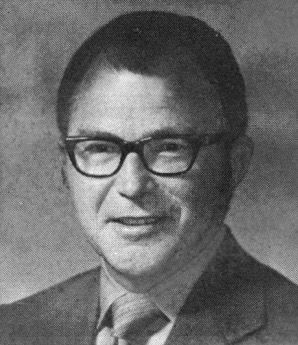
Historical · U.S. House · Washington · District 2
Lloyd Meeds
Former U.S. Representative · Washington District 2 · 1965–1979 · Democratic
Lloyd Meeds represented Washington's District 2 in the United States House of Representatives (1965–1979) for the Democratic party. The page below collects sourced biographical facts, term history, committee roles, and provenance for Meeds.
Bioguide ID: M000626
Key facts
- Full name
- Lloyd Meeds
- State
- Washington
- District
- District 2
- Party
- Democratic
- House service
- 1965–1979
- First House term
- 1965
- Status
- Left office
- Current term ends
- —
- Born
- 1927
- Bioguide ID
- M000626
- Committee assignments
- —
- Dataset version
- 1.20260605
Biographical narrative
905 words · sourced from the Wikipedia REST extract
Edwin Lloyd Meeds was an American politician who served as a Democratic member of the United States House of Representatives from Washington's 2nd congressional district from 1965 until 1979. His tenure in Congress was marked by significant contributions to conservation and education, as well as a notable engagement in legislative matters affecting Native American rights. Meeds' career spanned seven terms, during which he became a prominent figure in Washington state politics.
Early life and career
Lloyd Meeds was born on December 11, 1927, in Dillon, Montana. His family relocated to Monroe, Washington, in 1944, where he completed his high school education at Monroe High School in 1946. Following high school, he served in the United States Navy for a brief period from 1946 to 1947, an experience that contributed to his understanding of national service and civic duty. After his military service, Meeds pursued higher education, graduating from Everett Junior College in 1950.
In the early stages of his career, Meeds operated a gas station until 1954, when he decided to return to academia. He enrolled at Gonzaga University in Spokane, where he earned his law degree in 1958. Upon passing the bar exam, Meeds began his legal career, initially serving as a prosecutor in Spokane County before moving to Snohomish County. His legal background provided him with a solid foundation for his future political career, equipping him with the skills necessary for navigating the complexities of legislation and public policy.
House tenure
Lloyd Meeds entered the political arena when he successfully ran for a seat in the United States House of Representatives in 1964, defeating the incumbent Republican Alfred Westland. This victory marked the beginning of his seven-term congressional career, which lasted until January 3, 1979. Throughout his time in office, Meeds consistently won re-election, often by comfortable margins, reflecting his strong support among constituents. His electoral success continued until 1974, when he faced challenges related to his public statements and positions on various issues.
In 1974, a significant ruling by U.S. District Court Judge George Hugo Boldt determined that Native American tribes were entitled to half of the fish caught in their traditional fishing grounds. Meeds' comments regarding this ruling, which suggested that the tribes had legal backing and that the public should accept the decision, led to a backlash among some of his constituents. This controversy had a tangible impact on his political standing, culminating in a narrow victory in the 1976 election, where he won by a margin of just 542 votes. Following this close call, Meeds announced in late 1977 that he would not seek re-election in 1978, ultimately retiring from Congress and returning to the practice of law in early 1979. His congressional seat was subsequently filled by Al Swift, a former aide.
During his time in Congress, Meeds was recognized for his commitment to environmental conservation and educational initiatives. He played a pivotal role in the establishment of the Alpine Lakes Wilderness Area and the North Cascades National Park, both of which are significant natural landmarks in Washington state. His efforts in wilderness preservation were honored posthumously with a memorial erected in 2007 at the Snow Lake trailhead near Snoqualmie Pass, a popular hiking destination within the Alpine Lakes Wilderness. This recognition underscores the lasting impact of his work on the region's natural landscape.
Legislative focus and committees
Throughout his congressional tenure, Lloyd Meeds was particularly focused on issues related to conservation and education. His advocacy for environmental protection led to the creation of protected areas that preserve the natural beauty and ecological integrity of Washington state. The establishment of the Alpine Lakes Wilderness Area and the North Cascades National Park are among his most notable achievements in this regard. These areas are not only vital for biodiversity but also serve as recreational spaces for residents and visitors alike, reflecting Meeds' commitment to both environmental stewardship and public access to nature.
In contrast to his conservation efforts in Washington, Meeds was also involved in legislative actions that sought to limit land preservation in Alaska. He played a significant role in the discussions surrounding the Alaska National Interest Lands Conservation Act, which was signed into law by President Jimmy Carter in December 1980. This legislation aimed to balance the interests of land preservation with those of resource development, and Meeds' involvement highlighted the complexities and competing interests inherent in environmental policy.
After leaving Congress, Meeds transitioned to a career as a lobbyist in Washington, D.C. He became a partner in the law firm of Preston Gates Ellis & Rouvelas Meeds, which was the D.C. office of the Seattle-based law firm Preston Gates & Ellis. In this capacity, he continued to engage in political and legal matters, working closely with various stakeholders, including the state of Alaska and Representative Don Young, to influence land management policies.
Lloyd Meeds passed away on August 17, 2005, at the age of 77, after a battle with lung cancer. He died at his home in Church Creek, Maryland, and was laid to rest at Arlington National Cemetery. Meeds is survived by his wife, Mary Yang Meeds, with whom he shared 38 years of marriage, as well as their daughter. He also had two children from a previous marriage. His legacy in Washington state politics, particularly in the realms of conservation and education, continues to be recognized and remembered by those who value the natural heritage and public lands of the region.
Notable legislation
Sponsored and co-sponsored legislation for Lloyd Meeds is pending operator curation. The biographical narrative above carries the same provenance trail until per-bill rows are written.
Sources
- [1]https://en.wikipedia.org/wiki/Lloyd_MeedsWikipedia · retrieved 2026-06-05
Notable quotes
Sourced quotes for Lloyd Meeds are pending operator curation. Narrative-scope provenance remains attached below.
Sources
- [1]https://en.wikipedia.org/wiki/Lloyd_MeedsWikipedia · retrieved 2026-06-05
Key positions
Curated policy positions for Lloyd Meeds are pending operator review. The biographical narrative above carries the same provenance trail until per-topic positions are written.
Sources
- [1]https://en.wikipedia.org/wiki/Lloyd_MeedsWikipedia · retrieved 2026-06-05
Terms served
- 1965–1967U.S. House · Term 1 · Democratic
- 1967–1969U.S. House · Term 2 · Democratic
- 1969–1971U.S. House · Term 3 · Democratic
- 1971–1973U.S. House · Term 4 · Democratic
- 1973–1975U.S. House · Term 5 · Democratic
- 1975–1977U.S. House · Term 6 · Democratic
- 1977–1979U.S. House · Term 7 · Democratic
Sources & provenance
Every attributable claim above carries a per-section [N] marker that resolves to the corresponding URL below. Each entry records the upstream provider, the canonical URL, and the timestamp at which the source was retrieved by the ingest pipeline.
Key facts
- https://bioguide.congress.gov/search/bio/M000626bioguide · retrieved 2026-06-05
- https://www.govtrack.us/congress/members/407615govtrack · retrieved 2026-06-05
Biographical narrative
- https://en.wikipedia.org/wiki/Lloyd_Meedswikipedia · retrieved 2026-06-05
Find your representative
Every U.S. state elects representatives by district. Browse Washington’s delegation, the full former-representative roster, or explore the role and term length.
Related on The Candidate
- Preceded by Jack WestlandEarlier holder of the Washington District 2 House seat · Republican.Open
- Succeeded by Allan SwiftLater holder of the Washington District 2 House seat · Democratic.Open
- Emerson De LacyFormer U.S. Representative · Washington District 1 · DemocraticOpen
- Homer JonesFormer U.S. Representative · Washington District 1 · RepublicanOpen
- Jay InsleeFormer U.S. Representative · Washington District 1 · DemocraticOpen
- Joel PritchardFormer U.S. Representative · Washington District 1 · RepublicanOpen