
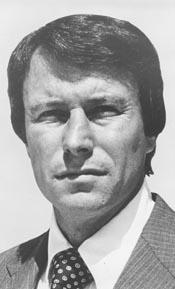
Historical · U.S. House · Washington · District 3
Don Bonker
Former U.S. Representative · Washington District 3 · 1975–1989 · Democratic
Don Bonker represented Washington's District 3 in the United States House of Representatives (1975–1989) for the Democratic party. The page below collects sourced biographical facts, term history, committee roles, and provenance for Bonker.
Bioguide ID: B000620
Key facts
- Full name
- Don Bonker
- State
- Washington
- District
- District 3
- Party
- Democratic
- House service
- 1975–1989
- First House term
- 1975
- Status
- Left office
- Current term ends
- —
- Born
- 1937
- Bioguide ID
- B000620
- Committee assignments
- —
- Dataset version
- 1.20260605
Biographical narrative
944 words · sourced from the Wikipedia REST extract
Donald Leroy Bonker was an American politician who served as a U.S. Representative for Washington's 3rd congressional district from 1975 to 1989. A member of the Democratic Party, Bonker was known for his moderate stance and significant contributions to trade legislation and environmental conservation during his time in Congress. Prior to his congressional career, he held various political positions, including serving as the Clark County auditor and working as an aide to a U.S. Senator. Bonker's political career was marked by his commitment to economic policy and environmental issues, as well as his involvement in local and national Democratic politics.
Early life and career
Born on March 7, 1937, Bonker grew up in Westminster, Colorado, where he attended public schools. He pursued higher education at Clark College in Vancouver, Washington, earning an Associate of Arts degree in 1962. He continued his studies at Lewis & Clark College in Portland, Oregon, where he obtained a Bachelor of Arts degree in 1964. Following his graduation, Bonker began his political career as an aide to Senator Maurine Neuberger of Oregon, serving in this capacity from 1964 to 1965.
In 1966, Bonker was elected as the Clark County auditor in Washington, a position he held until 1974. During this time, he was actively involved in local politics and served as a delegate to the Washington State Democratic conventions from 1968 to 1970. In 1972, Bonker sought to advance his political career by running for the office of Washington Secretary of State; however, he was defeated by the incumbent Republican, Lud Kramer. This setback did not deter him, as he continued to build his political profile leading up to his election to the U.S. House of Representatives.
House tenure
Bonker was elected to the U.S. House of Representatives in 1974, beginning his first term on January 3, 1975. He was a member of the Democratic Party and identified as a moderate within the party. Over the course of his congressional career, Bonker was re-elected for a total of seven terms, serving until January 3, 1989. His decision not to seek re-election in 1988 was motivated by his desire to run for the U.S. Senate. In the Senate primary, he narrowly lost to fellow Democratic Representative Mike Lowry, who ultimately lost in the general election to Republican candidate Slade Gorton.
During his tenure in Congress, Bonker was recognized for his active participation in various committees and initiatives. He served as a senior member of the House Committee on Foreign Affairs and held the position of chairman of the Subcommittee on International Economic Policy and Trade. His involvement in these roles allowed him to influence significant trade legislation and policies. Bonker also served on the President's Export Council and led former Speaker Tip O'Neill's Trade Task Force, which was instrumental in the passage of the Omnibus Trade and Competitiveness Act.
Legislative focus and committees
Bonker's legislative focus during his time in Congress was primarily on trade and environmental issues. He was a principal sponsor of several key pieces of legislation, including the Export Trading Company Act and the Export Administration Act, both of which aimed to enhance U.S. trade practices and competitiveness in the global market. His efforts in these areas reflected a commitment to improving economic opportunities for American businesses and workers.
In addition to his work on trade, Bonker was an advocate for environmental conservation. He played a significant role in the establishment of the Grays Harbor National Wildlife Refuge and the Mount St. Helens National Volcanic Monument. His conservation efforts also included the addition of Protection Island to the National Wildlife Refuge system and the preservation of the Point of Arches in Olympic National Park. Bonker was involved in expanding protected lands through the addition of 250,000 acres to the Washington Wilderness Act of 1984 and successfully advocating for a ban on the export of western redcedar.
Bonker's contributions to both trade policy and environmental conservation were significant during his congressional career, and he left a lasting impact on the legislative landscape in these areas. His work reflected a balance between economic development and environmental stewardship, which was a hallmark of his approach to governance.
After leaving Congress, Bonker continued to engage in public service and political activities. He ran for a U.S. Senate seat again in 1992 but was defeated in the primary by Patty Murray, who went on to win the general election. In 2000, he sought the position of Secretary of State once more, winning the party nomination in the primary but ultimately losing in the general election to Republican candidate Sam Reed.
In his later career, Bonker held various leadership roles, including serving as the president and CEO of the International Management and Development Institute. He was also involved with the Foundation for U.S.-Russia Business Cooperation and served as executive vice president of APCO Worldwide. His expertise in trade policy led him to write and speak extensively on the subject, including authoring a book titled "America's Trade Crisis."
Bonker's political affiliations and endorsements occasionally drew attention, such as when he endorsed Republican Susan Hutchison for King County Executive in 2009, which led to criticism from some within the Democratic Party. He was also a member of the ReFormers Caucus of Issue One, reflecting his ongoing engagement with political reform and governance issues.
Bonker's personal life included his marriage to Carolyn Ekern in 1971, with whom he had two children. He faced health challenges later in life, being diagnosed with liver cancer in May 2023. He passed away on May 30, 2023, at the age of 86, leaving behind a legacy of public service and commitment to both trade and environmental issues.
Notable legislation
Sponsored and co-sponsored legislation for Don Bonker is pending operator curation. The biographical narrative above carries the same provenance trail until per-bill rows are written.
Sources
- [1]https://en.wikipedia.org/wiki/Don_BonkerWikipedia · retrieved 2026-06-05
Notable quotes
Sourced quotes for Don Bonker are pending operator curation. Narrative-scope provenance remains attached below.
Sources
- [1]https://en.wikipedia.org/wiki/Don_BonkerWikipedia · retrieved 2026-06-05
Key positions
Curated policy positions for Don Bonker are pending operator review. The biographical narrative above carries the same provenance trail until per-topic positions are written.
Sources
- [1]https://en.wikipedia.org/wiki/Don_BonkerWikipedia · retrieved 2026-06-05
Terms served
- 1975–1977U.S. House · Term 1 · Democratic
- 1977–1979U.S. House · Term 2 · Democratic
- 1979–1981U.S. House · Term 3 · Democratic
- 1981–1983U.S. House · Term 4 · Democratic
- 1983–1985U.S. House · Term 5 · Democratic
- 1985–1987U.S. House · Term 6 · Democratic
- 1987–1989U.S. House · Term 7 · Democratic
Sources & provenance
Every attributable claim above carries a per-section [N] marker that resolves to the corresponding URL below. Each entry records the upstream provider, the canonical URL, and the timestamp at which the source was retrieved by the ingest pipeline.
Key facts
- https://bioguide.congress.gov/search/bio/B000620bioguide · retrieved 2026-06-05
- https://www.govtrack.us/congress/members/401585govtrack · retrieved 2026-06-05
Biographical narrative
- https://en.wikipedia.org/wiki/Don_Bonkerwikipedia · retrieved 2026-06-05
Find your representative
Every U.S. state elects representatives by district. Browse Washington’s delegation, the full former-representative roster, or explore the role and term length.
Related on The Candidate
- Preceded by Julia HansenEarlier holder of the Washington District 3 House seat · Democratic.Open
- Succeeded by Jolene UnsoeldLater holder of the Washington District 3 House seat · Democratic.Open
- Emerson De LacyFormer U.S. Representative · Washington District 1 · DemocraticOpen
- Homer JonesFormer U.S. Representative · Washington District 1 · RepublicanOpen
- Jay InsleeFormer U.S. Representative · Washington District 1 · DemocraticOpen
- Joel PritchardFormer U.S. Representative · Washington District 1 · RepublicanOpen