
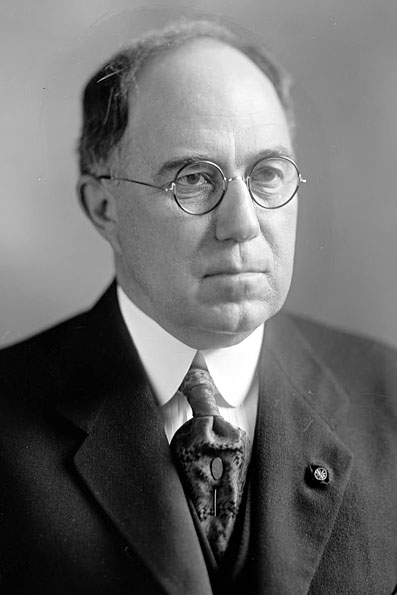
Historical · U.S. House · Washington · District 4
John Summers
Former U.S. Representative · Washington District 4 · 1919–1933 · Republican
John Summers represented Washington's District 4 in the United States House of Representatives (1919–1933) for the Republican party. The page below collects sourced biographical facts, term history, committee roles, and provenance for Summers.
Bioguide ID: S001067
Key facts
- Full name
- John Summers
- State
- Washington
- District
- District 4
- Party
- Republican
- House service
- 1919–1933
- First House term
- 1919
- Status
- Left office
- Current term ends
- —
- Born
- 1870
- Bioguide ID
- S001067
- Committee assignments
- —
- Dataset version
- 1.20260606
Biographical narrative
977 words · sourced from the Wikipedia REST extract
John Summers was an American physician and politician who served as a U.S. Representative for Washington's 4th congressional district from 1919 until 1933. A member of the Republican Party, Summers was elected to seven consecutive terms in the House of Representatives. His career in public service was preceded by a successful medical practice and involvement in local agriculture. Summers' life spanned a period of significant change in American society, and his contributions to both medicine and politics reflect the evolving landscape of the early 20th century.
Early life and career
John Summers was born on April 29, 1870, in Valeene, Indiana. He received his early education in the public school system, which laid the foundation for his future academic pursuits. In 1889, he graduated from the Southern Indiana Normal College located in Mitchell, Indiana. This institution was known for its focus on teacher education, which likely contributed to Summers' later abilities in public service and leadership.
Following his initial education, Summers pursued a career in medicine. He attended the Kentucky School of Medicine in Louisville, where he earned his medical degree in 1892. His commitment to the field of medicine did not end with his formal education; he furthered his studies through postgraduate work at various prestigious institutions. Summers expanded his medical knowledge at the Louisville Medical College, as well as in international settings, including New York, London, Berlin, and the University of Vienna in Austria. This extensive training provided him with a broad perspective on medical practices and innovations of the time.
After completing his education, Summers began his medical career in Mattoon, Illinois, where he practiced medicine for several years. His professional journey took a significant turn in 1908 when he relocated to Walla Walla, Washington. In Walla Walla, he not only continued his medical practice but also engaged in agricultural activities, including fruit raising. This dual focus on medicine and agriculture reflected a common lifestyle of the era, where many individuals balanced professional careers with farming and other forms of land use.
Summers' involvement in politics began at the state level. In 1917, he was elected to the Washington State House of Representatives, where he began to establish his reputation as a public servant. His experience in the state legislature provided him with valuable insights into governance and the legislative process, which would later serve him well in his congressional career.
House tenure
John Summers was elected to the U.S. House of Representatives as a member of the Republican Party, beginning his first term on March 4, 1919. He served in this capacity for a total of seven consecutive terms, demonstrating a sustained commitment to his constituents and the legislative process. His tenure in the House lasted until March 3, 1933, during which he participated in significant legislative developments that shaped the nation during the early years of the 20th century.
Summers' election to the Sixty-sixth Congress marked the beginning of a period characterized by substantial political and social change in the United States. His service coincided with the aftermath of World War I and the onset of the Great Depression, events that had profound implications for American society and governance. Throughout his time in office, Summers faced the challenges of addressing the needs of a nation grappling with economic hardship and social upheaval.
Despite his efforts and contributions, Summers was not successful in securing re-election in 1932 for the Seventy-third Congress. He also ran unsuccessfully for election in subsequent years, including attempts for the Seventy-fourth Congress in 1934 and the Seventy-fifth Congress in 1936. These electoral defeats marked the end of his formal political career, but they did not diminish his earlier accomplishments or the impact he had made during his time in office.
Legislative focus and committees
During his time in the U.S. House of Representatives, John Summers was involved in various legislative initiatives and discussions that reflected the priorities and concerns of his constituents in Washington State. While specific details regarding the bills he sponsored or the committees he served on are not provided, it is known that his background as a physician likely influenced his legislative interests, particularly in areas related to health care and public welfare.
Summers' medical expertise would have equipped him with a unique perspective on health-related issues, which were increasingly becoming a focal point of national policy discussions during his tenure. The early 20th century saw significant advancements in medical science and public health, and representatives like Summers played a crucial role in shaping the legislative framework that addressed these evolving challenges.
Additionally, as a member of the Republican Party, Summers would have been aligned with the party's platform and priorities during a time when economic issues were at the forefront of national discourse. His experience in both medicine and agriculture may have provided him with insights into the needs of rural communities, which were often underrepresented in national conversations.
After leaving Congress, Summers returned to his previous pursuits in medicine and agriculture. He continued to reside in Walla Walla, Washington, where he remained active in his community. Summers was married to Jennie (née Burks) Summers, who was involved in various social and community organizations, including the Christian Women's Temperance Union. Their partnership reflected a shared commitment to civic engagement and community service.
John Summers passed away on September 25, 1937, in Walla Walla, Washington. He was interred in Mountain View Cemetery, where he rests alongside his wife, Jennie. Their legacy continues through their family, including their daughter, Hope, who became a well-known actress in television and film.
In summary, John Summers' life and career encapsulate the journey of a dedicated public servant who navigated the complexities of medicine and politics during a transformative period in American history. His contributions as a physician and a U.S. Representative reflect the interconnectedness of health, governance, and community, leaving a lasting impact on those he served.
Notable legislation
Sponsored and co-sponsored legislation for John Summers is pending operator curation. The biographical narrative above carries the same provenance trail until per-bill rows are written.
Sources
- [1]https://en.wikipedia.org/wiki/John_W._SummersWikipedia · retrieved 2026-06-06
Notable quotes
Sourced quotes for John Summers are pending operator curation. Narrative-scope provenance remains attached below.
Sources
- [1]https://en.wikipedia.org/wiki/John_W._SummersWikipedia · retrieved 2026-06-06
Key positions
Curated policy positions for John Summers are pending operator review. The biographical narrative above carries the same provenance trail until per-topic positions are written.
Sources
- [1]https://en.wikipedia.org/wiki/John_W._SummersWikipedia · retrieved 2026-06-06
Terms served
- 1919–1921U.S. House · Term 1 · Republican
- 1921–1923U.S. House · Term 2 · Republican
- 1923–1925U.S. House · Term 3 · Republican
- 1925–1927U.S. House · Term 4 · Republican
- 1927–1929U.S. House · Term 5 · Republican
- 1929–1931U.S. House · Term 6 · Republican
- 1931–1933U.S. House · Term 7 · Republican
Sources & provenance
Every attributable claim above carries a per-section [N] marker that resolves to the corresponding URL below. Each entry records the upstream provider, the canonical URL, and the timestamp at which the source was retrieved by the ingest pipeline.
Key facts
- https://bioguide.congress.gov/search/bio/S001067bioguide · retrieved 2026-06-06
- https://www.govtrack.us/congress/members/410521govtrack · retrieved 2026-06-06
Biographical narrative
- https://en.wikipedia.org/wiki/John_W._Summerswikipedia · retrieved 2026-06-06
Find your representative
Every U.S. state elects representatives by district. Browse Washington’s delegation, the full former-representative roster, or explore the role and term length.
Related on The Candidate
- Preceded by William La FolletteEarlier holder of the Washington District 4 House seat · Republican.Open
- Succeeded by Knute HillLater holder of the Washington District 4 House seat · Democratic.Open
- Emerson De LacyFormer U.S. Representative · Washington District 1 · DemocraticOpen
- Homer JonesFormer U.S. Representative · Washington District 1 · RepublicanOpen
- Jay InsleeFormer U.S. Representative · Washington District 1 · DemocraticOpen
- Joel PritchardFormer U.S. Representative · Washington District 1 · RepublicanOpen