
Historical · U.S. House · Washington · District 5
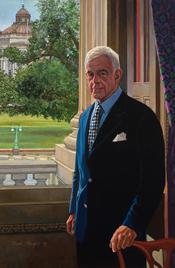
Thomas Foley
Former U.S. Representative · Washington District 5 · 1965–1995 · Democratic
Thomas Foley represented Washington's District 5 in the United States House of Representatives (1965–1995) for the Democratic party. The page below collects sourced biographical facts, term history, committee roles, and provenance for Foley.
Bioguide ID: F000239
Key facts
- Full name
- Thomas Foley
- State
- Washington
- District
- District 5
- Party
- Democratic
- House service
- 1965–1995
- First House term
- 1965
- Status
- Left office
- Current term ends
- —
- Born
- 1929
- Bioguide ID
- F000239
- Committee assignments
- —
- Dataset version
- 1.20260605
Biographical narrative
970 words · sourced from the Wikipedia REST extract
Thomas S. Foley was an American lawyer and politician who served as a U.S. Representative for Washington's 5th congressional district from 1965 until 1995. A member of the Democratic Party, he held the position of Speaker of the House from 1989 to 1995, making significant contributions to legislation during his tenure. Foley's political career spanned three decades, during which he navigated a changing political landscape and faced increasing challenges, culminating in his defeat in the 1994 election.
Early life and career
Thomas Stephen Foley was born on March 6, 1929, in Spokane, Washington. He was raised in a family with a strong educational background; his mother, Helen Marie, was a school teacher, and his father, Ralph E. Foley, served as a Superior Court judge for 34 years. Foley's heritage included Irish Catholic roots, with his grandfather, Cornelius Foley, working as a maintenance foreman for the Great Northern railroad in Spokane.
Foley's educational journey began at Gonzaga Preparatory School, a Jesuit institution, where he graduated in 1946. He then attended Gonzaga University for three years before transferring to the University of Washington in Seattle, where he completed his bachelor's degree. Following this, he pursued a legal education at the University of Washington School of Law, earning his Juris Doctor degree in 1957.
After graduating from law school, Foley entered private legal practice. In 1958, he joined the Spokane County prosecutor's office as a deputy prosecuting attorney. His legal career also included a teaching position at Gonzaga's School of Law from 1958 to 1959. In 1961, he transitioned to the state attorney general's office, serving as an assistant attorney general. That same year, Foley moved to Washington, D.C., to work on the staff of Senator Henry M. Jackson. This role provided him with valuable experience in federal legislative processes and laid the groundwork for his future political career.
In 1964, Foley decided to run for Congress, leaving Jackson's office to pursue this opportunity. He was unopposed for the Democratic nomination for Washington's 5th congressional district, which included Spokane. In the general election, he faced the incumbent Republican Congressman Walt Horan, who had served for 11 terms. Foley won the election by a margin of seven points, benefiting from the broader Democratic successes during the 1964 election cycle.
House tenure
Foley's congressional career began in 1965, and he was re-elected multiple times throughout the years, often without significant opposition. His early years in the House were marked by his appointment to the Agriculture Committee and the Interior and Insular Affairs Committee. He served on the latter committee until 1975, when he became chairman of the Agriculture Committee. His leadership in this role allowed him to influence agricultural policy and related legislation.
In 1981, Foley was appointed as Majority Whip, a position that required him to manage party discipline and ensure that members voted in line with party positions. He left the Agriculture Committee to serve on the House Administration Committee during this time. His leadership capabilities were further recognized when he was elected House Majority Leader in January 1987, a role he held until he ascended to the speakership.
Foley's tenure in the House was characterized by his ability to navigate a changing political landscape. Although his district became increasingly conservative over the years, he managed to secure re-election through the late 1980s. However, the political climate shifted significantly by the early 1990s, culminating in a challenging re-election campaign in 1994.
Legislative focus and committees
Throughout his time in Congress, Foley was involved in various legislative initiatives that reflected his commitment to civil rights, social welfare, and environmental issues. He voted in favor of key pieces of legislation, including the Voting Rights Act of 1965, the Civil Rights Act of 1968, and the Civil Rights Restoration Act of 1987. His support for these measures underscored his dedication to advancing civil rights and equality in the United States.
Foley's leadership as Speaker of the House began in June 1989, following the resignation of Jim Wright amid an ethics investigation. In the election to succeed Wright, Foley received substantial support, securing 251 votes against his Republican opponent. During his speakership, he presided over the passage of significant legislation, including updates to the Clean Air Act, the Americans with Disabilities Act, and the Family and Medical Leave Act. His role in these legislative achievements demonstrated his influence in shaping policy during a critical period in American history.
Foley's tenure also included the passage of the North American Free Trade Agreement Implementation Act and the Brady Handgun Violence Prevention Act. He played a key role in the Budget Enforcement Act of 1990, which established a framework for managing discretionary spending and taxes. This act became a focal point in the 1992 presidential campaign, highlighting the complexities of fiscal policy during his leadership.
Despite his accomplishments, Foley faced challenges related to his opposition to term limits, which became a contentious issue in the early 1990s. He successfully campaigned against a 1991 referendum that sought to impose term limits on elected officials in Washington state. However, a subsequent ballot initiative in 1992 approved term limits, leading to increased scrutiny of his position.
Foley's congressional career came to an end in 1995 when he was defeated by Republican candidate George Nethercutt in a highly competitive election. Nethercutt's campaign capitalized on public sentiment regarding term limits and Foley's long tenure in office. Following his departure from Congress, Foley continued to serve the public as the United States Ambassador to Japan from 1997 to 2001, appointed by President Bill Clinton.
Foley's legacy is marked by his long-standing commitment to public service, his leadership in the House of Representatives, and his contributions to significant legislative achievements that shaped American policy during his time in office. His career reflects the complexities and challenges faced by politicians navigating an evolving political landscape.
Notable legislation
Sponsored and co-sponsored legislation for Thomas Foley is pending operator curation. The biographical narrative above carries the same provenance trail until per-bill rows are written.
Sources
- [1]https://en.wikipedia.org/wiki/Tom_FoleyWikipedia · retrieved 2026-06-05
Notable quotes
Sourced quotes for Thomas Foley are pending operator curation. Narrative-scope provenance remains attached below.
Sources
- [1]https://en.wikipedia.org/wiki/Tom_FoleyWikipedia · retrieved 2026-06-05
Key positions
Curated policy positions for Thomas Foley are pending operator review. The biographical narrative above carries the same provenance trail until per-topic positions are written.
Sources
- [1]https://en.wikipedia.org/wiki/Tom_FoleyWikipedia · retrieved 2026-06-05
Terms served
- 1965–1967U.S. House · Term 1 · Democratic
- 1967–1969U.S. House · Term 2 · Democratic
- 1969–1971U.S. House · Term 3 · Democratic
- 1971–1973U.S. House · Term 4 · Democratic
- 1973–1975U.S. House · Term 5 · Democratic
- 1975–1977U.S. House · Term 6 · Democratic
- 1977–1979U.S. House · Term 7 · Democratic
- 1979–1981U.S. House · Term 8 · Democratic
- 1981–1983U.S. House · Term 9 · Democratic
- 1983–1985U.S. House · Term 10 · Democratic
- 1985–1987U.S. House · Term 11 · Democratic
- 1987–1989U.S. House · Term 12 · Democratic
- 1989–1991U.S. House · Term 13 · Democratic
- 1991–1993U.S. House · Term 14 · Democratic
- 1993–1995U.S. House · Term 15 · Democratic
Sources & provenance
Every attributable claim above carries a per-section [N] marker that resolves to the corresponding URL below. Each entry records the upstream provider, the canonical URL, and the timestamp at which the source was retrieved by the ingest pipeline.
Key facts
- https://bioguide.congress.gov/search/bio/F000239bioguide · retrieved 2026-06-05
- https://www.govtrack.us/congress/members/404193govtrack · retrieved 2026-06-05
Biographical narrative
- https://en.wikipedia.org/wiki/Tom_Foleywikipedia · retrieved 2026-06-05
Find your representative
Every U.S. state elects representatives by district. Browse Washington’s delegation, the full former-representative roster, or explore the role and term length.
Related on The Candidate
- Preceded by Walt HoranEarlier holder of the Washington District 5 House seat · Republican.Open
- Succeeded by George Nethercutt Jr.Later holder of the Washington District 5 House seat · Republican.Open
- Emerson De LacyFormer U.S. Representative · Washington District 1 · DemocraticOpen
- Homer JonesFormer U.S. Representative · Washington District 1 · RepublicanOpen
- Jay InsleeFormer U.S. Representative · Washington District 1 · DemocraticOpen
- Joel PritchardFormer U.S. Representative · Washington District 1 · RepublicanOpen