
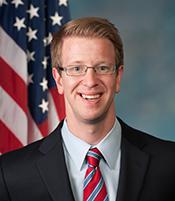
Historical · U.S. House · Washington · District 6
Derek Kilmer
Former U.S. Representative · Washington District 6 · 2013–2025 · Democratic
Derek Kilmer represented Washington's District 6 in the United States House of Representatives (2013–2025) for the Democratic party. The page below collects sourced biographical facts, term history, committee roles, and provenance for Kilmer.
Bioguide ID: K000381
Key facts
- Full name
- Derek Kilmer
- State
- Washington
- District
- District 6
- Party
- Democratic
- House service
- 2013–2025
- First House term
- 2013
- Status
- Left office
- Current term ends
- —
- Born
- 1974
- Bioguide ID
- K000381
- Committee assignments
- —
- Dataset version
- 1.20260603
Biographical narrative
885 words · sourced from the Wikipedia REST extract
Derek Kilmer is an American politician who served as the U.S. Representative for Washington's 6th congressional district from 2013 until 2025. A member of the Democratic Party, Kilmer has a background in both state and federal legislative roles, having previously served in the Washington House of Representatives and the Washington State Senate. His legislative career has been marked by a focus on economic development, bipartisan cooperation, and support for various social policies.
Early life and career
Derek Christian Kilmer was born on January 1, 1974, in Port Angeles, Washington. Growing up in a family of educators, both of his parents were public school teachers, which likely influenced his commitment to public service and community engagement. Kilmer pursued higher education at Princeton University, where he earned a Bachelor of Arts degree in public affairs from the Woodrow Wilson School of Public and International Affairs in 1996. His academic work included a senior thesis that analyzed the social and economic impacts of the Pacific Northwest timber crisis, showcasing his early interest in public policy and economic issues.
Following his undergraduate studies, Kilmer was awarded a Marshall Scholarship, which allowed him to further his education at the University of Oxford. He completed a Ph.D. in comparative social policy at Green Templeton College. His academic background provided him with a strong foundation in understanding complex social issues and policy development.
Before entering politics, Kilmer worked as a business consultant for McKinsey and Company, where he gained experience in strategic planning and organizational management. He also served as a business retention manager for the Economic Development Board for Tacoma-Pierce County, focusing on local economic growth and development. Additionally, Kilmer has been involved in educational initiatives as a trustee for Tacoma Community College and has served on the board of the Peninsula Schools Education Foundation, emphasizing his commitment to education and community service.
House tenure
Kilmer's political career began in earnest when he ran for the Washington House of Representatives in 2004, challenging incumbent Republican state representative Lois McMahan in the 26th district. He won the election by a narrow margin, securing 50% of the vote compared to McMahan's 48%. This victory marked the beginning of his legislative career at the state level. In 2006, he successfully ran for the Washington State Senate, defeating Republican Jim Hines with a significant majority. He was re-elected in 2010, further solidifying his position in the state legislature.
In March 2012, following the retirement announcement of long-serving U.S. Representative Norm Dicks, Kilmer declared his candidacy for Washington's newly redrawn 6th congressional district. His campaign received endorsements from notable publications, including The Seattle Times, which recognized his bipartisan approach to problem-solving. In the general election held on November 6, 2012, Kilmer won decisively against Republican nominee Bill Driscoll, capturing 59% of the vote and winning all six counties within the district.
During his tenure in the U.S. House of Representatives, which began in January 2013, Kilmer served on various committees and held leadership positions. Notably, he chaired the Select Committee on the Modernization of Congress from 2019 to 2023, where he worked on initiatives aimed at improving the efficiency and effectiveness of the legislative process. He also chaired the New Democrat Coalition from 2019 to 2021, advocating for a centrist and pragmatic approach to governance.
Kilmer's legislative actions in the House reflected a commitment to bipartisanship. He consistently voted in alignment with President Joe Biden's stated positions, achieving a 100% agreement rate during the 117th Congress, as analyzed by FiveThirtyEight. This alignment underscores his focus on collaborative governance and addressing pressing national issues.
Legislative focus and committees
Throughout his congressional career, Kilmer has focused on a variety of legislative priorities, particularly in the areas of economic development, job creation, and support for veterans. His background in business and economic policy has informed his approach to legislation, emphasizing the importance of fostering a strong economy and creating opportunities for constituents.
Kilmer has been active in supporting policies that strengthen the U.S.-Israel relationship, co-sponsoring the United States–Israel Strategic Partnership Act of 2013. He participated in a congressional delegation to Israel, aimed at enhancing strategic economic and military cooperation between the two nations. His involvement in this area reflects a commitment to international relations and national security.
In addition to his work on foreign policy, Kilmer has introduced legislation aimed at promoting financial literacy and savings among Americans. One notable example is the American Savings Promotion Act, which sought to authorize financial institutions to conduct savings promotion raffles to encourage savings among individuals. This initiative illustrates his focus on innovative approaches to economic challenges.
Kilmer's legislative efforts have garnered recognition for their bipartisan nature. He was ranked as one of the most bipartisan members of the House during the 114th Congress, highlighting his ability to work across party lines to achieve common goals. His commitment to collaboration has earned him accolades from various organizations, including business groups and veterans' associations.
In November 2023, Kilmer announced that he would not seek re-election in 2024, concluding his tenure in the House of Representatives. He was succeeded by Emily Randall, marking the end of a significant chapter in his political career. Throughout his time in office, Kilmer has demonstrated a dedication to public service and a focus on addressing the needs of his constituents in Washington's 6th congressional district.
Notable legislation
Sponsored and co-sponsored legislation for Derek Kilmer is pending operator curation. The biographical narrative above carries the same provenance trail until per-bill rows are written.
Sources
- [1]https://en.wikipedia.org/wiki/Derek_KilmerWikipedia · retrieved 2026-06-03
Notable quotes
Sourced quotes for Derek Kilmer are pending operator curation. Narrative-scope provenance remains attached below.
Sources
- [1]https://en.wikipedia.org/wiki/Derek_KilmerWikipedia · retrieved 2026-06-03
Key positions
Curated policy positions for Derek Kilmer are pending operator review. The biographical narrative above carries the same provenance trail until per-topic positions are written.
Sources
- [1]https://en.wikipedia.org/wiki/Derek_KilmerWikipedia · retrieved 2026-06-03
Terms served
- 2013–2015U.S. House · Term 1 · Democratic
- 2015–2017U.S. House · Term 2 · Democratic
- 2017–2019U.S. House · Term 3 · Democratic
- 2019–2021U.S. House · Term 4 · Democratic
- 2021–2023U.S. House · Term 5 · Democratic
- 2023–2025U.S. House · Term 6 · Democratic
Sources & provenance
Every attributable claim above carries a per-section [N] marker that resolves to the corresponding URL below. Each entry records the upstream provider, the canonical URL, and the timestamp at which the source was retrieved by the ingest pipeline.
Key facts
- https://bioguide.congress.gov/search/bio/K000381bioguide · retrieved 2026-06-03
- https://kilmer.house.govhouse.gov · retrieved 2026-06-03
Biographical narrative
- https://en.wikipedia.org/wiki/Derek_Kilmerwikipedia · retrieved 2026-06-03
Find your representative
Every U.S. state elects representatives by district. Browse Washington’s delegation, the full former-representative roster, or explore the role and term length.
Related on The Candidate
- Preceded by Norm DicksEarlier holder of the Washington District 6 House seat · Democratic.Open
- Emerson De LacyFormer U.S. Representative · Washington District 1 · DemocraticOpen
- Homer JonesFormer U.S. Representative · Washington District 1 · RepublicanOpen
- Jay InsleeFormer U.S. Representative · Washington District 1 · DemocraticOpen
- Joel PritchardFormer U.S. Representative · Washington District 1 · RepublicanOpen
- Democratic PartyFederal candidates and office holders on the Democratic line.Open