
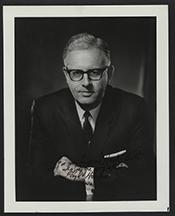
Historical · U.S. House · Washington · District 6
Floyd Hicks
Former U.S. Representative · Washington District 6 · 1965–1977 · Democratic
Floyd Hicks represented Washington's District 6 in the United States House of Representatives (1965–1977) for the Democratic party. The page below collects sourced biographical facts, term history, committee roles, and provenance for Hicks.
Bioguide ID: H000563
Key facts
- Full name
- Floyd Hicks
- State
- Washington
- District
- District 6
- Party
- Democratic
- House service
- 1965–1977
- First House term
- 1965
- Status
- Left office
- Current term ends
- —
- Born
- 1915
- Bioguide ID
- H000563
- Committee assignments
- —
- Dataset version
- 1.20260605
Biographical narrative
1,023 words · sourced from the Wikipedia REST extract
Floyd V. Hicks was an American politician and attorney who served as a U.S. Representative for Washington's 6th congressional district from 1965 until 1977. A member of the Democratic Party, Hicks had a diverse career that spanned education, military service, law, and public office. He was also an associate justice of the Washington Supreme Court after his tenure in Congress. His life and career reflect a commitment to public service and the legal profession, with significant contributions to both the legislative and judicial branches of government.
Early life and career
Floyd Verne Hicks was born on May 29, 1915, in Prosser, Washington. Growing up in the Pacific Northwest, he pursued higher education at Central Washington University, where he earned a bachelor's degree in education. His early career was rooted in education, as he became a high school teacher and football coach. This experience in education laid the foundation for his later work in public service, emphasizing the importance of community and leadership.
Hicks continued his academic journey by attending Washington State University, where he obtained certification as an education administrator. This additional qualification allowed him to deepen his involvement in educational administration and policy, further shaping his understanding of the needs of students and educators.
With the onset of World War II, Hicks joined the United States Army in 1942. His military service lasted four years, during which he rose to the rank of captain. This experience not only instilled in him a sense of duty and patriotism but also provided him with leadership skills that would serve him well in his subsequent political career.
After his discharge from the Army, Hicks returned to academia, enrolling in the University of Washington School of Law. He earned his Juris Doctor in 1948, marking the beginning of his legal career. Following his graduation, he established a small private law practice in Pierce County, Washington. His work as an attorney allowed him to engage directly with the legal system and advocate for his clients, further enhancing his understanding of the law and its implications for society.
In 1961, Hicks was appointed as a superior court judge, a position that allowed him to influence the judicial landscape of Washington State. His judicial experience provided him with a unique perspective on the law, which he would later bring to his role in Congress. In 1964, Hicks transitioned to national politics when he was elected to the United States House of Representatives, beginning a six-term tenure that would last until 1977.
House tenure
Hicks's congressional career began in 1965 when he was elected to represent Washington's 6th congressional district. During his time in the House of Representatives, he served on the House Committee on Armed Services, a role that was particularly relevant given his military background. His tenure in Congress was marked by a focus on issues related to defense, veterans' affairs, and the needs of his constituents in Washington State.
Throughout his six terms in office, Hicks was involved in various legislative initiatives and sponsored numerous bills. He sponsored a total of 48 bills, addressing a range of topics from federal employee pay raises to tariff schedules for imported goods. His legislative work often reflected the interests and needs of his district, as well as broader national concerns.
One notable aspect of Hicks's congressional service was his commitment to ensuring fair treatment for federal employees. For instance, he sponsored legislation that aimed to provide a specific pay raise for federal officers and employees while excluding Members of Congress from such increases. This demonstrated his understanding of the public sentiment regarding government compensation and his willingness to advocate for transparency and accountability in government.
In addition to his work on pay raises, Hicks also sponsored bills aimed at providing relief to individuals and families in specific circumstances. These included measures for the relief of individuals facing unique challenges, showcasing his concern for the welfare of his constituents and his commitment to addressing their needs through legislative action.
Hicks's time in Congress concluded on January 3, 1977, after which he transitioned to a new role in the judicial system. His experience in the House provided him with a wealth of knowledge about the legislative process, which he would later apply in his judicial career.
Legislative focus and committees
During his tenure in the House of Representatives, Hicks's legislative focus was shaped by his background in education, law, and military service. His work on the House Committee on Armed Services was particularly significant, as it allowed him to engage with issues related to national defense, military personnel, and veterans' affairs. His military experience likely informed his perspectives on these matters, enabling him to advocate effectively for policies that supported service members and their families.
Hicks's legislative initiatives were diverse, reflecting the multifaceted nature of his interests and the needs of his constituents. He sponsored bills that addressed economic issues, such as tariff schedules for imported goods, which were relevant to the local economy and industries in Washington State. His focus on economic matters demonstrated an understanding of the importance of trade and commerce in the region.
In addition to economic issues, Hicks was also concerned with social justice and individual welfare. His sponsorship of relief bills indicated a commitment to helping those in need, whether through direct financial assistance or legislative support. This aspect of his legislative focus highlighted his belief in the role of government as a facilitator of social welfare and justice.
After leaving Congress, Hicks continued to serve the public as an associate justice of the Washington Supreme Court from 1977 to 1982. This role allowed him to apply his extensive legal knowledge and experience in a judicial capacity, further contributing to the legal landscape of Washington State. Following his time on the Supreme Court, he returned to the Pierce County Superior Court as a judge, where he continued to influence the judicial system until his retirement.
Floyd V. Hicks passed away on December 1, 1992, in Tacoma, Washington. His life and career reflect a dedication to public service, education, and the law, with significant contributions to both the legislative and judicial branches of government.
Notable legislation
Sponsored and co-sponsored legislation for Floyd Hicks is pending operator curation. The biographical narrative above carries the same provenance trail until per-bill rows are written.
Sources
- [1]https://en.wikipedia.org/wiki/Floyd_HicksWikipedia · retrieved 2026-06-05
Notable quotes
Sourced quotes for Floyd Hicks are pending operator curation. Narrative-scope provenance remains attached below.
Sources
- [1]https://en.wikipedia.org/wiki/Floyd_HicksWikipedia · retrieved 2026-06-05
Key positions
Curated policy positions for Floyd Hicks are pending operator review. The biographical narrative above carries the same provenance trail until per-topic positions are written.
Sources
- [1]https://en.wikipedia.org/wiki/Floyd_HicksWikipedia · retrieved 2026-06-05
Terms served
- 1965–1967U.S. House · Term 1 · Democratic
- 1967–1969U.S. House · Term 2 · Democratic
- 1969–1971U.S. House · Term 3 · Democratic
- 1971–1973U.S. House · Term 4 · Democratic
- 1973–1975U.S. House · Term 5 · Democratic
- 1975–1977U.S. House · Term 6 · Democratic
Sources & provenance
Every attributable claim above carries a per-section [N] marker that resolves to the corresponding URL below. Each entry records the upstream provider, the canonical URL, and the timestamp at which the source was retrieved by the ingest pipeline.
Key facts
- https://bioguide.congress.gov/search/bio/H000563bioguide · retrieved 2026-06-05
- https://www.govtrack.us/congress/members/405425govtrack · retrieved 2026-06-05
Biographical narrative
- https://en.wikipedia.org/wiki/Floyd_Hickswikipedia · retrieved 2026-06-05
Find your representative
Every U.S. state elects representatives by district. Browse Washington’s delegation, the full former-representative roster, or explore the role and term length.
Related on The Candidate
- Preceded by Thor TollefsonEarlier holder of the Washington District 6 House seat · Republican.Open
- Succeeded by Norm DicksLater holder of the Washington District 6 House seat · Democratic.Open
- Emerson De LacyFormer U.S. Representative · Washington District 1 · DemocraticOpen
- Homer JonesFormer U.S. Representative · Washington District 1 · RepublicanOpen
- Jay InsleeFormer U.S. Representative · Washington District 1 · DemocraticOpen
- Joel PritchardFormer U.S. Representative · Washington District 1 · RepublicanOpen