
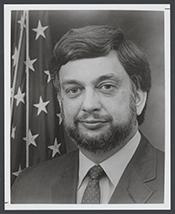
Historical · U.S. House · Washington · District 7
Michael Lowry
Former U.S. Representative · Washington District 7 · 1979–1989 · Democratic
Michael Lowry represented Washington's District 7 in the United States House of Representatives (1979–1989) for the Democratic party. The page below collects sourced biographical facts, term history, committee roles, and provenance for Lowry.
Bioguide ID: L000486
Key facts
- Full name
- Michael Lowry
- State
- Washington
- District
- District 7
- Party
- Democratic
- House service
- 1979–1989
- First House term
- 1979
- Status
- Left office
- Current term ends
- —
- Born
- 1939
- Bioguide ID
- L000486
- Committee assignments
- —
- Dataset version
- 1.20260605
Biographical narrative
963 words · sourced from the Wikipedia REST extract
Michael Edward Lowry was an American politician who served as a member of the U.S. House of Representatives for Washington's 7th congressional district from 1979 to 1989. A member of the Democratic Party, he later became the 20th governor of Washington, holding office from 1993 to 1997. His political career was marked by significant electoral contests, including two unsuccessful bids for the U.S. Senate. Lowry's tenure in public office concluded amid controversy following allegations of sexual misconduct.
Early life and career
Mike Lowry was born on March 8, 1939, in St. John, Washington. He was the son of Helen and Robert Lowry. Growing up in a small town, he developed a strong sense of community and civic responsibility, which would later influence his political aspirations. Lowry pursued higher education at Washington State University, where he graduated in 1962. His academic background provided a foundation for his future endeavors in public service and politics.
Following his graduation, Lowry began his career in public service, initially working for the Washington State Senate. This experience allowed him to gain insights into the legislative process and the workings of state government. He later transitioned into a role as a lobbyist for Group Health Cooperative, where he advocated for healthcare issues and developed a deeper understanding of health policy. His early career experiences laid the groundwork for his later political ambitions.
In 1975, Lowry was elected to the King County Council, where he served until 1978. His time on the council provided him with valuable experience in local governance and community issues, further solidifying his commitment to public service. His work at the county level helped him build a network of supporters and constituents, which would be instrumental in his subsequent campaign for the U.S. House of Representatives.
In 1978, Lowry successfully ran for the U.S. House of Representatives, representing Washington's 7th congressional district. His election marked the beginning of a decade-long tenure in Congress, during which he would focus on various issues affecting his constituents and the nation.
House tenure
Mike Lowry's congressional career began in 1979, when he was elected to represent Washington's 7th congressional district. During his time in the House, he served a total of five terms, establishing himself as a prominent figure within the Democratic Party. His tenure was characterized by a commitment to addressing the needs of his constituents and advocating for progressive policies.
Throughout his time in Congress, Lowry was involved in various legislative initiatives and discussions, reflecting the priorities of his district and the Democratic Party. His focus on issues such as healthcare, education, and environmental protection resonated with many voters in his district, contributing to his electoral success. Lowry's ability to connect with constituents and address their concerns was a hallmark of his time in office.
In addition to his legislative work, Lowry was known for his active engagement with the community. He frequently held town hall meetings and public forums, providing opportunities for constituents to voice their opinions and concerns. This approach helped him maintain a strong connection with the people he represented and fostered a sense of accountability in his role as a public servant.
Despite his successes in the House, Lowry faced challenges in his political career. He ran for the U.S. Senate in 1983, seeking to fill the vacancy left by the late Senator Henry "Scoop" Jackson. However, he was defeated by Republican former Governor Dan Evans, who was the incumbent at the time. Lowry's second attempt at the Senate came in 1988, when he ran against Republican candidate Slade Gorton. This race was notably competitive, but ultimately resulted in another loss for Lowry.
After his tenure in the House ended in 1989, Lowry transitioned to other roles, including work at Seattle University and involvement with an environmental organization. His experiences in Congress and his commitment to public service continued to shape his career trajectory.
Legislative focus and committees
During his time in the U.S. House of Representatives, Mike Lowry was known for his focus on several key issues that were important to his constituents and aligned with the Democratic Party's platform. His legislative priorities included healthcare reform, education, and environmental protection, reflecting the concerns of the diverse population in Washington's 7th congressional district.
Lowry's commitment to healthcare was particularly significant, as he sought to address the challenges faced by many Americans in accessing affordable medical services. His background as a lobbyist for Group Health Cooperative informed his understanding of healthcare policy, and he worked to advocate for reforms that would improve access and affordability for his constituents.
In addition to healthcare, Lowry was also an advocate for education. He recognized the importance of quality education in fostering economic opportunity and social mobility. His legislative efforts included initiatives aimed at improving educational access and resources for students in Washington and beyond.
Environmental issues were another area of focus for Lowry during his time in Congress. He was involved in discussions and legislation aimed at protecting natural resources and promoting sustainable practices. His commitment to environmental stewardship resonated with many constituents who valued the natural beauty and ecological diversity of Washington state.
Throughout his congressional career, Lowry served on various committees, which allowed him to influence legislation and advocate for the interests of his district. His committee assignments provided him with opportunities to engage with fellow lawmakers and contribute to the legislative process on a broader scale. These roles also enabled him to build relationships with other members of Congress, further enhancing his effectiveness as a legislator.
Lowry's tenure in the House of Representatives concluded in 1989, but his contributions to public service continued in other capacities. His experiences in Congress and his commitment to the issues he championed left a lasting impact on his constituents and the political landscape of Washington state.
Notable legislation
Sponsored and co-sponsored legislation for Michael Lowry is pending operator curation. The biographical narrative above carries the same provenance trail until per-bill rows are written.
Sources
- [1]https://en.wikipedia.org/wiki/Mike_LowryWikipedia · retrieved 2026-06-05
Notable quotes
Sourced quotes for Michael Lowry are pending operator curation. Narrative-scope provenance remains attached below.
Sources
- [1]https://en.wikipedia.org/wiki/Mike_LowryWikipedia · retrieved 2026-06-05
Key positions
Curated policy positions for Michael Lowry are pending operator review. The biographical narrative above carries the same provenance trail until per-topic positions are written.
Sources
- [1]https://en.wikipedia.org/wiki/Mike_LowryWikipedia · retrieved 2026-06-05
Terms served
- 1979–1981U.S. House · Term 1 · Democratic
- 1981–1983U.S. House · Term 2 · Democratic
- 1983–1985U.S. House · Term 3 · Democratic
- 1985–1987U.S. House · Term 4 · Democratic
- 1987–1989U.S. House · Term 5 · Democratic
Sources & provenance
Every attributable claim above carries a per-section [N] marker that resolves to the corresponding URL below. Each entry records the upstream provider, the canonical URL, and the timestamp at which the source was retrieved by the ingest pipeline.
Key facts
- https://bioguide.congress.gov/search/bio/L000486bioguide · retrieved 2026-06-05
- https://www.govtrack.us/congress/members/406974govtrack · retrieved 2026-06-05
Biographical narrative
- https://en.wikipedia.org/wiki/Mike_Lowrywikipedia · retrieved 2026-06-05
Find your representative
Every U.S. state elects representatives by district. Browse Washington’s delegation, the full former-representative roster, or explore the role and term length.
Related on The Candidate
- Preceded by John Cunningham IIIEarlier holder of the Washington District 7 House seat · Republican.Open
- Succeeded by Jim McDermottLater holder of the Washington District 7 House seat · Democratic.Open
- Emerson De LacyFormer U.S. Representative · Washington District 1 · DemocraticOpen
- Homer JonesFormer U.S. Representative · Washington District 1 · RepublicanOpen
- Jay InsleeFormer U.S. Representative · Washington District 1 · DemocraticOpen
- Joel PritchardFormer U.S. Representative · Washington District 1 · RepublicanOpen