
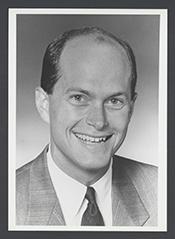
Historical · U.S. House · Washington · District 9
Randy Tate
Former U.S. Representative · Washington District 9 · 1995–1997 · Republican
Randy Tate represented Washington's District 9 in the United States House of Representatives (1995–1997) for the Republican party. The page below collects sourced biographical facts, term history, committee roles, and provenance for Tate.
Bioguide ID: T000048
Key facts
- Full name
- Randy Tate
- State
- Washington
- District
- District 9
- Party
- Republican
- House service
- 1995–1997
- First House term
- 1995
- Status
- Left office
- Current term ends
- —
- Born
- 1965
- Bioguide ID
- T000048
- Committee assignments
- —
- Dataset version
- 1.20260605
Biographical narrative
928 words · sourced from the Wikipedia REST extract
Randall John "Randy" Tate is an American politician and a former member of the United States House of Representatives, representing Washington's 9th congressional district as a Republican. Born on November 23, 1965, in Puyallup, Washington, Tate's political career began at the state level before he transitioned to national politics. He served one term in the U.S. House from 1995 until 1997, during which he was known for his alignment with conservative policies and his close association with prominent Republican leaders.
Early life and career
Randy Tate was raised in a trailer park in Puyallup, Washington, where he was influenced by his father, a Baptist minister. This upbringing in a modest environment contributed to his later political views and priorities. Tate pursued higher education, earning an Associate of Arts degree from Tacoma Community College in 1986, followed by a Bachelor of Arts degree from Western Washington University in 1988. Before entering politics, he worked as a mobile-home park owner, which provided him with insights into the challenges faced by small business owners and the importance of property rights.
Tate's political career began in the Washington House of Representatives, where he served from 1989 until 1995. His initial election was marked by controversy, particularly due to a campaign brochure that criticized his Democratic opponent, State Superintendent Frank Brouillet, regarding issues of child sexual abuse. Despite the contentious start, Tate became known for his strong conservative stance, focusing on issues such as tax reduction, tort reform, and crime prevention. His confrontational style garnered attention, and he became a prominent figure among Republicans in the state legislature, eventually rising to the position of the number two Republican in the House. His tenure was characterized by a series of confrontations with Democratic leaders, including a notable remark from House Speaker Joseph E. King, who referred to him disparagingly.
House tenure
In 1994, Randy Tate sought a seat in the U.S. House of Representatives, running for Washington's 9th congressional district against incumbent Democrat Mike Kreidler. The election was part of a larger Republican movement known as the "Republican Revolution," which aimed to gain control of Congress. During his campaign, Tate strategically distanced himself from the Christian Coalition, which was associated with Pat Robertson, to appeal to a broader electorate. His efforts paid off when he narrowly defeated Kreidler in the November election, securing approximately 51% of the vote compared to Kreidler's 49%, a margin of about 5,500 votes. This victory was significant, as it was part of a wave of Republican victories across the nation.
Upon taking office in January 1995, Tate was the youngest member among the 73 Republican freshmen in the House. He quickly aligned himself with Speaker Newt Gingrich and became an advocate for the party's conservative agenda. One of his notable legislative achievements was the passage of an amendment to the 1996 illegal immigration bill, which established restrictions on visa eligibility for individuals who had been in the United States without authorization for over a year. This amendment reflected Tate's commitment to stricter immigration policies and his focus on national security issues.
Tate's first term in Congress was marked by his active participation in various legislative initiatives, but he faced challenges as he prepared for re-election in 1996. He ran against Democratic State Senator Adam Smith, who positioned himself as a strong challenger. During the primary elections, Tate finished second, receiving 48% of the vote compared to Smith's 49%. This outcome indicated that Tate was one of the more vulnerable incumbents in the upcoming general election. Smith's campaign criticized Tate for his close ties to Newt Gingrich, his support for controversial Medicare reforms, and his positions on environmental regulations. In contrast, Tate attempted to frame Smith as being beholden to organized labor and special interests.
In the November general election, Adam Smith ultimately defeated Randy Tate, receiving approximately 50% of the vote to Tate's 47%, resulting in a margin of about 6,000 votes. This defeat marked the end of Tate's congressional career after just one term.
Legislative focus and committees
During his time in the U.S. House of Representatives, Randy Tate's legislative focus was primarily on conservative issues, including tax policy, crime prevention, and immigration reform. His alignment with the Republican Party's agenda was evident in his support for various initiatives aimed at reducing government spending and enhancing law enforcement capabilities. Tate's close association with Speaker Newt Gingrich positioned him as a key player within the Republican caucus, allowing him to influence discussions on significant legislative matters.
Tate's involvement in immigration policy was particularly noteworthy, as he championed measures that sought to tighten restrictions on undocumented immigrants. The amendment he sponsored became a part of the broader discussion on immigration reform, reflecting the Republican Party's emphasis on border security and legal immigration processes during the mid-1990s.
Despite his efforts to advance his legislative priorities, Tate's tenure was relatively brief, concluding with his defeat in the 1996 election. After leaving Congress, he continued to engage in public discourse through writing and media appearances, including a column for the Federal Way News and hosting radio shows. He also served as the director of Pat Robertson's Christian Coalition from 1997 to 1999, further indicating his ongoing involvement in conservative political circles.
Overall, Randy Tate's political career was marked by a commitment to conservative principles and a focus on issues that resonated with his constituents, although his time in the U.S. House was limited to a single term. His experiences in both state and national politics reflect the dynamics of the Republican Party during a transformative period in American political history.
Notable legislation
Sponsored and co-sponsored legislation for Randy Tate is pending operator curation. The biographical narrative above carries the same provenance trail until per-bill rows are written.
Sources
- [1]https://en.wikipedia.org/wiki/Randy_TateWikipedia · retrieved 2026-06-05
Notable quotes
Sourced quotes for Randy Tate are pending operator curation. Narrative-scope provenance remains attached below.
Sources
- [1]https://en.wikipedia.org/wiki/Randy_TateWikipedia · retrieved 2026-06-05
Key positions
Curated policy positions for Randy Tate are pending operator review. The biographical narrative above carries the same provenance trail until per-topic positions are written.
Sources
- [1]https://en.wikipedia.org/wiki/Randy_TateWikipedia · retrieved 2026-06-05
Terms served
- 1995–1997U.S. House · Term 1 · Republican
Sources & provenance
Every attributable claim above carries a per-section [N] marker that resolves to the corresponding URL below. Each entry records the upstream provider, the canonical URL, and the timestamp at which the source was retrieved by the ingest pipeline.
Key facts
- https://bioguide.congress.gov/search/bio/T000048bioguide · retrieved 2026-06-05
- https://www.govtrack.us/congress/members/410636govtrack · retrieved 2026-06-05
Biographical narrative
- https://en.wikipedia.org/wiki/Randy_Tatewikipedia · retrieved 2026-06-05
Find your representative
Every U.S. state elects representatives by district. Browse Washington’s delegation, the full former-representative roster, or explore the role and term length.
Related on The Candidate
- Preceded by Mike KreidlerEarlier holder of the Washington District 9 House seat · Democratic.Open
- Emerson De LacyFormer U.S. Representative · Washington District 1 · DemocraticOpen
- Homer JonesFormer U.S. Representative · Washington District 1 · RepublicanOpen
- Jay InsleeFormer U.S. Representative · Washington District 1 · DemocraticOpen
- Joel PritchardFormer U.S. Representative · Washington District 1 · RepublicanOpen
- Republican PartyFederal candidates and office holders on the Republican line.Open