
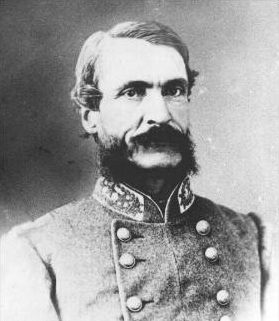
Historical · U.S. House · Washington · At-Large
James Anderson
Former U.S. Representative · Washington At-Large · 1855–1857 · Democratic
James Anderson represented Washington's At-Large in the United States House of Representatives (1855–1857) for the Democratic party. The page below collects sourced biographical facts, term history, committee roles, and provenance for Anderson.
Bioguide ID: A000192
Key facts
- Full name
- James Anderson
- State
- Washington
- District
- At-Large
- Party
- Democratic
- House service
- 1855–1857
- First House term
- 1855
- Status
- Left office
- Current term ends
- —
- Born
- 1822
- Bioguide ID
- A000192
- Committee assignments
- —
- Dataset version
- 1.20260606
Biographical narrative
871 words · sourced from the Wikipedia REST extract
James Anderson was a U.S. Representative from the Washington Territory, serving as a member of the Democratic Party. His political career was marked by his tenure in the 34th Congress, which took place from 1855 to 1857. In addition to his role in Congress, Anderson had a diverse background that included being a physician, lawyer, and military officer. His life spanned significant historical events, including the American Civil War, during which he served as a general in the Confederate Army. Anderson's career was shaped by his early life in the South, his involvement in various military conflicts, and his political activities in both the Union and the Confederacy.
Early life and career
James Patton Anderson was born on February 16, 1822, near Winchester in Franklin County, Tennessee. He was the son of Colonel William P. Anderson and Margaret L. (Adair) Anderson. In 1831, his family relocated to Kentucky, where Anderson spent a significant portion of his childhood. By 1838, they moved again, this time to Mississippi. Anderson's early education included attendance at the medical school of Jefferson College in Canonsburg, Pennsylvania, beginning in 1840. However, due to a family financial crisis, he was unable to complete his studies and withdrew shortly before graduation in 1842. Following his return home, he began practicing medicine.
In addition to his medical career, Anderson pursued a legal education at Montrose Law School in Frankfort, Kentucky, and was admitted to the bar in 1843. He established a law practice in Hernando, located in DeSoto County, Mississippi. His involvement in the military began in 1846 when he joined the state's militia forces, achieving the rank of captain. Anderson's military service continued during the Mexican-American War, where he commanded the 2nd Battalion, Mississippi Rifles, and held the rank of lieutenant colonel by February 1848. He was mustered out of volunteer service later that year.
During the 1850 U.S. census, Anderson was living in the household of Nathan Bedford Forrest in DeSoto County, Mississippi. He had previously organized a company in which Forrest's brother, John N. Forrest, served during the Mexican War. Following his military service, Anderson transitioned into politics, serving in the Mississippi House of Representatives. It was during this time that he developed a friendship with Jefferson Davis, a fellow officer and future President of the Confederate States.
Anderson's political career took a significant turn when Davis, who became Secretary of War under President Franklin Pierce, appointed him as U.S. Marshal for the Washington Territory. This appointment led Anderson to relocate to Olympia, where he served in this capacity for several years. His political aspirations culminated in his election to the U.S. House of Representatives, where he represented the Washington Territory as a Democrat during the 34th Congress.
House tenure
James Anderson's congressional career began in 1855 when he was elected to the U.S. House of Representatives for the Washington Territory. His term lasted until 1857, during which he participated in the legislative processes of the time. As a representative, Anderson was involved in discussions and decisions that would shape the future of the territory and its integration into the Union. His tenure occurred during a period of significant national tension, as debates over slavery and statehood were becoming increasingly contentious.
After completing his term in the House, Anderson expressed concerns about the future of the Union, which was on the brink of civil war. Following his departure from Congress, he relocated back to the South, specifically to Florida, where he was invited by his aunt to manage her plantation. This move marked a significant shift in his life, as he transitioned from a political role in the Union to a more active engagement in the Southern states during a time of rising conflict.
Legislative focus and committees
During his time in the House of Representatives, James Anderson's legislative focus reflected the interests and concerns of the Washington Territory and the broader national context of the mid-19th century. While specific details regarding the bills he sponsored or the committees he served on are not available, it is known that his political activities were influenced by the prevailing issues of his time, particularly those related to the expansion of the United States and the contentious debates surrounding slavery.
Anderson's political career was deeply intertwined with the events leading up to the American Civil War. His connections with prominent figures such as Jefferson Davis and his subsequent involvement in the Florida Secession Convention illustrated his alignment with Southern interests. After leaving Congress, he became increasingly engaged in the military and political developments in the Confederacy, culminating in his service as a general during the Civil War.
In summary, James Anderson's life encompassed a range of roles, from a physician and lawyer to a politician and military officer. His tenure in the U.S. House of Representatives was a brief yet significant chapter in a life marked by the complexities of 19th-century American history. Following his congressional service, Anderson's actions and affiliations reflected the turbulent times in which he lived, ultimately leading him to a prominent role in the Confederate military during the Civil War. His legacy is one of a man who navigated the intersections of medicine, law, politics, and military service in a rapidly changing America.
Notable legislation
Sponsored and co-sponsored legislation for James Anderson is pending operator curation. The biographical narrative above carries the same provenance trail until per-bill rows are written.
Sources
- [1]https://en.wikipedia.org/wiki/James_Patton_AndersonWikipedia · retrieved 2026-06-06
Notable quotes
Sourced quotes for James Anderson are pending operator curation. Narrative-scope provenance remains attached below.
Sources
- [1]https://en.wikipedia.org/wiki/James_Patton_AndersonWikipedia · retrieved 2026-06-06
Key positions
Curated policy positions for James Anderson are pending operator review. The biographical narrative above carries the same provenance trail until per-topic positions are written.
Sources
- [1]https://en.wikipedia.org/wiki/James_Patton_AndersonWikipedia · retrieved 2026-06-06
Terms served
- 1855–1857U.S. House · Term 1 · Democratic
Sources & provenance
Every attributable claim above carries a per-section [N] marker that resolves to the corresponding URL below. Each entry records the upstream provider, the canonical URL, and the timestamp at which the source was retrieved by the ingest pipeline.
Key facts
- https://bioguide.congress.gov/search/bio/A000192bioguide · retrieved 2026-06-06
- https://www.govtrack.us/congress/members/400847govtrack · retrieved 2026-06-06
Biographical narrative
- https://en.wikipedia.org/wiki/James_Patton_Andersonwikipedia · retrieved 2026-06-06
Find your representative
Every U.S. state elects representatives by district. Browse Washington’s delegation, the full former-representative roster, or explore the role and term length.
Related on The Candidate
- Preceded by Columbia LancasterEarlier holder of the Washington At-Large House seat · Democratic.Open
- Succeeded by Isaac StevensLater holder of the Washington At-Large House seat · Democratic.Open
- Emerson De LacyFormer U.S. Representative · Washington District 1 · DemocraticOpen
- Homer JonesFormer U.S. Representative · Washington District 1 · RepublicanOpen
- Jay InsleeFormer U.S. Representative · Washington District 1 · DemocraticOpen
- Joel PritchardFormer U.S. Representative · Washington District 1 · RepublicanOpen