
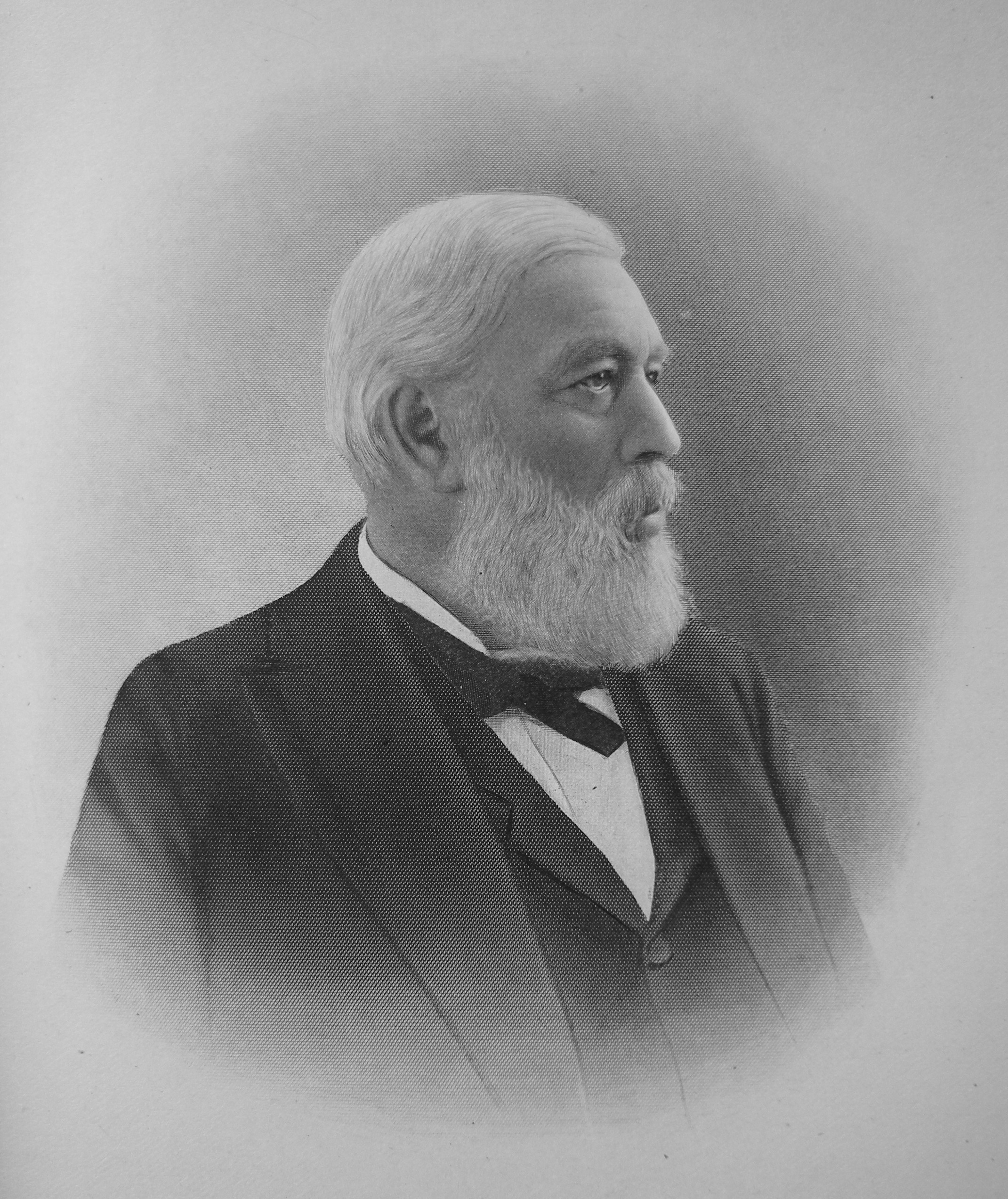
Historical · U.S. House · Washington · At-Large
Orange Jacobs
Former U.S. Representative · Washington At-Large · 1875–1879 · Republican
Orange Jacobs represented Washington's At-Large in the United States House of Representatives (1875–1879) for the Republican party. The page below collects sourced biographical facts, term history, committee roles, and provenance for Jacobs.
Bioguide ID: J000037
Key facts
- Full name
- Orange Jacobs
- State
- Washington
- District
- At-Large
- Party
- Republican
- House service
- 1875–1879
- First House term
- 1875
- Status
- Left office
- Current term ends
- —
- Born
- 1827
- Bioguide ID
- J000037
- Committee assignments
- —
- Dataset version
- 1.20260606
Biographical narrative
995 words · sourced from the Wikipedia REST extract
Orange Jacobs was an American lawyer, newspaper publisher, and politician who played a significant role in the early political landscape of the Washington Territory. He served as a U.S. Representative for Washington's at-large congressional district and held various influential positions, including chief justice of the Territory of Washington's supreme court and mayor of Seattle. His career spanned several decades, during which he contributed to the development of the region's legal and political frameworks.
Early life and career
Orange Jacobs was born on May 2, 1827, near Geneseo, New York. He was raised in a family that moved to the Michigan Territory in 1831, which exposed him to the evolving dynamics of American frontier life. Jacobs received his early education in the common schools of Michigan, where he developed a foundation for his future pursuits. He furthered his education at Albion College and the University of Michigan at Ann Arbor, institutions that provided him with a robust academic background.
After completing his studies, Jacobs pursued a career in law. He was admitted to the Michigan bar in 1851, marking the beginning of his legal practice in Sturgis, Michigan. His early career in Michigan laid the groundwork for his future endeavors in the legal field. In 1852, Jacobs relocated to the Territory of Oregon, where he settled in Jacksonville, Jackson County. In Jacksonville, he continued to practice law and also took on the role of editor and publisher of the Jacksonville Sentinel, a local newspaper, until 1859. This experience in journalism not only honed his writing skills but also allowed him to engage with the community on various issues.
Jacobs moved to the Territory of Washington sometime after 1860, where he continued his legal career and became increasingly involved in the region's governance. His legal expertise and commitment to public service led to his appointment as an associate justice of the supreme court of the Territory of Washington in 1869. He later ascended to the position of chief justice, serving from 1871 to 1875. This role was pivotal, as it allowed him to influence the legal landscape of the territory during a formative period in its history.
House tenure
Jacobs's political career took a significant turn when he was elected as a Republican to the U.S. House of Representatives. He served in the Forty-fourth and Forty-fifth Congresses from March 4, 1875, until March 3, 1879. His election to Congress came at a time when Washington was still a territory, and his role as a delegate was crucial in representing the interests of the region at the national level. During his tenure, Jacobs participated in legislative discussions that shaped the future of Washington, advocating for policies that would benefit the territory's development and integration into the Union.
As a member of Congress, Jacobs was involved in various legislative matters, although specific details regarding the bills he sponsored or voted on are not documented in the available records. His contributions during this period were part of a broader effort to secure statehood for Washington and to address the needs of its growing population. Jacobs's political alignment with the Republican Party positioned him within a party that was focused on issues such as economic development, infrastructure, and the rights of settlers in the West.
After completing his two terms in the House, Jacobs chose not to seek renomination in 1878. This decision marked the end of his congressional career, but it did not signify a retreat from public life. Instead, he returned to Seattle, where he resumed his legal practice, continuing to influence the community through his professional work and civic engagement.
Legislative focus and committees
During his time in the U.S. House of Representatives, Orange Jacobs's legislative focus was likely aligned with the interests of his constituents in the Washington Territory. While specific committee assignments or legislative initiatives are not detailed in the available records, it can be inferred that his background as a lawyer and chief justice would have informed his approach to legal and governance issues. As a representative of a territory seeking statehood, Jacobs would have been involved in discussions surrounding the rights of territories, land use, and the establishment of legal frameworks necessary for governance.
Following his congressional tenure, Jacobs continued to engage in public service in various capacities. In 1880, he served as the mayor of Seattle, a role that allowed him to further influence local governance and address the needs of the city's residents. His leadership during this period contributed to the development of Seattle as a burgeoning urban center in the Pacific Northwest.
Jacobs's commitment to public service extended beyond his role as mayor. He was a member of the Territorial Council from 1885 to 1887, where he participated in legislative activities that shaped the governance of the territory. Additionally, he served on the Seattle charter revision commission in 1889, contributing to the modernization of the city's governance structure. His legal expertise was further utilized when he was appointed as the corporation counsel for the city of Seattle in 1890, a position that involved providing legal advice and representation for the city government.
In 1896, Jacobs was appointed as a judge of the superior court of King County, a position he held until 1900. This role allowed him to continue his legal career while serving the community in a judicial capacity. His contributions to the legal system in Washington were recognized by the University of Washington, which awarded him its first honorary degree, a doctor of laws, in acknowledgment of his service and impact on the region.
Orange Jacobs passed away on May 21, 1914, in Seattle, where he was interred in Mount Pleasant Cemetery. His legacy as a lawyer, politician, and public servant remains a part of the historical narrative of Washington's development during a critical period in American history. Through his various roles, Jacobs played an integral part in shaping the legal and political landscape of the region, leaving a lasting impact on the community he served.
Notable legislation
Sponsored and co-sponsored legislation for Orange Jacobs is pending operator curation. The biographical narrative above carries the same provenance trail until per-bill rows are written.
Sources
- [1]https://en.wikipedia.org/wiki/Orange_JacobsWikipedia · retrieved 2026-06-06
Notable quotes
Sourced quotes for Orange Jacobs are pending operator curation. Narrative-scope provenance remains attached below.
Sources
- [1]https://en.wikipedia.org/wiki/Orange_JacobsWikipedia · retrieved 2026-06-06
Key positions
Curated policy positions for Orange Jacobs are pending operator review. The biographical narrative above carries the same provenance trail until per-topic positions are written.
Sources
- [1]https://en.wikipedia.org/wiki/Orange_JacobsWikipedia · retrieved 2026-06-06
Terms served
- 1875–1877U.S. House · Term 1 · Republican
- 1877–1879U.S. House · Term 2 · Republican
Sources & provenance
Every attributable claim above carries a per-section [N] marker that resolves to the corresponding URL below. Each entry records the upstream provider, the canonical URL, and the timestamp at which the source was retrieved by the ingest pipeline.
Key facts
- https://bioguide.congress.gov/search/bio/J000037bioguide · retrieved 2026-06-06
- https://www.govtrack.us/congress/members/405942govtrack · retrieved 2026-06-06
Biographical narrative
- https://en.wikipedia.org/wiki/Orange_Jacobswikipedia · retrieved 2026-06-06
Find your representative
Every U.S. state elects representatives by district. Browse Washington’s delegation, the full former-representative roster, or explore the role and term length.
Related on The Candidate
- Preceded by Obadiah McFaddenEarlier holder of the Washington At-Large House seat · Democratic.Open
- Succeeded by Thomas BrentsLater holder of the Washington At-Large House seat · Republican.Open
- Emerson De LacyFormer U.S. Representative · Washington District 1 · DemocraticOpen
- Homer JonesFormer U.S. Representative · Washington District 1 · RepublicanOpen
- Jay InsleeFormer U.S. Representative · Washington District 1 · DemocraticOpen
- Joel PritchardFormer U.S. Representative · Washington District 1 · RepublicanOpen