
Historical · U.S. House · Wisconsin · District 1
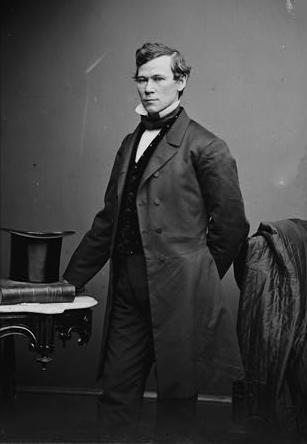
John Potter
Former U.S. Representative · Wisconsin District 1 · 1857–1863 · Republican
John Potter represented Wisconsin's District 1 in the United States House of Representatives (1857–1863) for the Republican party. The page below collects sourced biographical facts, term history, committee roles, and provenance for Potter.
Bioguide ID: P000465
Key facts
- Full name
- John Potter
- State
- Wisconsin
- District
- District 1
- Party
- Republican
- House service
- 1857–1863
- First House term
- 1857
- Status
- Left office
- Current term ends
- —
- Born
- 1817
- Bioguide ID
- P000465
- Committee assignments
- —
- Dataset version
- 1.20260606
Biographical narrative
1,100 words · sourced from the Wikipedia REST extract
John Potter was a prominent American lawyer and politician who served as a U.S. Representative for Wisconsin's 1st congressional district from 1857 to 1863. A member of the Republican Party, he was known for his involvement in significant legislative efforts during a tumultuous period in American history. Potter's political career was marked by his commitment to anti-slavery causes and his active participation in the early Republican Party. His legacy includes his role in the passage of the Homestead Act and his efforts to address corruption within state government.
Early life and career
John Fox Potter was born on May 11, 1817, in Augusta, Massachusetts, which is now part of Maine. He pursued his education at Phillips Exeter Academy in New Hampshire before returning to his father's law office to study law. At the age of 19, Potter embarked on a journey to explore the western territories of the United States. His travels took him to Chicago in 1836, and he subsequently explored the Michigan Territory, where his uncle had settled, and the Wisconsin Territory in 1837. After his explorations, Potter decided to settle in Wisconsin.
In the spring of 1838, Potter returned to Wisconsin and claimed land on the north shore of a lake that would later bear his name, Potter Lake. He became one of the first settlers in what is now East Troy, Wisconsin, where he constructed a log cabin that eventually evolved into a larger residence. This homestead would remain his primary home for the rest of his life.
Potter was admitted to practice law in the Wisconsin Territory in 1839, becoming the first lawyer in East Troy, a position he held until 1843. In addition to his legal career, he was appointed the first postmaster of East Troy, serving in that capacity for two years. During these formative years, he also became involved in the temperance movement, advocating for social reform in the burgeoning community.
In 1841, Potter was appointed by the Council of the Wisconsin Territory to serve as a transcribing clerk for the second session of the 3rd Wisconsin Territorial Assembly. The following year, he was appointed probate judge for Walworth County by Governor Henry Dodge, a role he maintained until 1847. Potter's early political involvement included attending the first formal town meeting in Troy in 1842, where he was one of the landowning men eligible to vote.
House tenure
Potter's political career advanced significantly when he became involved with the Whig Party during his early years in Wisconsin. He served as a delegate to the 1852 Whig National Convention. However, with the rise of anti-slavery sentiment, the Republican Party emerged in 1854, absorbing many members of the Whig Party, including Potter. He actively participated in the caucuses and conventions of the new Republican Party in Wisconsin, aligning himself with the abolitionist movement.
In the fall of 1855, Potter was elected to the state central committee of the Republican Party and subsequently won a seat in the Wisconsin State Assembly for the 9th Wisconsin Legislature. His tenure in the Assembly was marked by significant challenges, as Wisconsin was embroiled in corruption scandals during the mid-1850s. Potter was appointed to lead a special investigative committee to audit state offices and school land sales under the administration of Democratic Governor William A. Barstow. The investigation revealed extensive fraud and self-dealing, with losses to the state university fund estimated at over $3 million.
During the same legislative term, Potter played a crucial role in one of Wisconsin's most notorious scandals. He was instrumental in drafting the final version of a bill that authorized state land grants to the La Crosse and Milwaukee Railroad. This legislation would later be linked to a bribery scheme orchestrated by railroad executive Byron Kilbourn, implicating numerous legislators and state officials, including the governor.
Potter's congressional career began when he was elected to the U.S. House of Representatives in 1857. He served three consecutive terms, concluding his final term on March 3, 1863. During the 37th Congress, he held the position of chair of the House Committee on Public Lands, where he played a pivotal role in the passage of the Homestead Act of 1862. This landmark legislation aimed to encourage westward expansion by providing land to settlers at little or no cost.
In addition to his work on public lands, Potter chaired the House Select Committee on Loyalty of Federal Employees, which sought to identify and remove Confederate sympathizers from government positions. His efforts in this role led to notable tensions with Secretary of War Simon Cameron, reflecting the contentious political climate of the time.
Potter gained notoriety for an incident in 1860 when he was challenged to a duel by Virginia Representative Roger A. Pryor. Potter's insistence on using a bowie knife as his weapon earned him the nickname "Bowie Knife" Potter. Although the duel did not take place, the incident received widespread media coverage, enhancing his reputation as a staunch abolitionist.
Legislative focus and committees
Throughout his time in Congress, John Potter's legislative focus was heavily influenced by the pressing issues of his era, particularly the expansion of the United States and the fight against slavery. His role as chair of the House Committee on Public Lands was significant, as he was involved in promoting policies that facilitated the settlement of western territories. The Homestead Act, which he helped to pass, was a critical piece of legislation that aimed to provide opportunities for ordinary Americans to own land and build a future for themselves.
Potter's commitment to anti-slavery causes was evident in his work on the House Select Committee on Loyalty of Federal Employees. This committee was established during a time when the nation was deeply divided over issues related to the Civil War. Potter's efforts to root out Confederate sympathizers demonstrated his dedication to preserving the Union and ensuring loyalty within the federal government.
After leaving Congress in 1863, Potter continued to engage in public service. He served as the American consul general in Montreal from 1864 to 1866, further contributing to his career in public service and diplomacy. His legacy as a politician is marked by his involvement in significant legislative initiatives and his commitment to addressing corruption and promoting social reform.
John Potter's life and career reflect the complexities of American politics during the mid-19th century. His contributions to the early Republican Party, his legislative achievements, and his efforts to combat corruption have left a lasting impact on Wisconsin and the nation. He passed away on May 18, 1899, leaving behind a legacy that continues to be remembered in the context of American history.
Notable legislation
Sponsored and co-sponsored legislation for John Potter is pending operator curation. The biographical narrative above carries the same provenance trail until per-bill rows are written.
Sources
- [1]https://en.wikipedia.org/wiki/John_F._PotterWikipedia · retrieved 2026-06-06
Notable quotes
Sourced quotes for John Potter are pending operator curation. Narrative-scope provenance remains attached below.
Sources
- [1]https://en.wikipedia.org/wiki/John_F._PotterWikipedia · retrieved 2026-06-06
Key positions
Curated policy positions for John Potter are pending operator review. The biographical narrative above carries the same provenance trail until per-topic positions are written.
Sources
- [1]https://en.wikipedia.org/wiki/John_F._PotterWikipedia · retrieved 2026-06-06
Terms served
- 1857–1859U.S. House · Term 1 · Republican
- 1859–1861U.S. House · Term 2 · Republican
- 1861–1863U.S. House · Term 3 · Republican
Sources & provenance
Every attributable claim above carries a per-section [N] marker that resolves to the corresponding URL below. Each entry records the upstream provider, the canonical URL, and the timestamp at which the source was retrieved by the ingest pipeline.
Key facts
- https://bioguide.congress.gov/search/bio/P000465bioguide · retrieved 2026-06-06
- https://www.govtrack.us/congress/members/408852govtrack · retrieved 2026-06-06
Biographical narrative
- https://en.wikipedia.org/wiki/John_F._Potterwikipedia · retrieved 2026-06-06
Find your representative
Every U.S. state elects representatives by district. Browse Wisconsin’s delegation, the full former-representative roster, or explore the role and term length.
Related on The Candidate
- Preceded by Daniel Wells Jr.Earlier holder of the Wisconsin District 1 House seat · Democratic.Open
- Succeeded by James BrownLater holder of the Wisconsin District 1 House seat · Democratic.Open
- Charles WilliamsFormer U.S. Representative · Wisconsin District 1 · RepublicanOpen
- Clifford RandallFormer U.S. Representative · Wisconsin District 1 · RepublicanOpen
- Clinton BabbittFormer U.S. Representative · Wisconsin District 1 · DemocraticOpen
- Republican PartyFederal candidates and office holders on the Republican line.Open