
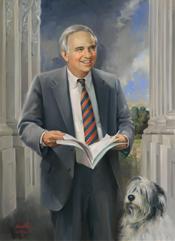
Historical · U.S. House · Wisconsin · District 1
Leslie Aspin
Former U.S. Representative · Wisconsin District 1 · 1971–1993 · Democratic
Leslie Aspin represented Wisconsin's District 1 in the United States House of Representatives (1971–1993) for the Democratic party. The page below collects sourced biographical facts, term history, committee roles, and provenance for Aspin.
Bioguide ID: A000224
Key facts
- Full name
- Leslie Aspin
- State
- Wisconsin
- District
- District 1
- Party
- Democratic
- House service
- 1971–1993
- First House term
- 1971
- Status
- Left office
- Current term ends
- —
- Born
- 1938
- Bioguide ID
- A000224
- Committee assignments
- —
- Dataset version
- 1.20260605
Biographical narrative
972 words · sourced from the Wikipedia REST extract
Les Aspin was an American politician and economist who served as a Democratic U.S. Representative for Wisconsin's 1st congressional district from 1971 until 1993. Known for his analytical approach to defense and foreign policy issues, Aspin played a significant role in various legislative matters during his tenure in Congress. After leaving the House, he was appointed as the 18th United States Secretary of Defense under President Bill Clinton, a position he held from 1993 until 1994. His career was marked by a blend of advocacy for military reform and a commitment to addressing complex social issues within the armed forces.
Early life and career
Les Aspin was born on July 21, 1938, in Milwaukee, Wisconsin. He completed his secondary education at Shorewood High School before pursuing higher education at Yale University. At Yale, Aspin graduated summa cum laude in 1960 with a Bachelor of Arts degree in history and was a member of the Zeta Psi fraternity. He furthered his studies at the University of Oxford, where he earned a Master of Philosophy in economics in 1962. Aspin continued his academic journey at the Massachusetts Institute of Technology (MIT), where he obtained a Doctor of Philosophy in economics in 1966.
Aspin's early professional experiences included a brief stint as a congressional staff member for U.S. Senator William Proxmire. He also served in the U.S. Army from 1966 to 1968, where he worked as a systems analyst in the Pentagon under Secretary of Defense Robert S. McNamara. This experience provided him with insights into military operations and defense policy. Following his military service, Aspin became involved in Wisconsin politics and taught economics at Marquette University.
In 1968, Aspin met Maureen Shea in Saigon during the Vietnam War. Shea, who was working for a research firm at the time, later moved to Wisconsin to assist Aspin in his unsuccessful campaign for the position of Wisconsin State Treasurer. The couple married in January 1969 but divorced in 1979 and had no children.
House tenure
Aspin's political career in the U.S. House of Representatives began when he ran as a peace candidate in 1970, opposing the Vietnam War. His initial campaign faced challenges, including a close Democratic primary against Doug La Follette, who had the party's endorsement. After a narrow loss in the first count, Aspin secured a recount with financial support from his campaign team and ultimately won the primary by a small margin. He then went on to defeat the incumbent Republican representative, Henry Schadeberg, in the general election.
Aspin was elected as a Democrat to the 92nd Congress and served a total of 12 consecutive terms until his resignation on January 20, 1993. Throughout his time in Congress, he developed a reputation as an intellectual and a defense expert. He took a middle-ground approach on various controversial issues, often balancing support for military initiatives with critiques of defense spending and military practices.
In the early years of his congressional career, Aspin was vocal about the shortcomings of the armed forces. He notably criticized the Air Force's plan to conduct experiments involving beagle puppies, which garnered significant public outrage. His advocacy for transparency in military operations was also evident when he sued the Department of Defense to release the Peers Commission investigation into the My Lai massacre.
By 1985, Aspin had risen to the position of chairman of the Armed Services Committee, where he became a prominent figure in defense policy discussions. His chairmanship was not without controversy, particularly due to his support for some of the Reagan administration's defense initiatives, including the MX missile program and aid to the Nicaraguan Contras. Despite facing opposition from some members of his party, Aspin managed to regain his committee chairmanship after a temporary removal in 1987.
Aspin's influence in Congress was further solidified when he supported the Bush administration's decision to use military force against Iraq in 1991, following Iraq's invasion of Kuwait. His predictions regarding the military's swift victory with minimal casualties contributed to his reputation as a knowledgeable defense authority.
Legislative focus and committees
Throughout his congressional career, Aspin's legislative focus was primarily on defense and military issues. His expertise in these areas was recognized by both colleagues and constituents. He was involved in shaping significant defense policies and was known for his analytical approach to complex military matters. Aspin's support for military initiatives was often tempered by his commitment to fiscal responsibility and accountability within the armed forces.
As chairman of the Armed Services Committee, Aspin played a crucial role in overseeing defense appropriations and military readiness. His leadership was characterized by a willingness to engage in bipartisan discussions and a focus on the implications of military actions on both national security and international relations. He advocated for a balanced approach to defense spending, often calling for reductions in military personnel and a reevaluation of the United States' military presence abroad.
In addition to his work on defense issues, Aspin was also concerned with social matters within the military, including the roles of women and LGBTQ+ individuals in the armed forces. His tenure as Secretary of Defense saw him addressing these complex social issues, reflecting a shift in military culture during the early 1990s.
After leaving Congress, Aspin continued to influence defense policy as Secretary of Defense under President Bill Clinton. His tenure in this role was marked by significant challenges, including military interventions in Somalia, Bosnia, and Haiti. Aspin's approach to defense policy was shaped by his experiences in Congress, where he had developed a nuanced understanding of military and foreign affairs.
Les Aspin's career in public service was characterized by his commitment to addressing both defense and social issues within the military framework. His contributions to U.S. defense policy and his role in shaping military reform continue to be recognized as part of his legacy in American politics.
Notable legislation
Sponsored and co-sponsored legislation for Leslie Aspin is pending operator curation. The biographical narrative above carries the same provenance trail until per-bill rows are written.
Sources
- [1]https://en.wikipedia.org/wiki/Les_AspinWikipedia · retrieved 2026-06-05
Notable quotes
Sourced quotes for Leslie Aspin are pending operator curation. Narrative-scope provenance remains attached below.
Sources
- [1]https://en.wikipedia.org/wiki/Les_AspinWikipedia · retrieved 2026-06-05
Key positions
Curated policy positions for Leslie Aspin are pending operator review. The biographical narrative above carries the same provenance trail until per-topic positions are written.
Sources
- [1]https://en.wikipedia.org/wiki/Les_AspinWikipedia · retrieved 2026-06-05
Terms served
- 1971–1973U.S. House · Term 1 · Democratic
- 1973–1975U.S. House · Term 2 · Democratic
- 1975–1977U.S. House · Term 3 · Democratic
- 1977–1979U.S. House · Term 4 · Democratic
- 1979–1981U.S. House · Term 5 · Democratic
- 1981–1983U.S. House · Term 6 · Democratic
- 1983–1985U.S. House · Term 7 · Democratic
- 1985–1987U.S. House · Term 8 · Democratic
- 1987–1989U.S. House · Term 9 · Democratic
- 1989–1991U.S. House · Term 10 · Democratic
- 1991–1993U.S. House · Term 11 · Democratic
- 1993–1993U.S. House · Term 12 · Democratic
Sources & provenance
Every attributable claim above carries a per-section [N] marker that resolves to the corresponding URL below. Each entry records the upstream provider, the canonical URL, and the timestamp at which the source was retrieved by the ingest pipeline.
Key facts
- https://bioguide.congress.gov/search/bio/A000224bioguide · retrieved 2026-06-05
- https://www.govtrack.us/congress/members/400967govtrack · retrieved 2026-06-05
Biographical narrative
- https://en.wikipedia.org/wiki/Les_Aspinwikipedia · retrieved 2026-06-05
Find your representative
Every U.S. state elects representatives by district. Browse Wisconsin’s delegation, the full former-representative roster, or explore the role and term length.
Related on The Candidate
- Preceded by Henry SchadebergEarlier holder of the Wisconsin District 1 House seat · Republican.Open
- Succeeded by Peter BarcaLater holder of the Wisconsin District 1 House seat · Democratic.Open
- Charles WilliamsFormer U.S. Representative · Wisconsin District 1 · RepublicanOpen
- Clifford RandallFormer U.S. Representative · Wisconsin District 1 · RepublicanOpen
- Clinton BabbittFormer U.S. Representative · Wisconsin District 1 · DemocraticOpen
- Daniel Wells Jr.Former U.S. Representative · Wisconsin District 1 · DemocraticOpen