
Historical · U.S. House · Wisconsin · District 2
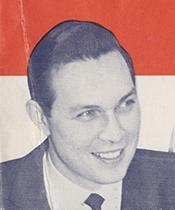
Robert Kastenmeier
Former U.S. Representative · Wisconsin District 2 · 1959–1991 · Democratic
Robert Kastenmeier represented Wisconsin's District 2 in the United States House of Representatives (1959–1991) for the Democratic party. The page below collects sourced biographical facts, term history, committee roles, and provenance for Kastenmeier.
Bioguide ID: K000020
Key facts
- Full name
- Robert Kastenmeier
- State
- Wisconsin
- District
- District 2
- Party
- Democratic
- House service
- 1959–1991
- First House term
- 1959
- Status
- Left office
- Current term ends
- —
- Born
- 1924
- Bioguide ID
- K000020
- Committee assignments
- —
- Dataset version
- 1.20260605
Biographical narrative
1,011 words · sourced from the Wikipedia REST extract
Robert W. Kastenmeier was an American lawyer and politician who served as a U.S. Representative for Wisconsin's 2nd congressional district from 1959 until 1991. A member of the Democratic Party, Kastenmeier was known for his opposition to the Vietnam War and his significant contributions to copyright law and privacy legislation during his lengthy congressional career. Over the course of 16 terms in the House of Representatives, he played a pivotal role in shaping key legislative measures that impacted American law and civil rights.
Early life and career
Robert William Kastenmeier was born on January 24, 1924, in Beaver Dam, Wisconsin. He received his early education in the local public school system and graduated from Beaver Dam High School. Following his high school education, Kastenmeier enlisted in the United States Army to serve during World War II. He was commissioned as a second lieutenant and was en route to the Pacific Theater when the war concluded in 1945. After the war, he was discharged on August 15, 1946, with the rank of first lieutenant. Kastenmeier chose to remain in the Philippines until 1948, where he worked as a branch office director for the United States Department of Defense, handling war claims.
Upon returning to the United States, Kastenmeier pursued higher education at Carleton College in Northfield, Minnesota. He later attended the University of Wisconsin Law School, where he earned his Bachelor of Laws degree in 1952. After being admitted to the bar, he began practicing law in Watertown, Wisconsin. Kastenmeier's legal background provided a strong foundation for his subsequent political career.
Kastenmeier's initial foray into public service began in 1955 when he was elected as justice of the peace for Jefferson and Dodge counties in Wisconsin, a position he held until 1959. His political ambitions grew, leading him to run for Congress in Wisconsin's 2nd congressional district in 1956. Although he lost that election to Republican incumbent Donald Tewes, Kastenmeier successfully challenged Tewes in a rematch in 1958, becoming the first Democrat to hold the seat in 28 years. This victory marked the beginning of a long and influential career in the U.S. House of Representatives.
House tenure
Kastenmeier's congressional career began with his election to the 86th United States Congress in 1959. He quickly established himself as a prominent member of the House, serving a total of 16 terms until his departure from Congress in 1991. Throughout his tenure, Kastenmeier was known for his progressive stance on various issues, particularly his skepticism toward military intervention abroad. He was an early opponent of the Vietnam War, publicly voicing his concerns about U.S. involvement in the conflict starting in 1965.
Kastenmeier's legislative contributions were significant, particularly in the realm of civil rights and judicial matters. He voted in favor of the Civil Rights Act of 1964, demonstrating his commitment to advancing civil rights in the United States. He served on the House Judiciary Committee for nearly his entire congressional career, where he played a crucial role in various high-profile legislative initiatives.
One of Kastenmeier's notable achievements was his involvement in the impeachment process against President Richard Nixon. He advocated for a thorough examination of each article of impeachment, emphasizing the importance of debate on each issue. His leadership on the Judiciary Committee also included a tenure as chairman of the Subcommittee on Courts, Intellectual Property, and the Administration of Justice from 1969 until he left office.
Kastenmeier was instrumental in the passage of the Copyright Act of 1976, which represented the first major overhaul of American copyright law since 1909. This legislation laid the groundwork for modern copyright protections in the United States, reflecting Kastenmeier's commitment to intellectual property rights.
In addition to his work on copyright law, Kastenmeier was a strong advocate for privacy legislation. Between 1973 and 1991, he sponsored or introduced numerous bills aimed at enhancing protections for communications privacy, financial privacy, and medical record confidentiality. His efforts culminated in the successful passage of the Electronic Communications Privacy Act of 1986, which expanded government restrictions on wiretapping to include mobile phones and electronic communications.
Kastenmeier's commitment to justice and accountability extended to his role as one of the impeachment managers in the case against Judge Harry E. Claiborne, who had been convicted of tax crimes. Kastenmeier helped frame the impeachment resolution, which ultimately led to Claiborne's conviction and removal from office by the Senate.
Despite his long and successful career, Kastenmeier faced an unexpected defeat in the 1990 election when he lost his re-election bid to Republican challenger Scott Klug, a former television anchor. This marked the end of his 32-year tenure in Congress.
Legislative focus and committees
Throughout his time in the House of Representatives, Kastenmeier's legislative focus was characterized by a commitment to civil rights, privacy, and intellectual property. His early opposition to the Vietnam War set the tone for his skepticism regarding military interventions, a stance that resonated with many constituents during a tumultuous period in American history.
As a member of the House Judiciary Committee, Kastenmeier's influence extended beyond his own district, as he contributed to significant national discussions on civil liberties and judicial integrity. His leadership in the impeachment process against President Nixon underscored his belief in the importance of accountability in government, while his work on the Copyright Act of 1976 established him as a key figure in the evolution of copyright law in the United States.
Kastenmeier's advocacy for privacy rights was particularly noteworthy, as he recognized the growing importance of protecting individuals' personal information in an increasingly digital world. His introduction of multiple bills aimed at enhancing privacy protections demonstrated his foresight and commitment to safeguarding citizens' rights.
After leaving Congress, Kastenmeier continued to engage in public service, briefly serving on a judicial reform commission before retiring. He spent his later years living in Sun Prairie, Wisconsin, and Arlington, Virginia, where he passed away on March 20, 2015. His legacy is honored by the Robert W. Kastenmeier United States Courthouse in Madison, Wisconsin, named in his honor in 1991, reflecting his significant contributions to American law and public service.
Notable legislation
Sponsored and co-sponsored legislation for Robert Kastenmeier is pending operator curation. The biographical narrative above carries the same provenance trail until per-bill rows are written.
Sources
- [1]https://en.wikipedia.org/wiki/Robert_KastenmeierWikipedia · retrieved 2026-06-05
Notable quotes
Sourced quotes for Robert Kastenmeier are pending operator curation. Narrative-scope provenance remains attached below.
Sources
- [1]https://en.wikipedia.org/wiki/Robert_KastenmeierWikipedia · retrieved 2026-06-05
Key positions
Curated policy positions for Robert Kastenmeier are pending operator review. The biographical narrative above carries the same provenance trail until per-topic positions are written.
Sources
- [1]https://en.wikipedia.org/wiki/Robert_KastenmeierWikipedia · retrieved 2026-06-05
Terms served
- 1959–1961U.S. House · Term 1 · Democratic
- 1961–1963U.S. House · Term 2 · Democratic
- 1963–1965U.S. House · Term 3 · Democratic
- 1965–1967U.S. House · Term 4 · Democratic
- 1967–1969U.S. House · Term 5 · Democratic
- 1969–1971U.S. House · Term 6 · Democratic
- 1971–1973U.S. House · Term 7 · Democratic
- 1973–1975U.S. House · Term 8 · Democratic
- 1975–1977U.S. House · Term 9 · Democratic
- 1977–1979U.S. House · Term 10 · Democratic
- 1979–1981U.S. House · Term 11 · Democratic
- 1981–1983U.S. House · Term 12 · Democratic
- 1983–1985U.S. House · Term 13 · Democratic
- 1985–1987U.S. House · Term 14 · Democratic
- 1987–1989U.S. House · Term 15 · Democratic
- 1989–1991U.S. House · Term 16 · Democratic
Sources & provenance
Every attributable claim above carries a per-section [N] marker that resolves to the corresponding URL below. Each entry records the upstream provider, the canonical URL, and the timestamp at which the source was retrieved by the ingest pipeline.
Key facts
- https://bioguide.congress.gov/search/bio/K000020bioguide · retrieved 2026-06-05
- https://www.govtrack.us/congress/members/406191govtrack · retrieved 2026-06-05
Biographical narrative
- https://en.wikipedia.org/wiki/Robert_Kastenmeierwikipedia · retrieved 2026-06-05
Find your representative
Every U.S. state elects representatives by district. Browse Wisconsin’s delegation, the full former-representative roster, or explore the role and term length.
Related on The Candidate
- Preceded by Donald TewesEarlier holder of the Wisconsin District 2 House seat · Republican.Open
- Succeeded by Scott KlugLater holder of the Wisconsin District 2 House seat · Republican.Open
- Charles WilliamsFormer U.S. Representative · Wisconsin District 1 · RepublicanOpen
- Clifford RandallFormer U.S. Representative · Wisconsin District 1 · RepublicanOpen
- Clinton BabbittFormer U.S. Representative · Wisconsin District 1 · DemocraticOpen
- Daniel Wells Jr.Former U.S. Representative · Wisconsin District 1 · DemocraticOpen