
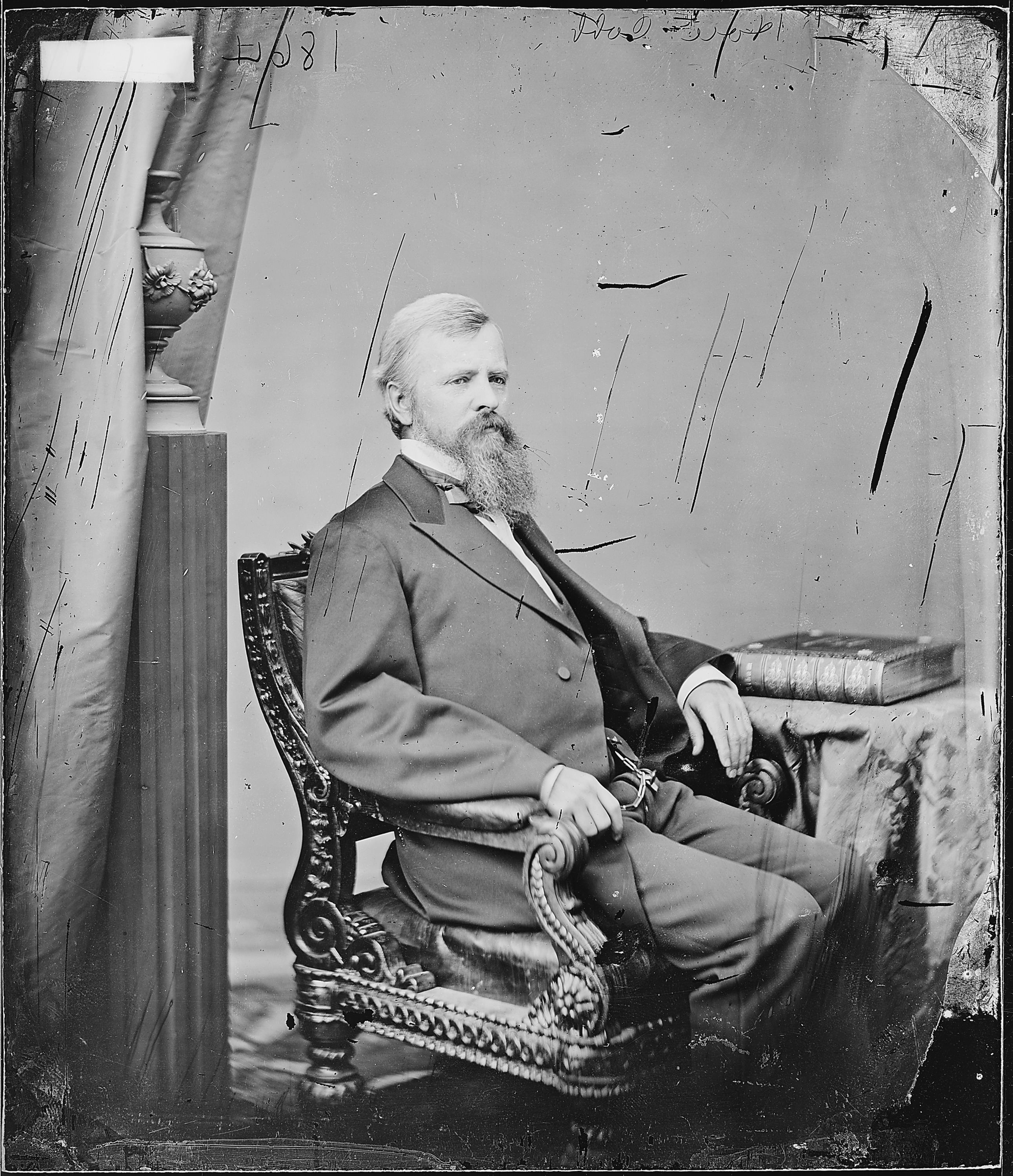
Historical · U.S. House · Wisconsin · District 3
Amasa Cobb
Former U.S. Representative · Wisconsin District 3 · 1863–1871 · Republican
Amasa Cobb represented Wisconsin's District 3 in the United States House of Representatives (1863–1871) for the Republican party. The page below collects sourced biographical facts, term history, committee roles, and provenance for Cobb.
Bioguide ID: C000543
Key facts
- Full name
- Amasa Cobb
- State
- Wisconsin
- District
- District 3
- Party
- Republican
- House service
- 1863–1871
- First House term
- 1863
- Status
- Left office
- Current term ends
- —
- Born
- 1823
- Bioguide ID
- C000543
- Committee assignments
- —
- Dataset version
- 1.20260606
Biographical narrative
824 words · sourced from the Wikipedia REST extract
Amasa Cobb was an American politician, lawyer, and military officer who served four terms as a U.S. Representative for Wisconsin's 3rd congressional district from 1863 to 1871. A member of the Republican Party, Cobb's career spanned various roles in public service, including significant contributions during the American Civil War and later judicial responsibilities in Nebraska. His life journey reflects a commitment to public service, law, and military duty, culminating in a notable legacy in both legislative and judicial capacities.
Early life and career
Amasa Cobb was born on September 27, 1823, in Crawford County, Illinois, near the town of Palestine. He was the son of Nancy and John Cobb. In 1842, Cobb moved to the Wisconsin Territory, where he initially engaged in lead mining. His early experiences in the region were formative, as they set the stage for his future endeavors in politics and law.
Cobb's military service began with his enlistment as a private in the Mexican-American War, which provided him with early exposure to military life and leadership. Following the war, he pursued a legal education, successfully passing the bar examination and establishing a law practice in Mineral Point, Wisconsin. His legal career was complemented by his involvement in local governance; he served as district attorney from 1850 to 1854 and was elected to the Wisconsin State Senate in 1855, holding office until 1856. During this period, he also took on the role of adjutant general of Wisconsin from 1855 to 1858, further solidifying his reputation as a public servant.
In 1860, Cobb was elected to the Wisconsin State Assembly, where he served as Speaker in 1861. His legislative experience during this time provided him with valuable insights into the workings of state government, which would later inform his actions at the federal level.
House tenure
Cobb's tenure in the U.S. House of Representatives began with his election to the 38th Congress in 1862, representing Wisconsin's 3rd congressional district. He was re-elected to the 39th, 40th, and 41st Congresses, serving until March 3, 1871. His congressional career coincided with a tumultuous period in American history, marked by the Civil War and its aftermath.
During his time in Congress, Cobb was known for his commitment to the Union cause. His military background, having served as Colonel of the 5th Wisconsin Infantry Regiment during the Civil War, provided him with a unique perspective on the issues facing the nation. He participated in several significant battles, including the Battle of Antietam and the Battle of Fredericksburg, where he demonstrated leadership and bravery.
Despite his responsibilities as a sitting Representative, Cobb continued to serve in the military. In September 1864, he was appointed as Colonel of the newly formed 43rd Wisconsin Infantry Regiment. His regiment played a crucial role in guarding supply lines and railroads in Tennessee, particularly during the Battle of Johnsonville, where they successfully repelled an attack by Confederate forces. Cobb's military service was recognized when he was nominated for the rank of brevet brigadier general for his distinguished service during the war, a nomination that was confirmed by the Senate in March 1866.
Cobb's congressional career was marked by his alignment with Republican ideals, particularly in support of the Union and post-war reconstruction efforts. His legislative contributions were shaped by the pressing needs of the nation during this period, although specific details regarding his legislative initiatives or the bills he supported are not extensively documented.
Legislative focus and committees
While specific details regarding Cobb's committee assignments and legislative focus during his time in the House are not provided, it can be inferred that his background in law and military service influenced his priorities as a legislator. Given the context of the Civil War and the subsequent Reconstruction era, it is likely that Cobb engaged with issues related to military affairs, veterans' rights, and the rebuilding of the nation.
Cobb's experience as a former state legislator and military officer would have equipped him with the skills necessary to navigate the complexities of federal legislation during a time of significant change. His commitment to public service was evident not only in his military career but also in his legislative actions, as he sought to represent the interests of his constituents in Wisconsin.
After concluding his service in the House, Cobb transitioned to a legal career in Lincoln, Nebraska, where he continued to influence public life as mayor and later as an associate justice of the Nebraska Supreme Court. His judicial career further exemplified his dedication to law and governance, culminating in his role as chief justice from 1888 to 1892.
Amasa Cobb passed away on July 5, 1905, in Los Angeles, California. His contributions to American public life, both as a military officer and a legislator, left a lasting impact on the communities he served. He was laid to rest in Wyuka Cemetery in Lincoln, Nebraska, marking the end of a life dedicated to public service, law, and the principles of democracy.
Notable legislation
Sponsored and co-sponsored legislation for Amasa Cobb is pending operator curation. The biographical narrative above carries the same provenance trail until per-bill rows are written.
Sources
- [1]https://en.wikipedia.org/wiki/Amasa_CobbWikipedia · retrieved 2026-06-06
Notable quotes
Sourced quotes for Amasa Cobb are pending operator curation. Narrative-scope provenance remains attached below.
Sources
- [1]https://en.wikipedia.org/wiki/Amasa_CobbWikipedia · retrieved 2026-06-06
Key positions
Curated policy positions for Amasa Cobb are pending operator review. The biographical narrative above carries the same provenance trail until per-topic positions are written.
Sources
- [1]https://en.wikipedia.org/wiki/Amasa_CobbWikipedia · retrieved 2026-06-06
Terms served
- 1863–1865U.S. House · Term 1 · Republican
- 1865–1867U.S. House · Term 2 · Republican
- 1867–1869U.S. House · Term 3 · Republican
- 1869–1871U.S. House · Term 4 · Republican
Sources & provenance
Every attributable claim above carries a per-section [N] marker that resolves to the corresponding URL below. Each entry records the upstream provider, the canonical URL, and the timestamp at which the source was retrieved by the ingest pipeline.
Key facts
- https://bioguide.congress.gov/search/bio/C000543bioguide · retrieved 2026-06-06
- https://www.govtrack.us/congress/members/402676govtrack · retrieved 2026-06-06
Biographical narrative
- https://en.wikipedia.org/wiki/Amasa_Cobbwikipedia · retrieved 2026-06-06
Find your representative
Every U.S. state elects representatives by district. Browse Wisconsin’s delegation, the full former-representative roster, or explore the role and term length.
Related on The Candidate
- Preceded by Andrew SloanEarlier holder of the Wisconsin District 3 House seat · Republican.Open
- Succeeded by Joel BarberLater holder of the Wisconsin District 3 House seat · Republican.Open
- Charles WilliamsFormer U.S. Representative · Wisconsin District 1 · RepublicanOpen
- Clifford RandallFormer U.S. Representative · Wisconsin District 1 · RepublicanOpen
- Clinton BabbittFormer U.S. Representative · Wisconsin District 1 · DemocraticOpen
- Daniel Wells Jr.Former U.S. Representative · Wisconsin District 1 · DemocraticOpen