
Historical · U.S. House · Wisconsin · District 4
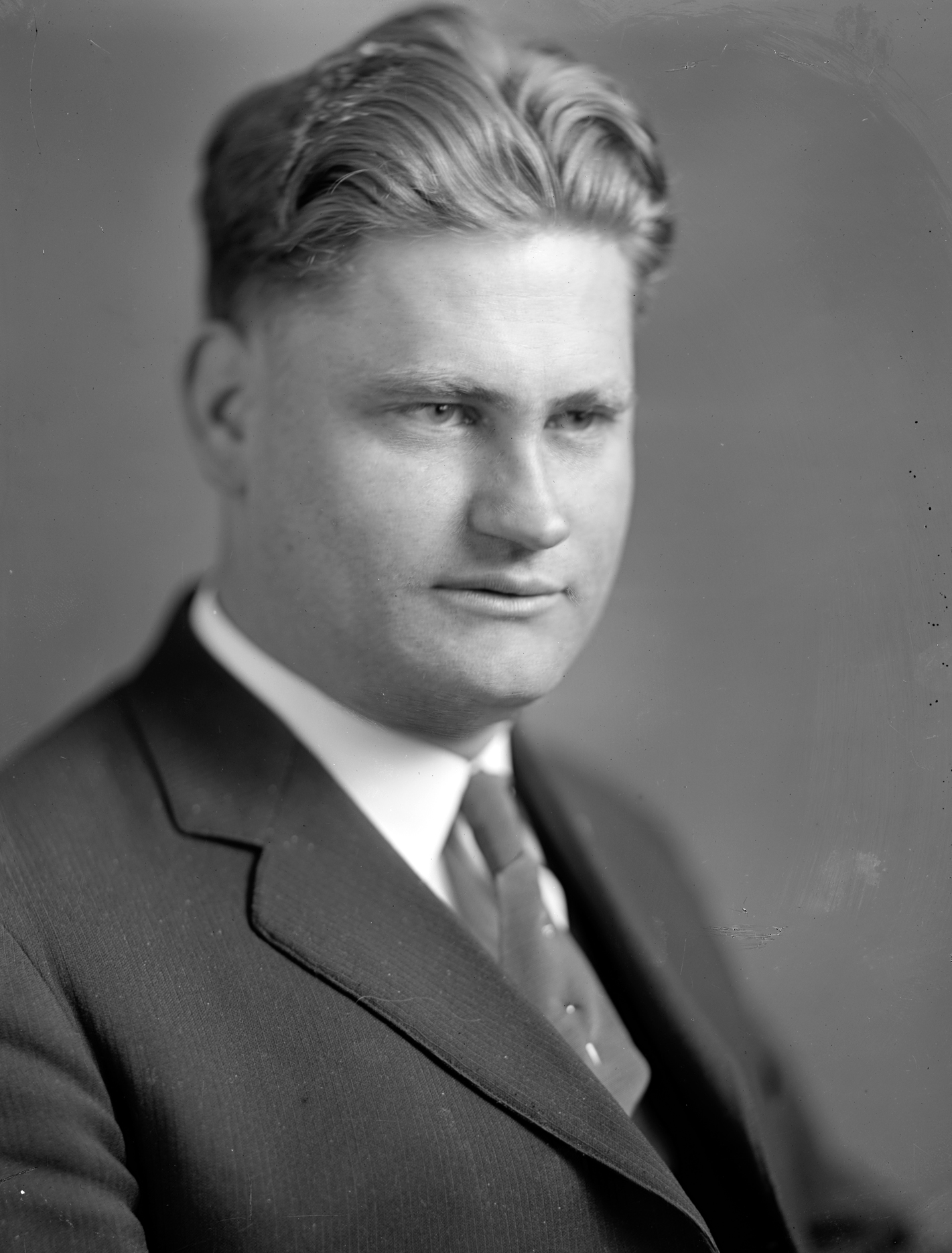
John Schafer
Former U.S. Representative · Wisconsin District 4 · 1923–1941 · Republican
John Schafer represented Wisconsin's District 4 in the United States House of Representatives (1923–1941) for the Republican party. The page below collects sourced biographical facts, term history, committee roles, and provenance for Schafer.
Bioguide ID: S000111
Key facts
- Full name
- John Schafer
- State
- Wisconsin
- District
- District 4
- Party
- Republican
- House service
- 1923–1941
- First House term
- 1923
- Status
- Left office
- Current term ends
- —
- Born
- 1893
- Bioguide ID
- S000111
- Committee assignments
- —
- Dataset version
- 1.20260605
Biographical narrative
1,057 words · sourced from the Wikipedia REST extract
John Schafer was an American politician and railroad operator who served as a U.S. Representative for Wisconsin's 4th congressional district. A member of the Republican Party, he held office for six terms, spanning from 1923 to 1933 and again from 1939 to 1941. Schafer's political career was marked by his initial alignment with the progressive faction of the Republican Party, a shift to more conservative stances later in his career, and a notable involvement in labor issues stemming from his background in the railroad industry.
Early life and career
John Charles Schafer was born on May 7, 1893, in Milwaukee, Wisconsin. He attended West Allis High School but left before completing his education to work as an office boy at the Allis-Chalmers Manufacturing Company. His early employment included work on the assembly line, which laid the groundwork for his later involvement in labor issues.
When the United States entered World War I, Schafer enlisted in the Army, joining the 13th Engineer Regiment. His service included a deployment to France, where he spent 22 months working on railway engineering projects. The regiment was initially attached to the French 4th Army and later to the French 2nd Army, participating in significant military operations such as the battles at Champagne, Verdun, Saint-Mihiel, and the Meuse–Argonne offensive.
After returning from military service, Schafer found work as a railroad fireman and engineman for the Chicago and Northwestern Railroad. His experiences in the railroad industry led him to become an active member of the Brotherhood of Locomotive Firemen and Enginemen, a labor union representing railroad workers. Additionally, he was involved in veterans' organizations, including the American Legion and the Veterans of Foreign Wars (VFW), where he served as vice commander of the Wisconsin department in the early 1920s.
Schafer's political career began in 1920 when he was elected to the Wisconsin State Assembly as a Republican, representing Milwaukee County's 16th Assembly district. He won the election against a socialist opponent by a significant margin. During his term in the Assembly, he gained attention for his progressive views, notably advocating for a resolution that called for Congress to impose a form of conscription on the wealthy to help pay off the national debts incurred during World War I. This proposal garnered support from both progressive and farm-labor Republicans, reflecting Schafer's early alignment with the progressive wing of the party.
House tenure
In 1922, Schafer chose not to seek re-election to the Assembly and instead ran for the U.S. House of Representatives in Wisconsin's 4th congressional district, following the retirement of incumbent John C. Kleczka. At that time, the district encompassed the southern half of Milwaukee County, including parts of the city of Milwaukee and the towns of Wauwatosa.
Schafer entered a competitive Republican primary, positioning himself as a progressive ally of U.S. Senator Robert M. La Follette. The primary featured several candidates, but three withdrew to consolidate support behind John L. Grunwald, a staffer for the outgoing representative. Despite efforts to block his nomination, Schafer narrowly won the primary with approximately 37% of the vote. In the general election, he faced socialist candidate Edmund T. Melms and won by a narrow margin of just 631 votes, attributing his victory to strong backing from organized labor.
Schafer was noted for his distinctive appearance, often described in the media as resembling a railroad worker, which included a cap and a robust physical presence. He was one of the youngest representatives from Wisconsin at the time, being just 29 years old when he took office.
During his first term, Schafer supported La Follette's bid for the Republican presidential nomination in 1924, which ultimately was unsuccessful. Despite his progressive affiliations, he ran for re-election as a Republican and faced another contested primary. He won this primary with a comfortable margin, securing 57% of the vote against state senator George Czerwinski and James D. Reilly. In the general election, he again triumphed, defeating Socialist Leo Krzycki and Democrat Thomas H. Dorr by a significant margin.
However, Schafer's standing within the Republican caucus diminished due to his support for La Follette. He was one of eleven Republicans targeted for expulsion from the caucus by Speaker Nicholas Longworth, but the proposal faced division within the caucus, and Schafer remained defiant, indicating he did not intend to return to the caucus.
Schafer continued to serve in Congress, winning re-election in subsequent terms. His political alignment shifted over time, moving away from the progressive faction and increasingly aligning with more conservative elements within the party. His later years in Congress were characterized by a growing focus on anti-communism and a controversial defense of the German American Bund, a pro-Nazi organization in the United States, during the lead-up to World War II.
Legislative focus and committees
Throughout his congressional career, Schafer's legislative focus evolved, reflecting both his personal beliefs and the shifting political landscape of the time. Initially, he was associated with progressive causes, advocating for labor rights and social equity, which resonated with his background in the railroad industry and his experiences as a veteran. His early proposals, such as the conscription of the wealthy to address post-war debts, showcased his commitment to addressing economic disparities.
As his career progressed, Schafer's alignment with the Republican Party shifted. He became more aligned with the stalwart faction of the party, particularly after the death of La Follette. This transition marked a departure from his earlier progressive ideals, as he increasingly embraced conservative policies and rhetoric. His later years in Congress were marked by a strong anti-communist stance, reflecting the broader national sentiment during the late 1930s and early 1940s.
Schafer's involvement in various committees during his tenure allowed him to influence legislation on a range of issues. However, specific details regarding the committees he served on or the bills he sponsored are not extensively documented. His legislative actions, particularly in the context of labor rights and anti-communism, contributed to his reputation as a complex figure within the Republican Party.
Schafer's congressional career concluded with his last term ending on January 3, 1941. After leaving office, he remained active in various capacities, but specific details about his post-congressional activities are limited. He passed away on June 9, 1962, leaving behind a legacy marked by his unique journey from a progressive labor advocate to a conservative politician during a tumultuous period in American history.
Notable legislation
Sponsored and co-sponsored legislation for John Schafer is pending operator curation. The biographical narrative above carries the same provenance trail until per-bill rows are written.
Sources
- [1]https://en.wikipedia.org/wiki/John_C._SchaferWikipedia · retrieved 2026-06-05
Notable quotes
Sourced quotes for John Schafer are pending operator curation. Narrative-scope provenance remains attached below.
Sources
- [1]https://en.wikipedia.org/wiki/John_C._SchaferWikipedia · retrieved 2026-06-05
Key positions
Curated policy positions for John Schafer are pending operator review. The biographical narrative above carries the same provenance trail until per-topic positions are written.
Sources
- [1]https://en.wikipedia.org/wiki/John_C._SchaferWikipedia · retrieved 2026-06-05
Terms served
- 1923–1925U.S. House · Term 1 · Republican
- 1925–1927U.S. House · Term 2 · Republican
- 1927–1929U.S. House · Term 3 · Republican
- 1929–1931U.S. House · Term 4 · Republican
- 1931–1933U.S. House · Term 5 · Republican
- 1939–1941U.S. House · Term 6 · Republican
Sources & provenance
Every attributable claim above carries a per-section [N] marker that resolves to the corresponding URL below. Each entry records the upstream provider, the canonical URL, and the timestamp at which the source was retrieved by the ingest pipeline.
Key facts
- https://bioguide.congress.gov/search/bio/S000111bioguide · retrieved 2026-06-05
- https://www.govtrack.us/congress/members/409620govtrack · retrieved 2026-06-05
Biographical narrative
- https://en.wikipedia.org/wiki/John_C._Schaferwikipedia · retrieved 2026-06-05
Find your representative
Every U.S. state elects representatives by district. Browse Wisconsin’s delegation, the full former-representative roster, or explore the role and term length.
Related on The Candidate
- Preceded by John KleczkaEarlier holder of the Wisconsin District 4 House seat · Republican.Open
- Succeeded by Thaddeus WasielewskiLater holder of the Wisconsin District 4 House seat · Democratic.Open
- Charles WilliamsFormer U.S. Representative · Wisconsin District 1 · RepublicanOpen
- Clifford RandallFormer U.S. Representative · Wisconsin District 1 · RepublicanOpen
- Clinton BabbittFormer U.S. Representative · Wisconsin District 1 · DemocraticOpen
- Daniel Wells Jr.Former U.S. Representative · Wisconsin District 1 · DemocraticOpen