
Historical · U.S. House · Wisconsin · District 4
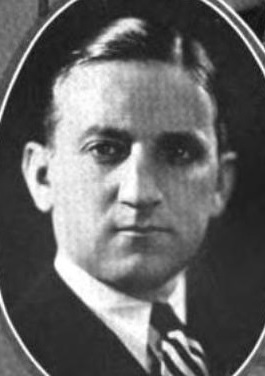
Raymond Cannon
Former U.S. Representative · Wisconsin District 4 · 1933–1939 · Democratic
Raymond Cannon represented Wisconsin's District 4 in the United States House of Representatives (1933–1939) for the Democratic party. The page below collects sourced biographical facts, term history, committee roles, and provenance for Cannon.
Bioguide ID: C000124
Key facts
- Full name
- Raymond Cannon
- State
- Wisconsin
- District
- District 4
- Party
- Democratic
- House service
- 1933–1939
- First House term
- 1933
- Status
- Left office
- Current term ends
- —
- Born
- 1894
- Bioguide ID
- C000124
- Committee assignments
- —
- Dataset version
- 1.20260605
Biographical narrative
865 words · sourced from the Wikipedia REST extract
Raymond Joseph Cannon was a Democratic politician, attorney, and former baseball player who served as a U.S. Representative for Wisconsin's 4th congressional district from 1933 until 1939. His tenure in Congress was marked by significant political activity, including efforts to introduce government oversight of film censorship and involvement in labor issues within the sports industry. Cannon's early life experiences and diverse career shaped his approach to politics and legislation.
Early life and career
Raymond Cannon was born on August 26, 1894, in Ironwood, Michigan. He faced considerable adversity early in life, as he lost both of his parents when he was just six months old. Following this tragic event, he spent a brief period in an orphanage before being taken in by relatives who raised him. This challenging upbringing influenced his later pursuits and ambitions.
Cannon's early career included a notable stint as a semi-professional baseball player, where he played primarily as a pitcher from 1908 to 1922. His baseball career included a memorable appearance against the Philadelphia Phillies during a spring training exhibition game in March 1918, where he faced significant challenges on the mound. In addition to his athletic endeavors, Cannon also worked as a teacher in Minocqua, Wisconsin, during 1910 and 1911, showcasing his diverse interests and skills.
Cannon pursued higher education at Marquette University Law School in Milwaukee, where he earned his law degree and was admitted to the bar in 1914. He became recognized as an early sports attorney, representing notable clients, including heavyweight boxing champion Jack Dempsey. His legal career took a significant turn following the infamous Black Sox Scandal, where he represented several players who were blacklisted from baseball, including Happy Felsch, Buck Weaver, Shoeless Joe Jackson, and Swede Risberg. Cannon's involvement in this high-profile case brought him both recognition and controversy, particularly as he helped Felsch sue for back pay and damages.
In 1922, Cannon played a role in the formation of the National Baseball Players Association of the United States, an early attempt to unionize professional baseball players. However, the organization was short-lived, and its collapse was believed to be partly due to Cannon's association with the Black Sox players. His legal troubles continued when his law license was suspended in 1929, preventing him from practicing until it was reinstated in 1931.
House tenure
Cannon's political career began in earnest when he became the Democratic nominee for Wisconsin's 4th congressional district in the 1932 elections. He successfully unseated the Republican incumbent, John C. Schafer, with a significant margin, receiving 61,038 votes compared to Schafer's 33,609 and Socialist candidate Walter Polakowski's 24,377 votes. This victory marked the beginning of Cannon's three terms in the U.S. House of Representatives, where he served from 1933 until 1939.
During his time in Congress, Cannon was re-elected in 1934, securing a plurality of 38.56% in a competitive five-way race that included Schafer, a Socialist, a Progressive, and an independent Communist candidate. He continued to build on his political support and was re-elected again in 1936, achieving a plurality of 47.25% against his opponents, which included Progressive Paul Gauer and Schafer.
Cannon's legislative career faced challenges, particularly in the 1938 Democratic primary, where he was unseated by Thad F. Wasielewski. Despite this setback, Cannon chose to run as an independent candidate in the general election. However, he was unable to regain his seat, receiving only a small fraction of the vote compared to Schafer and Wasielewski. This defeat marked the end of his congressional tenure, although he continued to be active in politics, running unsuccessfully for the Democratic gubernatorial nomination in both 1940 and 1942.
Legislative focus and committees
Throughout his time in Congress, Cannon was involved in various legislative initiatives and issues that reflected his interests and background. One notable area of focus was film censorship. In 1934, following a call from Cardinal Dougherty of Philadelphia for a boycott of films, Cannon announced plans to introduce a bill aimed at establishing government oversight of film censorship. This initiative garnered support from both Democratic and Republican colleagues, highlighting his ability to work across party lines on issues of public concern.
Cannon's background in sports law and his experiences as a former athlete also informed his legislative priorities. His involvement with labor issues, particularly in relation to professional sports, underscored his commitment to advocating for the rights and welfare of athletes. His legal expertise and connections within the sports community positioned him as a knowledgeable figure in discussions surrounding labor relations in athletics.
Despite the challenges he faced during his political career, including electoral defeats and controversies, Cannon's contributions to the legislative process during his time in office were significant. His efforts to address issues such as film censorship and labor rights reflected a broader commitment to public service and advocacy for the interests of his constituents.
Cannon's life and career were marked by a blend of personal challenges, professional achievements, and a dedication to public service. After leaving Congress, he continued to engage in various pursuits until his death on November 25, 1951, in Milwaukee, Wisconsin. He was laid to rest at Holy Cross Cemetery & Mausoleum in Milwaukee, leaving behind a legacy that intertwined sports, law, and politics.
Notable legislation
Sponsored and co-sponsored legislation for Raymond Cannon is pending operator curation. The biographical narrative above carries the same provenance trail until per-bill rows are written.
Sources
- [1]https://en.wikipedia.org/wiki/Raymond_J._CannonWikipedia · retrieved 2026-06-05
Notable quotes
Sourced quotes for Raymond Cannon are pending operator curation. Narrative-scope provenance remains attached below.
Sources
- [1]https://en.wikipedia.org/wiki/Raymond_J._CannonWikipedia · retrieved 2026-06-05
Key positions
Curated policy positions for Raymond Cannon are pending operator review. The biographical narrative above carries the same provenance trail until per-topic positions are written.
Sources
- [1]https://en.wikipedia.org/wiki/Raymond_J._CannonWikipedia · retrieved 2026-06-05
Terms served
- 1933–1935U.S. House · Term 1 · Democratic
- 1935–1937U.S. House · Term 2 · Democratic
- 1937–1939U.S. House · Term 3 · Democratic
Sources & provenance
Every attributable claim above carries a per-section [N] marker that resolves to the corresponding URL below. Each entry records the upstream provider, the canonical URL, and the timestamp at which the source was retrieved by the ingest pipeline.
Key facts
- https://bioguide.congress.gov/search/bio/C000124bioguide · retrieved 2026-06-05
- https://www.govtrack.us/congress/members/402275govtrack · retrieved 2026-06-05
Biographical narrative
- https://en.wikipedia.org/wiki/Raymond_J._Cannonwikipedia · retrieved 2026-06-05
Find your representative
Every U.S. state elects representatives by district. Browse Wisconsin’s delegation, the full former-representative roster, or explore the role and term length.
Related on The Candidate
- Preceded by John KleczkaEarlier holder of the Wisconsin District 4 House seat · Republican.Open
- Succeeded by Thaddeus WasielewskiLater holder of the Wisconsin District 4 House seat · Democratic.Open
- Charles WilliamsFormer U.S. Representative · Wisconsin District 1 · RepublicanOpen
- Clifford RandallFormer U.S. Representative · Wisconsin District 1 · RepublicanOpen
- Clinton BabbittFormer U.S. Representative · Wisconsin District 1 · DemocraticOpen
- Daniel Wells Jr.Former U.S. Representative · Wisconsin District 1 · DemocraticOpen