
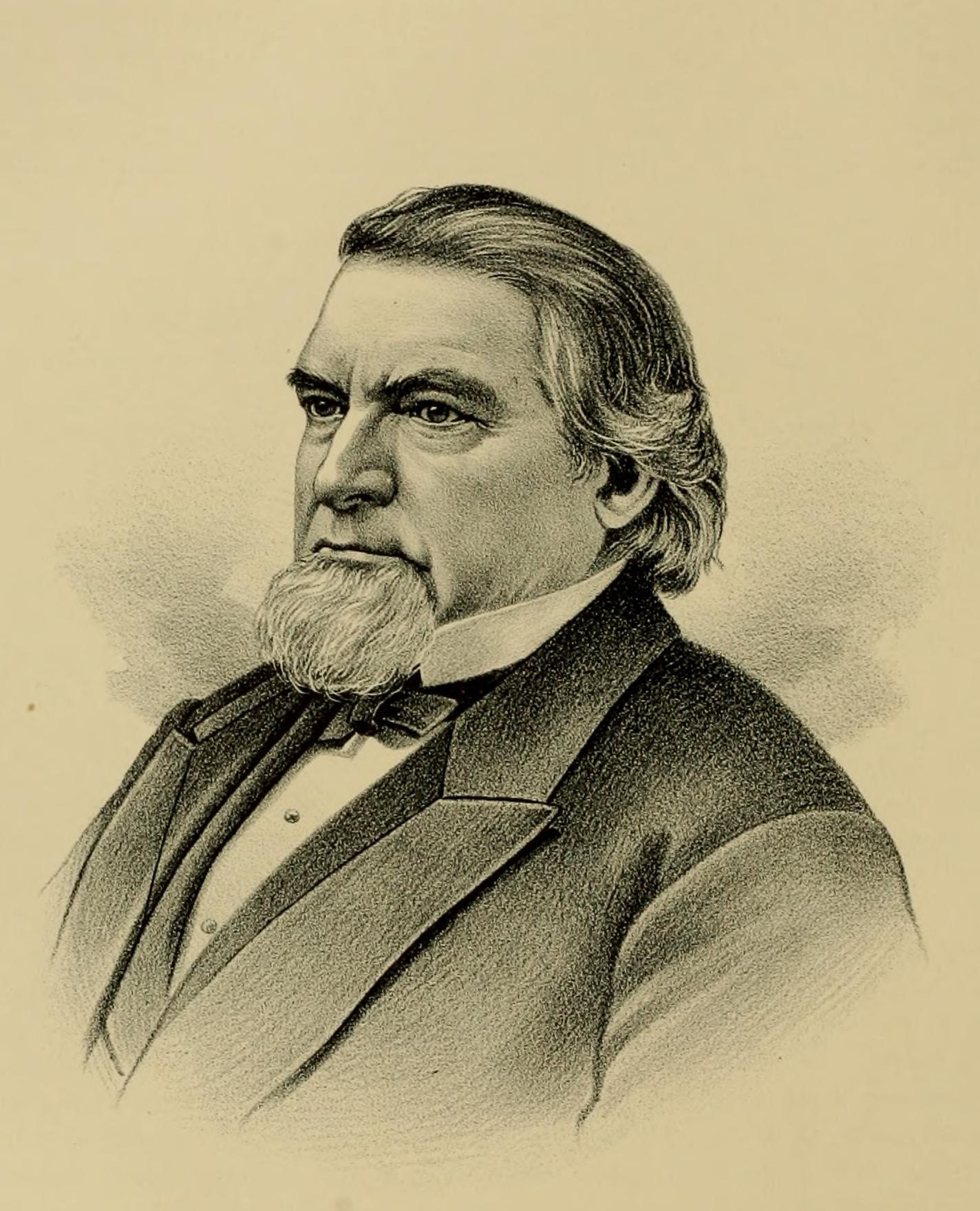
Historical · U.S. House · Wisconsin · District 6
Cadwallader Washburn
Former U.S. Representative · Wisconsin District 6 · 1855–1871 · Republican
Cadwallader Washburn represented Wisconsin's District 6 in the United States House of Representatives (1855–1871) for the Republican party. The page below collects sourced biographical facts, term history, committee roles, and provenance for Washburn.
Bioguide ID: W000170
Key facts
- Full name
- Cadwallader Washburn
- State
- Wisconsin
- District
- District 6
- Party
- Republican
- House service
- 1855–1871
- First House term
- 1855
- Status
- Left office
- Current term ends
- —
- Born
- 1818
- Bioguide ID
- W000170
- Committee assignments
- —
- Dataset version
- 1.20260606
Biographical narrative
895 words · sourced from the Wikipedia REST extract
Cadwallader Washburn was a prominent American businessman and politician, affiliated with the Republican Party. He served as a U.S. Representative for Wisconsin's 6th congressional district and was also the 11th governor of Wisconsin. Washburn's political career spanned over a decade in the U.S. House of Representatives, where he was known for his opposition to the expansion of slavery and his involvement in significant military operations during the American Civil War. His contributions to both business and politics have left a lasting legacy in Wisconsin and beyond.
Early life and career
Cadwallader Colden Washburn was born on April 22, 1818, in Livermore, Massachusetts, which is now part of Maine. He was the son of Martha (née Benjamin) and Israel Washburn Sr., and he was one of seven brothers, several of whom also became notable politicians. Among them were Israel Washburn Jr., who served as the 29th governor of Maine, and William D. Washburn, who became a United States senator from Minnesota. This family background provided a foundation for Washburn's future involvement in politics.
Washburn received his early education in Wiscasset, Maine, where he later took on the role of a teacher from 1838 to 1839. In 1839, he relocated to the Iowa Territory, settling in Davenport. There, he continued his teaching career while also working in a store and serving as a surveyor. Inspired by his brother Elihu, who had established a legal practice in Galena, Illinois, Washburn pursued a legal education. He was admitted to the Wisconsin bar in 1842 and subsequently moved to Mineral Point in the Wisconsin Territory, where he began his legal practice.
In 1844, Washburn formed a partnership with land agent Cyrus Woodman, which led to the establishment of several companies, including the Wisconsin Mining Company. Their most successful venture was in land acquisition, which laid the groundwork for Washburn's future business endeavors. In May 1855, they founded the Mineral Point Bank, although their partnership dissolved later that same year.
House tenure
Washburn's political career began in earnest when he ran for Congress as a Republican in 1854. He was elected to represent Wisconsin's 2nd congressional district and took office on March 4, 1855. Over the course of his political career, he served a total of five terms in the U.S. House of Representatives, concluding his last term on March 3, 1861. During his time in office, Washburn was an active member of the radical wing of the Republican Party, staunchly opposing the expansion of slavery into new territories.
Throughout the 34th, 35th, and 36th Congresses, Washburn was involved in significant legislative activities. He was part of the House during a contentious period marked by debates over slavery and sectional tensions. In his last term, he served as the chairman of the Committee on Private Land Claims, where he dealt with issues related to land ownership and rights, which were particularly relevant in the context of westward expansion.
In 1860, Washburn chose not to seek re-election, a decision that coincided with the growing national crisis that would soon erupt into the Civil War. Following his departure from Congress, he returned to Wisconsin, where he became involved in efforts to prevent the impending conflict. However, as tensions escalated, he enlisted in the Union Army, where he would serve with distinction.
Legislative focus and committees
During his tenure in the U.S. House of Representatives, Cadwallader Washburn was known for his commitment to the principles of the Republican Party, particularly its opposition to slavery. His legislative focus reflected the political climate of the time, as he engaged in debates and discussions that shaped the future of the nation. Washburn's involvement in the House was marked by his participation in critical votes and his alignment with fellow Republicans who sought to limit the spread of slavery.
Washburn's leadership capabilities were recognized when he served as chairman of the Committee on Private Land Claims during his final term in Congress. In this role, he was responsible for addressing issues related to land ownership, which were particularly significant in the context of the rapidly expanding United States. His work on this committee contributed to the broader discussions surrounding land rights and claims, which were essential to the development of the western territories.
After leaving Congress, Washburn's military career further defined his legacy. He rose through the ranks of the Union Army during the Civil War, ultimately achieving the rank of major general. His military service included commanding troops in significant campaigns, such as the siege of Vicksburg, where he played a crucial role in the Union's efforts to secure victory in the western theater of the war.
Following his military service, Washburn returned to public life and continued to influence Wisconsin's political landscape. He was elected as the 11th governor of Wisconsin, serving from 1872 to 1874. His tenure as governor allowed him to further implement policies aligned with his Republican ideals and address the needs of his constituents.
In summary, Cadwallader Washburn's career spanned various domains, including law, business, military service, and politics. His contributions to the U.S. House of Representatives and his subsequent role as governor of Wisconsin reflect a commitment to public service and the principles of the Republican Party during a tumultuous period in American history. His legacy continues to be felt in Wisconsin and serves as a testament to the impact of his work in both business and politics.
Notable legislation
Sponsored and co-sponsored legislation for Cadwallader Washburn is pending operator curation. The biographical narrative above carries the same provenance trail until per-bill rows are written.
Sources
- [1]https://en.wikipedia.org/wiki/Cadwallader_C._WashburnWikipedia · retrieved 2026-06-06
Notable quotes
Sourced quotes for Cadwallader Washburn are pending operator curation. Narrative-scope provenance remains attached below.
Sources
- [1]https://en.wikipedia.org/wiki/Cadwallader_C._WashburnWikipedia · retrieved 2026-06-06
Key positions
Curated policy positions for Cadwallader Washburn are pending operator review. The biographical narrative above carries the same provenance trail until per-topic positions are written.
Sources
- [1]https://en.wikipedia.org/wiki/Cadwallader_C._WashburnWikipedia · retrieved 2026-06-06
Terms served
- 1855–1857U.S. House · Term 1 · Ind. Republican-Democrat
- 1857–1859U.S. House · Term 2 · Republican
- 1859–1861U.S. House · Term 3 · Republican
- 1867–1869U.S. House · Term 4 · Republican
- 1869–1871U.S. House · Term 5 · Republican
Sources & provenance
Every attributable claim above carries a per-section [N] marker that resolves to the corresponding URL below. Each entry records the upstream provider, the canonical URL, and the timestamp at which the source was retrieved by the ingest pipeline.
Key facts
- https://bioguide.congress.gov/search/bio/W000170bioguide · retrieved 2026-06-06
- https://www.govtrack.us/congress/members/411343govtrack · retrieved 2026-06-06
Biographical narrative
- https://en.wikipedia.org/wiki/Cadwallader_C._Washburnwikipedia · retrieved 2026-06-06
Find your representative
Every U.S. state elects representatives by district. Browse Wisconsin’s delegation, the full former-representative roster, or explore the role and term length.
Related on The Candidate
- Succeeded by Alanson KimballLater holder of the Wisconsin District 6 House seat · Republican.Open
- Charles WilliamsFormer U.S. Representative · Wisconsin District 1 · RepublicanOpen
- Clifford RandallFormer U.S. Representative · Wisconsin District 1 · RepublicanOpen
- Clinton BabbittFormer U.S. Representative · Wisconsin District 1 · DemocraticOpen
- Daniel Wells Jr.Former U.S. Representative · Wisconsin District 1 · DemocraticOpen
- Republican PartyFederal candidates and office holders on the Republican line.Open