
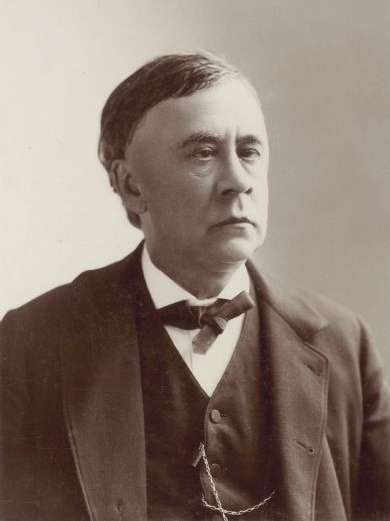
Historical · U.S. House · Wisconsin · District 6
Gabriel Bouck
Former U.S. Representative · Wisconsin District 6 · 1877–1881 · Democratic
Gabriel Bouck represented Wisconsin's District 6 in the United States House of Representatives (1877–1881) for the Democratic party. The page below collects sourced biographical facts, term history, committee roles, and provenance for Bouck.
Bioguide ID: B000658
Key facts
- Full name
- Gabriel Bouck
- State
- Wisconsin
- District
- District 6
- Party
- Democratic
- House service
- 1877–1881
- First House term
- 1877
- Status
- Left office
- Current term ends
- —
- Born
- 1828
- Bioguide ID
- B000658
- Committee assignments
- —
- Dataset version
- 1.20260606
Biographical narrative
926 words · sourced from the Wikipedia REST extract
Gabriel Bouck was an American lawyer and politician who served as a U.S. Representative for Wisconsin's 6th congressional district. A member of the Democratic Party, Bouck's political career included two terms in the U.S. House of Representatives, as well as serving as Wisconsin's Attorney General and Speaker of the Wisconsin State Assembly. His life also encompassed military service during the American Civil War, where he rose to the rank of colonel. Bouck's contributions to both law and politics in Wisconsin were significant during a transformative period in American history.
Early life and career
Gabriel Bouck was born on December 16, 1828, in Fultonham, Schoharie County, New York. He was the fourth of eight children in the Bouck family, which included siblings who pursued various paths in life. His father, William C. Bouck, served as the Governor of New York, while his uncle, Joseph Bouck, was a member of the U.S. House of Representatives. This familial background in politics likely influenced Gabriel's own political aspirations.
Bouck's early education took place at Schoharie Academy and The Albany Academy, institutions that prepared him for higher learning. He graduated from Union College in 1847, where he was recognized for his academic achievements, including membership in the Phi Beta Kappa honor society and the Kappa Alpha Society. Following his graduation, Bouck pursued a career in law, studying under Daniel S. Dickinson in Binghamton, New York. He moved to Milwaukee, Wisconsin, in 1848, where he gained admission to the bar and began practicing law. By 1849, he had relocated to Oshkosh, Wisconsin, where he continued his legal career.
In addition to his legal practice, Bouck's life was marked by his military service during the American Civil War. He played a significant role in organizing Company E of the 2nd Wisconsin Infantry Regiment, which was composed of volunteers from Oshkosh. Bouck was appointed as captain of this company, which became part of the renowned Iron Brigade in the Army of the Potomac. His leadership skills were recognized, and he was promoted to colonel of the 18th Wisconsin Infantry in April 1862, following the death of the previous commander at the Battle of Shiloh. Bouck led his regiment through various campaigns in the western theater of the war, serving under notable generals such as Ulysses S. Grant and William Tecumseh Sherman. He resigned from military service in January 1864 and returned to Oshkosh.
House tenure
Gabriel Bouck's political career began in earnest after his military service. He was an active member of the Democratic Party and was elected as Wisconsin's Attorney General, serving from 1858 to 1860. His involvement in state politics continued as he served two terms in the Wisconsin State Assembly, first in 1860 and later in 1874, culminating in his role as Speaker during his final year in the assembly. Bouck was also a delegate to the Democratic National Conventions in 1868 and 1872, further solidifying his position within the party.
Bouck's initial attempt to enter the U.S. Congress in 1874 was unsuccessful. However, he was elected to the House of Representatives in 1876, representing Wisconsin's 6th congressional district. In this election, he received a significant number of votes, defeating his Republican opponent. Bouck served in the 45th United States Congress and was subsequently reelected for a second term in the 46th Congress. His tenure in the House was marked by his commitment to the Democratic Party and his ambitions for higher office, particularly his desire to become Governor of Wisconsin, a position previously held by his father in New York.
Despite his efforts, Bouck faced challenges in his political career. He was defeated in his bid for reelection to the 47th Congress in 1880 by Republican candidate Richard Guenther. This loss marked the end of his congressional career, but Bouck continued to engage in legal practice upon leaving office.
Legislative focus and committees
During his time in the U.S. House of Representatives, Gabriel Bouck was involved in various legislative activities and committees, although specific details regarding his committee assignments and legislative initiatives are not extensively documented. His background as a lawyer and his experiences in the military likely informed his perspectives on issues relevant to his constituents and the nation at large.
Bouck's legislative focus may have reflected the interests and needs of his district, which included a mix of agricultural and industrial concerns typical of Wisconsin during that era. As a member of the Democratic Party, he would have aligned with the party's platform, which often emphasized issues such as labor rights, economic development, and social justice. His previous experience as Attorney General and Speaker of the Assembly would have equipped him with a strong understanding of legal and governance matters, which he could apply to his work in Congress.
After concluding his congressional service, Bouck returned to Oshkosh, where he resumed his law practice. He became the head of Bouck & Hilton Attorneys at Law and remained active in the legal community. His involvement in military organizations continued as well; he founded two Grand Army of the Republic posts and established the 2nd Company of the Wisconsin National Guard, serving as its captain.
Gabriel Bouck passed away on February 21, 1904, in Oshkosh, Wisconsin, after a period of declining health. His funeral was held at the Masonic Temple of Oshkosh Lodge No. 27, and he was laid to rest in the city. Bouck's life and career reflect the complexities of American political and military history during the 19th century, as well as the evolving role of lawyers and politicians in shaping public policy and governance.
Notable legislation
Sponsored and co-sponsored legislation for Gabriel Bouck is pending operator curation. The biographical narrative above carries the same provenance trail until per-bill rows are written.
Sources
- [1]https://en.wikipedia.org/wiki/Gabriel_BouckWikipedia · retrieved 2026-06-06
Notable quotes
Sourced quotes for Gabriel Bouck are pending operator curation. Narrative-scope provenance remains attached below.
Sources
- [1]https://en.wikipedia.org/wiki/Gabriel_BouckWikipedia · retrieved 2026-06-06
Key positions
Curated policy positions for Gabriel Bouck are pending operator review. The biographical narrative above carries the same provenance trail until per-topic positions are written.
Sources
- [1]https://en.wikipedia.org/wiki/Gabriel_BouckWikipedia · retrieved 2026-06-06
Terms served
- 1877–1879U.S. House · Term 1 · Democratic
- 1879–1881U.S. House · Term 2 · Democratic
Sources & provenance
Every attributable claim above carries a per-section [N] marker that resolves to the corresponding URL below. Each entry records the upstream provider, the canonical URL, and the timestamp at which the source was retrieved by the ingest pipeline.
Key facts
- https://bioguide.congress.gov/search/bio/B000658bioguide · retrieved 2026-06-06
- https://www.govtrack.us/congress/members/401620govtrack · retrieved 2026-06-06
Biographical narrative
- https://en.wikipedia.org/wiki/Gabriel_Bouckwikipedia · retrieved 2026-06-06
Find your representative
Every U.S. state elects representatives by district. Browse Wisconsin’s delegation, the full former-representative roster, or explore the role and term length.
Related on The Candidate
- Preceded by Alanson KimballEarlier holder of the Wisconsin District 6 House seat · Republican.Open
- Succeeded by Charles ClarkLater holder of the Wisconsin District 6 House seat · Republican.Open
- Charles WilliamsFormer U.S. Representative · Wisconsin District 1 · RepublicanOpen
- Clifford RandallFormer U.S. Representative · Wisconsin District 1 · RepublicanOpen
- Clinton BabbittFormer U.S. Representative · Wisconsin District 1 · DemocraticOpen
- Daniel Wells Jr.Former U.S. Representative · Wisconsin District 1 · DemocraticOpen