
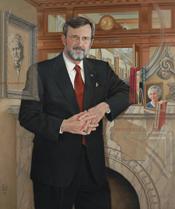
Historical · U.S. House · Wisconsin · District 7
Dave Obey
Former U.S. Representative · Wisconsin District 7 · 1969–2011 · Democratic
Dave Obey represented Wisconsin's District 7 in the United States House of Representatives (1969–2011) for the Democratic party. The page below collects sourced biographical facts, term history, committee roles, and provenance for Obey.
Bioguide ID: O000007
Key facts
- Full name
- Dave Obey
- State
- Wisconsin
- District
- District 7
- Party
- Democratic
- House service
- 1969–2011
- First House term
- 1969
- Status
- Left office
- Current term ends
- —
- Born
- 1938
- Bioguide ID
- O000007
- Committee assignments
- —
- Dataset version
- 1.20260605
Biographical narrative
1,041 words · sourced from the Wikipedia REST extract
David R. Obey is a former U.S. Representative who served Wisconsin's 7th congressional district from 1969 until 2011. A member of the Democratic Party, Obey is recognized for his long tenure in Congress, which spanned over four decades and included significant leadership roles, particularly as Chairman of the House Committee on Appropriations. His legislative career was marked by a commitment to progressive values and a focus on ethical reforms within the House of Representatives.
Early life and career
David R. Obey was born on October 3, 1938, in Okmulgee, Oklahoma. His family relocated to Wisconsin in 1941, where he was raised in Wausau. Obey completed his secondary education at Wausau East High School and began his higher education at the University of Wisconsin branch in Wausau. He later transferred to the University of Wisconsin–Madison, where he earned a Bachelor of Arts degree in political science. During his time at the university, he engaged in graduate studies related to Soviet politics, supported by a National Defense Education Act scholarship.
In his early political life, Obey identified as a Republican and participated in campaign activities for Senator Joseph McCarthy. However, his political affiliation shifted in his teenage years after he witnessed the damaging effects of McCarthyism on individuals, including a teacher who was unjustly accused of communism. This experience led him to embrace the progressive ideals of Robert M. La Follette and to support Democratic candidates such as Gaylord Nelson and William Proxmire, marking his transition to the Democratic Party in the mid-1950s.
Before entering Congress, Obey worked as a real estate broker and began his political career in the Wisconsin State Assembly, where he was elected in 1963. He served in the Assembly until 1969, during which time he ascended to the role of Assistant Majority Leader for the Democratic caucus, a position he held from 1967 until he left the legislature to join the U.S. House of Representatives.
House tenure
Obey was elected to the U.S. House of Representatives in 1969, succeeding eight-term Republican incumbent Melvin R. Laird, who had been appointed Secretary of Defense. At the age of 30, Obey became the youngest member of Congress and the first Democrat to represent Wisconsin's 7th congressional district in the 20th century. He was elected to a full term in 1970 and subsequently won reelection 18 times throughout his career. His most challenging electoral contest occurred in 1972 when his district was merged with the neighboring 10th District, which was represented by long-serving Republican Alvin O'Konski. Despite the political challenges, Obey retained a significant portion of his former constituency and was reelected comfortably in subsequent elections.
During his time in Congress, Obey was known for his leadership and influence within the House. He chaired the commission responsible for drafting the House's Code of Ethics, implementing reforms aimed at increasing transparency and accountability among members of Congress. Among these reforms was a requirement for representatives to disclose their personal financial interests, which was intended to mitigate potential conflicts of interest.
Obey served as Chairman of the House Appropriations Committee from 2007 until 2011, having previously held the position briefly from 1994 to 1995. He also served as the ranking Democrat on the committee from 1995 to 2007 and chaired its Subcommittee on Labor. His leadership roles positioned him as a key figure in shaping federal funding priorities and budgetary decisions.
Throughout his congressional career, Obey was recognized as one of the more liberal members of the House, aligning himself with progressive values and policies. He was a prominent figure in the Democratic Study Group during the 1970s, a caucus of liberal Democrats aimed at countering the influence of conservative factions within the party. His legislative initiatives included the "Obey Amendment," which prohibited the export of the Lockheed Martin F-22 Raptor to certain American allies.
Obey's tenure was also marked by significant moments of intervention and advocacy on the House floor. Notably, he intervened during a heated exchange between fellow Democrat Harold Ford, Jr. and Republican Jean Schmidt, highlighting his commitment to maintaining decorum and civility in congressional discourse.
In 2010, Obey played a pivotal role in the passage of the Patient Protection and Affordable Care Act, using the same gavel that had been used to pass Medicare in 1965. His legislative efforts often focused on education and labor issues, exemplified by his proposal for an amendment to allocate funds to prevent teacher layoffs during a time of economic uncertainty.
Legislative focus and committees
Throughout his congressional career, David Obey's legislative focus encompassed a range of issues, with a particular emphasis on education, labor, and ethical governance. His role as Chairman of the House Appropriations Committee allowed him to influence federal funding decisions that impacted various sectors, including education and social services. He was known for advocating for increased funding for public education and initiatives aimed at supporting teachers and students.
Obey's commitment to ethical governance was evident in his efforts to reform the House's Code of Ethics. By requiring members to disclose their financial dealings, he aimed to enhance transparency and build public trust in the legislative process. His leadership in this area underscored his belief in the importance of accountability among elected officials.
In addition to his work on appropriations, Obey was involved in various legislative initiatives that reflected his progressive values. He was an advocate for social justice and worked to address issues related to labor rights, healthcare access, and education reform. His long-standing affiliation with the Democratic Party and his alignment with progressive ideals shaped his legislative priorities and actions throughout his career.
Obey's retirement from Congress in 2011 marked the end of a significant chapter in Wisconsin's political history. He was the longest-serving Democratic Representative from the state and had a profound impact on both his constituents and the legislative landscape. His departure from the House was influenced by a combination of factors, including challenging poll numbers, personal reflections on his career, and the loss of close colleagues.
In summary, David R. Obey's career in the U.S. House of Representatives was characterized by a commitment to progressive values, ethical governance, and a focus on education and labor issues. His leadership roles and legislative initiatives left a lasting legacy within the House and the state of Wisconsin.
Notable legislation
Sponsored and co-sponsored legislation for Dave Obey is pending operator curation. The biographical narrative above carries the same provenance trail until per-bill rows are written.
Sources
- [1]https://en.wikipedia.org/wiki/Dave_ObeyWikipedia · retrieved 2026-06-05
Notable quotes
Sourced quotes for Dave Obey are pending operator curation. Narrative-scope provenance remains attached below.
Sources
- [1]https://en.wikipedia.org/wiki/Dave_ObeyWikipedia · retrieved 2026-06-05
Key positions
Curated policy positions for Dave Obey are pending operator review. The biographical narrative above carries the same provenance trail until per-topic positions are written.
Sources
- [1]https://en.wikipedia.org/wiki/Dave_ObeyWikipedia · retrieved 2026-06-05
Terms served
- 1969–1971U.S. House · Term 1 · Democratic
- 1971–1973U.S. House · Term 2 · Democratic
- 1973–1975U.S. House · Term 3 · Democratic
- 1975–1977U.S. House · Term 4 · Democratic
- 1977–1979U.S. House · Term 5 · Democratic
- 1979–1981U.S. House · Term 6 · Democratic
- 1981–1983U.S. House · Term 7 · Democratic
- 1983–1985U.S. House · Term 8 · Democratic
- 1985–1987U.S. House · Term 9 · Democratic
- 1987–1989U.S. House · Term 10 · Democratic
- 1989–1991U.S. House · Term 11 · Democratic
- 1991–1993U.S. House · Term 12 · Democratic
- 1993–1995U.S. House · Term 13 · Democratic
- 1995–1997U.S. House · Term 14 · Democratic
- 1997–1999U.S. House · Term 15 · Democratic
- 1999–2001U.S. House · Term 16 · Democratic
- 2001–2003U.S. House · Term 17 · Democratic
- 2003–2005U.S. House · Term 18 · Democratic
- 2005–2007U.S. House · Term 19 · Democratic
- 2007–2009U.S. House · Term 20 · Democratic
- 2009–2011U.S. House · Term 21 · Democratic
Sources & provenance
Every attributable claim above carries a per-section [N] marker that resolves to the corresponding URL below. Each entry records the upstream provider, the canonical URL, and the timestamp at which the source was retrieved by the ingest pipeline.
Key facts
- https://bioguide.congress.gov/search/bio/O000007bioguide · retrieved 2026-06-05
- http://obey.house.govhouse.gov · retrieved 2026-06-05
Biographical narrative
- https://en.wikipedia.org/wiki/Dave_Obeywikipedia · retrieved 2026-06-05
Find your representative
Every U.S. state elects representatives by district. Browse Wisconsin’s delegation, the full former-representative roster, or explore the role and term length.
Related on The Candidate
- Preceded by Reid MurrayEarlier holder of the Wisconsin District 7 House seat · Republican.Open
- Succeeded by Sean DuffyLater holder of the Wisconsin District 7 House seat · Republican.Open
- Charles WilliamsFormer U.S. Representative · Wisconsin District 1 · RepublicanOpen
- Clifford RandallFormer U.S. Representative · Wisconsin District 1 · RepublicanOpen
- Clinton BabbittFormer U.S. Representative · Wisconsin District 1 · DemocraticOpen
- Daniel Wells Jr.Former U.S. Representative · Wisconsin District 1 · DemocraticOpen