
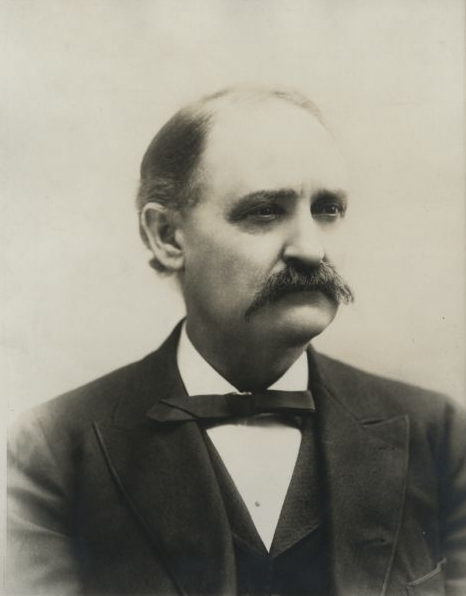
Historical · U.S. House · Wisconsin · District 7
Gilbert Woodward
Former U.S. Representative · Wisconsin District 7 · 1883–1885 · Democratic
Gilbert Woodward represented Wisconsin's District 7 in the United States House of Representatives (1883–1885) for the Democratic party. The page below collects sourced biographical facts, term history, committee roles, and provenance for Woodward.
Bioguide ID: W000731
Key facts
- Full name
- Gilbert Woodward
- State
- Wisconsin
- District
- District 7
- Party
- Democratic
- House service
- 1883–1885
- First House term
- 1883
- Status
- Left office
- Current term ends
- —
- Born
- 1835
- Bioguide ID
- W000731
- Committee assignments
- —
- Dataset version
- 1.20260606
Biographical narrative
838 words · sourced from the Wikipedia REST extract
Gilbert Woodward was an American lawyer and politician who served as a U.S. Representative for Wisconsin's 7th congressional district from 1883 to 1885. A member of the Democratic Party, Woodward's political career also included serving as the 16th mayor of La Crosse, Wisconsin, and as the Democratic nominee for Governor of Wisconsin in 1886. His early life was marked by a commitment to public service, which included military service as an officer in the Union Army during the American Civil War, where he served in the renowned Iron Brigade.
Early life and career
Gilbert Woodward was born on December 25, 1835, in Washington, D.C. He received his education in the common schools of the area and began his professional journey in the printing trade. Woodward apprenticed as a printer in Baltimore, where he worked as both a printer and proofreader in various locations, including Baltimore, Upper Marlboro, and Washington, D.C. His early career was significantly shaped by his work at the National Intelligencer, a prominent newspaper in Washington.
In February 1860, seeking new opportunities, Woodward relocated to Wisconsin, settling in La Crosse. He pursued a legal education under the mentorship of Isaac E. Messmore and was admitted to the bar in 1861. However, the outbreak of the American Civil War prompted him to delay the start of his legal career and enlist in the Union Army.
During the Civil War, Woodward joined the "La Crosse Light Guards," which became Company B of the 2nd Wisconsin Infantry Regiment. The regiment mustered into federal service in June 1861 and was soon deployed to Washington, D.C. Woodward quickly rose through the ranks, being promoted to first sergeant shortly after the First Battle of Bull Run. The 2nd Wisconsin Infantry was later incorporated into a brigade that would gain fame as the Iron Brigade due to its distinguished performance in various battles.
Woodward's military service included participation in several significant battles, such as the Battle of Gainesville, the Battle of Antietam, and the Battle of Gettysburg, where he was wounded. After his recovery, he continued to serve as an aide to General Lysander Cutler during the Overland Campaign until his enlistment ended in July 1864.
House tenure
Following the Civil War, Woodward returned to La Crosse, where he became actively involved in the legal community. He was elected district attorney of La Crosse County in 1865 and was re-elected three times, serving until January 1874. During this period, he established a law partnership with Samuel S. Burton, which lasted until 1876. Woodward's political ambitions extended beyond local office; he sought a position in the Wisconsin State Senate in 1872 but was defeated.
In 1874, Woodward was elected mayor of La Crosse, defeating a Republican-Temperance unity ticket. He later served as city attorney from 1876 to 1882, further solidifying his political presence in the region. His political career took a significant turn when he ran for the United States House of Representatives in 1882. Woodward secured the Democratic nomination on the first ballot of the convention, and despite the district's Republican leanings, he won the general election with a plurality of the vote, marking an upset victory.
Woodward served in the Forty-eighth Congress from March 4, 1883, to March 3, 1885. His tenure in the House was characterized by the challenges of representing a district that had historically leaned Republican. After one term, he was unsuccessful in his bid for re-election in 1884.
Legislative focus and committees
During his time in Congress, Woodward's legislative focus and committee assignments are not detailed in the available records. However, his background as a lawyer and his experience in local government likely influenced his approach to legislative matters. After leaving office, he returned to his law practice in La Crosse and remained active in the Democratic Party.
In 1886, Woodward was nominated by acclamation as the Democratic candidate for Governor of Wisconsin after the expected nominee declined the position. Despite his efforts, he was defeated in the general election by the incumbent Republican governor, Jeremiah McLain Rusk. His political involvement continued as he served as chairman of the Wisconsin delegation to the 1888 Democratic National Convention.
In the years following his political career, Woodward formed a law partnership with J. W. Losey, known as Losey & Woodward. He dedicated much of the remainder of his life to his legal practice and was recognized as a frequent litigant before the Wisconsin Supreme Court.
Woodward's personal life included a marriage to Ella R. Parker in 1864, which ended with her death in 1868. The couple did not have children, and Woodward never remarried. He continued to work in his legal career until his health began to decline. Gilbert Woodward passed away on March 13, 1914, at the home of a friend in La Crosse. He was buried at Oak Grove Cemetery in the same city where he had spent much of his life and career. His legacy includes his contributions to both the legal and political landscapes of Wisconsin during a transformative period in American history.
Notable legislation
Sponsored and co-sponsored legislation for Gilbert Woodward is pending operator curation. The biographical narrative above carries the same provenance trail until per-bill rows are written.
Sources
- [1]https://en.wikipedia.org/wiki/Gilbert_M._WoodwardWikipedia · retrieved 2026-06-06
Notable quotes
Sourced quotes for Gilbert Woodward are pending operator curation. Narrative-scope provenance remains attached below.
Sources
- [1]https://en.wikipedia.org/wiki/Gilbert_M._WoodwardWikipedia · retrieved 2026-06-06
Key positions
Curated policy positions for Gilbert Woodward are pending operator review. The biographical narrative above carries the same provenance trail until per-topic positions are written.
Sources
- [1]https://en.wikipedia.org/wiki/Gilbert_M._WoodwardWikipedia · retrieved 2026-06-06
Terms served
- 1883–1885U.S. House · Term 1 · Democratic
Sources & provenance
Every attributable claim above carries a per-section [N] marker that resolves to the corresponding URL below. Each entry records the upstream provider, the canonical URL, and the timestamp at which the source was retrieved by the ingest pipeline.
Key facts
- https://bioguide.congress.gov/search/bio/W000731bioguide · retrieved 2026-06-06
- https://www.govtrack.us/congress/members/411883govtrack · retrieved 2026-06-06
Biographical narrative
- https://en.wikipedia.org/wiki/Gilbert_M._Woodwardwikipedia · retrieved 2026-06-06
Find your representative
Every U.S. state elects representatives by district. Browse Wisconsin’s delegation, the full former-representative roster, or explore the role and term length.
Related on The Candidate
- Preceded by Herman HumphreyEarlier holder of the Wisconsin District 7 House seat · Republican.Open
- Succeeded by Ormsby ThomasLater holder of the Wisconsin District 7 House seat · Republican.Open
- Charles WilliamsFormer U.S. Representative · Wisconsin District 1 · RepublicanOpen
- Clifford RandallFormer U.S. Representative · Wisconsin District 1 · RepublicanOpen
- Clinton BabbittFormer U.S. Representative · Wisconsin District 1 · DemocraticOpen
- Daniel Wells Jr.Former U.S. Representative · Wisconsin District 1 · DemocraticOpen