
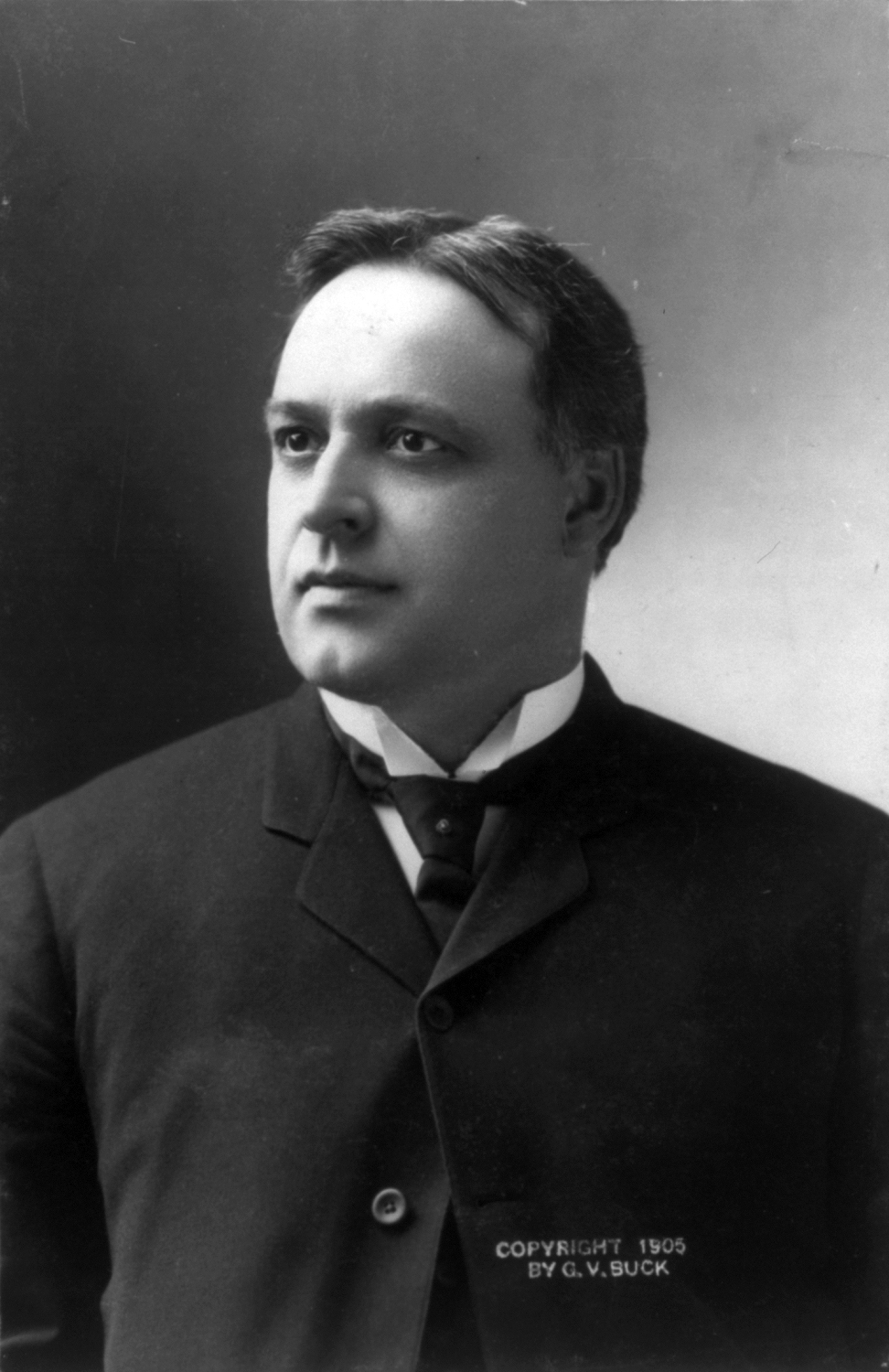
Historical · U.S. House · Wisconsin · District 7
John Esch
Former U.S. Representative · Wisconsin District 7 · 1899–1921 · Republican
John Esch represented Wisconsin's District 7 in the United States House of Representatives (1899–1921) for the Republican party. The page below collects sourced biographical facts, term history, committee roles, and provenance for Esch.
Bioguide ID: E000212
Key facts
- Full name
- John Esch
- State
- Wisconsin
- District
- District 7
- Party
- Republican
- House service
- 1899–1921
- First House term
- 1899
- Status
- Left office
- Current term ends
- —
- Born
- 1861
- Bioguide ID
- E000212
- Committee assignments
- —
- Dataset version
- 1.20260606
Biographical narrative
1,018 words · sourced from the Wikipedia REST extract
John Esch was an American lawyer and politician who served as a U.S. Representative for Wisconsin's 7th congressional district from 1899 to 1921. A member of the Republican Party, Esch had a notable career in public service, spanning over two decades in the House of Representatives. Following his congressional tenure, he was appointed to the Interstate Commerce Commission, where he served until 1928. His contributions to legislative processes, particularly in transportation and military affairs, marked significant aspects of his political legacy.
Early life and career
John Esch was born on March 20, 1861, near Norwalk, Wisconsin, to Rev. Henry Esch and Agnes Mathilda Esch. His father, an immigrant from Westphalia, Germany, initially served as a minister before retiring due to health issues and transitioning into the manufacturing sector. Esch's early education took place in local schools, culminating in his graduation from Sparta High School. He pursued higher education at the University of Wisconsin, where he graduated in 1882.
After completing his undergraduate studies, Esch spent a year reading law, which is a traditional method of legal education. To finance his formal legal training, he took on a teaching position for three years. In 1886, he returned to the University of Wisconsin to complete his legal education, finishing the required coursework in just one year while also teaching geometry at Madison High School.
Esch was admitted to the Wisconsin Bar in 1887 and began his legal practice in La Crosse, Wisconsin. He became a partner in the law firm of Winter, Esch & Winter. In addition to his legal career, Esch was involved in military service; he founded a military group known as the Sparta Rifles in 1883, which later became part of the Wisconsin National Guard. He served in various capacities within the Guard, including as first lieutenant and captain of the Gateway City Guards. His military involvement extended to serving as the Acting Judge Advocate General of the Guard, appointed by Governor William H. Upham in 1894.
Esch's interest in politics was evident early on, as he participated as a delegate in Republican state conventions in 1894 and 1896. His political career began in earnest when he was elected as a Congressman from Wisconsin's 7th congressional district in 1898.
House tenure
Esch's congressional career spanned 22 years, during which he was elected to 11 consecutive terms in the U.S. House of Representatives. He began his service in the Fifty-sixth United States Congress and continued to represent Wisconsin's 7th congressional district through ten additional Congresses. His tenure was marked by a strong focus on military and transportation legislation, particularly in the context of the post-Spanish-American War era.
Initially, Esch was appointed to the Committee on Public Lands and the Committee on Military Affairs, where he was involved in military legislation. After six years, he transitioned to the Committee on Interstate and Foreign Commerce, relinquishing his other committee assignments to focus entirely on this area. His work on transportation legislation was significant, particularly with the Hepburn Act of 1906, which expanded the powers of the Interstate Commerce Commission over railroads. This legislation was influenced by an earlier bill he had introduced.
Throughout his congressional career, Esch was responsible for several important legislative accomplishments, including the Hours of Service Act, the Esch Car Service Act, the Boiler Inspection Act, the Federal Water Power Act, and the Esch-Cummins Act, also known as the Transportation Act of 1920. The latter act notably elevated his national profile. Esch's voting record included a notable stance on foreign policy; he was one of a small number of representatives who voted against declaring war on Germany on April 5, 1917.
Esch's congressional career came to an end when he was defeated in the Republican primary in 1920. His departure from the House on March 3, 1921, was marked by a rare moment of bipartisan respect, as members from both sides of the aisle stood to acknowledge his service.
Legislative focus and committees
During his time in Congress, Esch's legislative focus was primarily on issues related to transportation and military affairs. His early work on the Committee on Public Lands and the Committee on Military Affairs laid the groundwork for his later contributions to transportation policy. His appointment to the Committee on Interstate and Foreign Commerce allowed him to concentrate on the regulation of interstate commerce, particularly in the railroad industry.
Esch's involvement in the Hepburn Act of 1906 was a pivotal moment in his legislative career, as it significantly increased the regulatory authority of the Interstate Commerce Commission over railroad rates and practices. This act was a response to growing public concern over railroad monopolies and unfair practices, and it reflected Esch's commitment to reforming transportation regulation.
In addition to the Hepburn Act, Esch played a crucial role in the development of several other key pieces of legislation. The Hours of Service Act aimed to regulate the working hours of railroad employees, while the Esch Car Service Act focused on improving the efficiency of freight car distribution. The Boiler Inspection Act addressed safety standards for steam boilers, and the Federal Water Power Act aimed to promote the development of hydroelectric power.
The Esch-Cummins Act, which he co-sponsored, was particularly significant as it addressed the regulation of railroads and the transportation industry in the aftermath of World War I. This legislation sought to stabilize the railroad industry and ensure its efficient operation, reflecting the broader economic challenges of the time.
After leaving Congress, Esch continued his public service when he was appointed to the Interstate Commerce Commission by President Warren G. Harding. His tenure on the Commission further solidified his influence in transportation policy, although his renomination for a second term was met with controversy and ultimately rejected by the Senate.
Esch's legislative contributions and his long-standing commitment to public service left a lasting impact on transportation policy and regulation in the United States. Following his departure from the Commission, he returned to legal practice and remained active in various professional organizations until his retirement in 1938. He passed away on April 27, 1941, leaving behind a legacy of public service and legislative achievement.
Notable legislation
Sponsored and co-sponsored legislation for John Esch is pending operator curation. The biographical narrative above carries the same provenance trail until per-bill rows are written.
Sources
- [1]https://en.wikipedia.org/wiki/John_J._EschWikipedia · retrieved 2026-06-06
Notable quotes
Sourced quotes for John Esch are pending operator curation. Narrative-scope provenance remains attached below.
Sources
- [1]https://en.wikipedia.org/wiki/John_J._EschWikipedia · retrieved 2026-06-06
Key positions
Curated policy positions for John Esch are pending operator review. The biographical narrative above carries the same provenance trail until per-topic positions are written.
Sources
- [1]https://en.wikipedia.org/wiki/John_J._EschWikipedia · retrieved 2026-06-06
Terms served
- 1899–1901U.S. House · Term 1 · Republican
- 1901–1903U.S. House · Term 2 · Republican
- 1903–1905U.S. House · Term 3 · Republican
- 1905–1907U.S. House · Term 4 · Republican
- 1907–1909U.S. House · Term 5 · Republican
- 1909–1911U.S. House · Term 6 · Republican
- 1911–1913U.S. House · Term 7 · Republican
- 1913–1915U.S. House · Term 8 · Republican
- 1915–1917U.S. House · Term 9 · Republican
- 1917–1919U.S. House · Term 10 · Republican
- 1919–1921U.S. House · Term 11 · Republican
Sources & provenance
Every attributable claim above carries a per-section [N] marker that resolves to the corresponding URL below. Each entry records the upstream provider, the canonical URL, and the timestamp at which the source was retrieved by the ingest pipeline.
Key facts
- https://bioguide.congress.gov/search/bio/E000212bioguide · retrieved 2026-06-06
- https://www.govtrack.us/congress/members/403899govtrack · retrieved 2026-06-06
Biographical narrative
- https://en.wikipedia.org/wiki/John_J._Eschwikipedia · retrieved 2026-06-06
Find your representative
Every U.S. state elects representatives by district. Browse Wisconsin’s delegation, the full former-representative roster, or explore the role and term length.
Related on The Candidate
- Preceded by Michael GriffinEarlier holder of the Wisconsin District 7 House seat · Republican.Open
- Succeeded by Joseph BeckLater holder of the Wisconsin District 7 House seat · Republican.Open
- Charles WilliamsFormer U.S. Representative · Wisconsin District 1 · RepublicanOpen
- Clifford RandallFormer U.S. Representative · Wisconsin District 1 · RepublicanOpen
- Clinton BabbittFormer U.S. Representative · Wisconsin District 1 · DemocraticOpen
- Daniel Wells Jr.Former U.S. Representative · Wisconsin District 1 · DemocraticOpen