
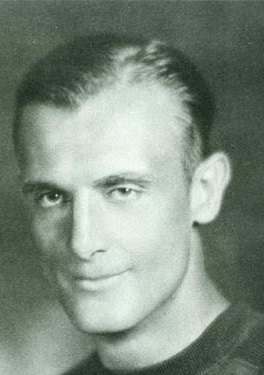
Historical · U.S. House · Wisconsin · District 8
LaVern Dilweg
Former U.S. Representative · Wisconsin District 8 · 1943–1945 · Democratic
LaVern Dilweg represented Wisconsin's District 8 in the United States House of Representatives (1943–1945) for the Democratic party. The page below collects sourced biographical facts, term history, committee roles, and provenance for Dilweg.
Bioguide ID: D000349
Key facts
- Full name
- LaVern Dilweg
- State
- Wisconsin
- District
- District 8
- Party
- Democratic
- House service
- 1943–1945
- First House term
- 1943
- Status
- Left office
- Current term ends
- —
- Born
- 1903
- Bioguide ID
- D000349
- Committee assignments
- —
- Dataset version
- 1.20260605
Biographical narrative
851 words · sourced from the Wikipedia REST extract
LaVern Dilweg was an American professional football player, attorney, and politician who served as a U.S. Representative for Wisconsin's 8th congressional district. A member of the Democratic Party, he held office during a pivotal time in American history, specifically during World War II. Dilweg's career spanned various fields, including sports and law, and he is remembered for his contributions both on the football field and in public service.
Early life and career
LaVern Ralph Dilweg was born on November 1, 1903, in Milwaukee, Wisconsin. He grew up in the city, where he attended public schools and graduated from Washington High School. Following high school, Dilweg enrolled at Marquette University in Milwaukee, where he distinguished himself as a three-sport athlete. He played college football for the Golden Avalanche under head coach Frank Murray, where he earned recognition as an All-American end. In addition to football, Dilweg was active in basketball, serving as a center on the team, and competed in track and field as a shot putter. His athletic prowess contributed to the Golden Avalanche achieving a notable record during his collegiate career.
Dilweg's football career began in earnest while he was still a student at Marquette. In 1926, he played professionally for the Milwaukee Badgers, a team in the National Football League (NFL) that unfortunately folded before the end of the season. After completing his undergraduate studies, he enrolled in Marquette's law school and was admitted to the Wisconsin Bar in 1927. While pursuing his legal career in Green Bay, he continued to play professional football, signing with the Green Bay Packers in August 1927. Dilweg played for the Packers until the end of the 1934 season, balancing his time between football and his law practice.
During his tenure with the Packers, Dilweg became known as one of the premier ends in the NFL, contributing to the team's success during the late 1920s and early 1930s. The Packers won three consecutive NFL championships in 1929, 1930, and 1931, solidifying Dilweg's reputation in the sport. He played in a total of 107 games, starting 72 of them, and recorded 12 touchdowns with 23 receptions for 443 yards. His performance earned him a place on the NFL 1920s All-Decade Team, and he was recognized as a consensus All-Pro for five consecutive years. After his football career, Dilweg served as a football official in the Big Ten Conference until he transitioned to a political career in early 1943.
House tenure
Dilweg's political career began during a tumultuous period in American history, marked by World War II. He announced his candidacy for the U.S. House of Representatives in late July 1942, entering the race for Wisconsin's 8th congressional district with less than four months until the election. Dilweg, representing the Democratic Party, successfully defeated the incumbent, Joshua Johns, and took office in the 78th United States Congress. His term began on January 3, 1943, and lasted until January 3, 1945.
During his time in Congress, Dilweg participated in legislative discussions and decisions relevant to the war effort and other pressing national issues. However, he was not re-elected in 1944, losing his seat to Republican candidate John Byrnes, who would go on to serve in Congress for 28 years. Following his congressional term, Dilweg returned to his legal practice in Green Bay and Washington, D.C. His political career did not end with his defeat; in 1961, he was appointed by President John F. Kennedy to the Foreign Claims Settlement Commission, a role that allowed him to continue serving in a governmental capacity.
Legislative focus and committees
While specific details regarding the committees on which Dilweg served during his congressional tenure are not available, his time in office coincided with significant legislative activity related to World War II. As a member of the Democratic Party, he would have been involved in discussions and decisions that shaped wartime policies, military funding, and other issues pertinent to the nation's efforts during the conflict.
Dilweg's background as a professional athlete and attorney likely influenced his perspectives on various legislative matters, particularly those related to sports, education, and public welfare. His experience in law would have equipped him with the skills necessary to navigate the complexities of legislative processes and advocate for his constituents' interests.
After leaving Congress, Dilweg's commitment to public service continued through his appointment to the Foreign Claims Settlement Commission. This role involved addressing claims made by American citizens against foreign governments, further showcasing his dedication to serving the public even after his time in elected office.
In summary, LaVern Dilweg's career encompassed significant achievements in both professional sports and public service. His contributions as a U.S. Representative during a critical period in American history reflect his commitment to his constituents and the nation. Following his political career, he returned to his legal practice and continued to engage in public service until his passing on January 2, 1968. Dilweg's legacy is remembered not only for his athletic accomplishments but also for his role in shaping policies during a transformative era in the United States. He is interred at Fort Howard Cemetery in Green Bay, Wisconsin.
Notable legislation
Sponsored and co-sponsored legislation for LaVern Dilweg is pending operator curation. The biographical narrative above carries the same provenance trail until per-bill rows are written.
Sources
- [1]https://en.wikipedia.org/wiki/LaVern_DilwegWikipedia · retrieved 2026-06-05
Notable quotes
Sourced quotes for LaVern Dilweg are pending operator curation. Narrative-scope provenance remains attached below.
Sources
- [1]https://en.wikipedia.org/wiki/LaVern_DilwegWikipedia · retrieved 2026-06-05
Key positions
Curated policy positions for LaVern Dilweg are pending operator review. The biographical narrative above carries the same provenance trail until per-topic positions are written.
Sources
- [1]https://en.wikipedia.org/wiki/LaVern_DilwegWikipedia · retrieved 2026-06-05
Terms served
- 1943–1945U.S. House · Term 1 · Democratic
Sources & provenance
Every attributable claim above carries a per-section [N] marker that resolves to the corresponding URL below. Each entry records the upstream provider, the canonical URL, and the timestamp at which the source was retrieved by the ingest pipeline.
Key facts
- https://bioguide.congress.gov/search/bio/D000349bioguide · retrieved 2026-06-05
- https://www.govtrack.us/congress/members/403467govtrack · retrieved 2026-06-05
Biographical narrative
- https://en.wikipedia.org/wiki/LaVern_Dilwegwikipedia · retrieved 2026-06-05
Find your representative
Every U.S. state elects representatives by district. Browse Wisconsin’s delegation, the full former-representative roster, or explore the role and term length.
Related on The Candidate
- Preceded by Joshua JohnsEarlier holder of the Wisconsin District 8 House seat · Republican.Open
- Succeeded by John ByrnesLater holder of the Wisconsin District 8 House seat · Republican.Open
- Charles WilliamsFormer U.S. Representative · Wisconsin District 1 · RepublicanOpen
- Clifford RandallFormer U.S. Representative · Wisconsin District 1 · RepublicanOpen
- Clinton BabbittFormer U.S. Representative · Wisconsin District 1 · DemocraticOpen
- Daniel Wells Jr.Former U.S. Representative · Wisconsin District 1 · DemocraticOpen