
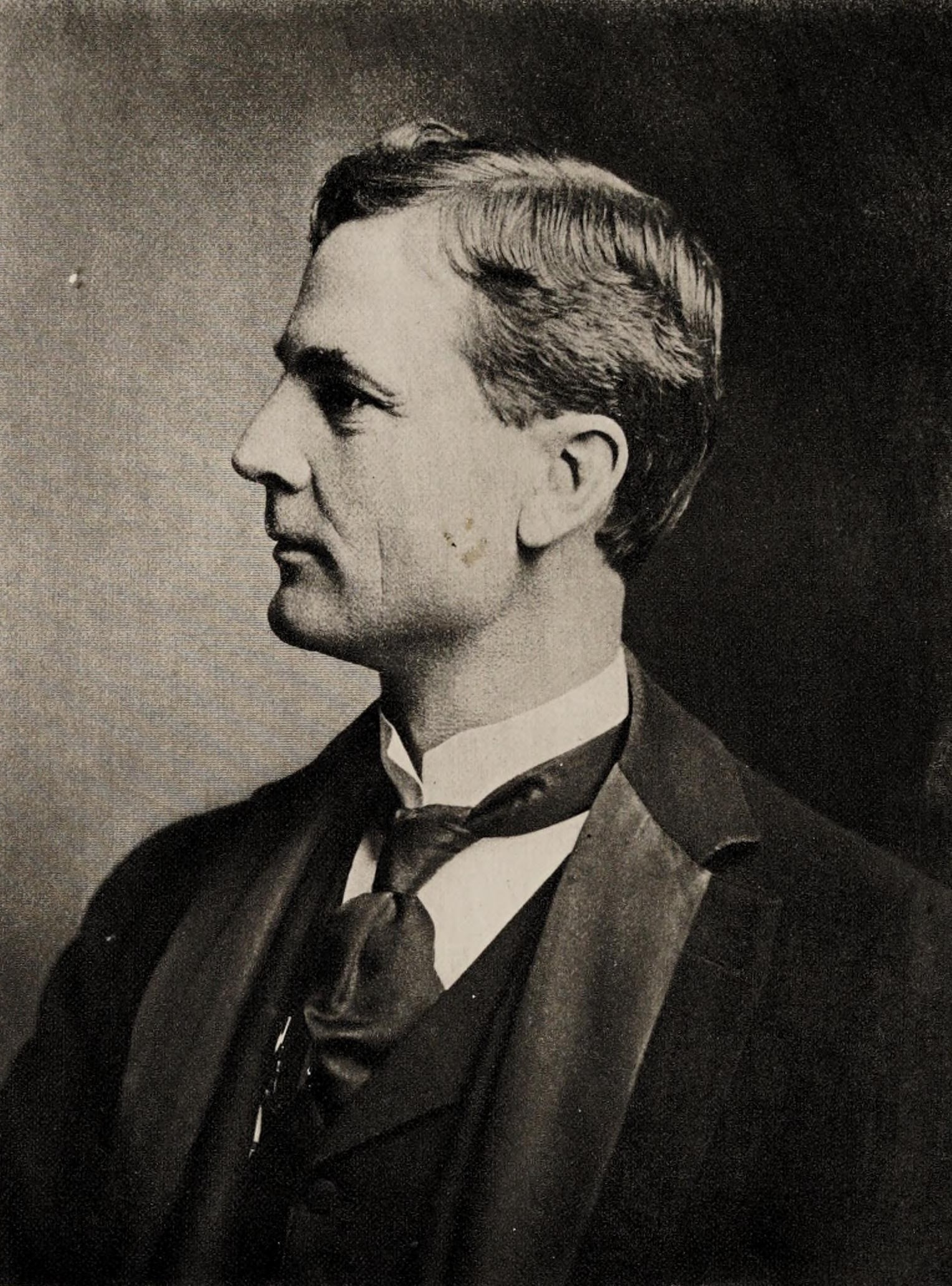
Historical · U.S. House · Wisconsin · District 8
Lyman Barnes
Former U.S. Representative · Wisconsin District 8 · 1893–1895 · Democratic
Lyman Barnes represented Wisconsin's District 8 in the United States House of Representatives (1893–1895) for the Democratic party. The page below collects sourced biographical facts, term history, committee roles, and provenance for Barnes.
Bioguide ID: B000159
Key facts
- Full name
- Lyman Barnes
- State
- Wisconsin
- District
- District 8
- Party
- Democratic
- House service
- 1893–1895
- First House term
- 1893
- Status
- Left office
- Current term ends
- —
- Born
- 1855
- Bioguide ID
- B000159
- Committee assignments
- —
- Dataset version
- 1.20260606
Biographical narrative
837 words · sourced from the Wikipedia REST extract
Lyman Barnes was an American lawyer and politician affiliated with the Democratic Party, who served as a U.S. Representative for Wisconsin's 8th congressional district during the 53rd Congress from 1893 to 1895. Born in 1855 in Weyauwega, Wisconsin, he pursued a legal career before entering politics, where he held the position of district attorney for Outagamie County prior to his congressional tenure. After losing his re-election bid in 1894, Barnes returned to his legal practice and later contributed to state judicial reform efforts until his death in 1904.
Early life and career
Lyman Barnes was born on June 30, 1855, in Weyauwega, Wisconsin. He grew up in the state and received his education in the public schools of Oshkosh. At the age of 17, he began his legal studies under the guidance of Earl P. Lynch and Charles Barber in Oshkosh. He furthered his legal education at Columbia College in New York City, where he graduated from the law department in 1876. Upon completing his studies, Barnes returned to Wisconsin and settled in Appleton, where he was admitted to the bar later that same year.
In 1877, Barnes established a law partnership with John Goodland, who was the father of future Wisconsin Governor Walter Samuel Goodland. This partnership marked the beginning of Barnes's professional legal career. In 1882, he relocated to Rockledge, Florida, where he practiced law for approximately five years. However, he eventually returned to Appleton, Wisconsin, to continue his legal practice.
Barnes's legal career was complemented by his entry into politics. He was elected as the district attorney of Outagamie County in 1890, a position that allowed him to gain valuable experience in public service and legal administration. His work in this role likely laid the groundwork for his subsequent ambitions in higher office.
House tenure
In 1892, Barnes sought the Democratic Party nomination for the U.S. House of Representatives in Wisconsin's 8th congressional district. This district had been newly established following the redistricting that occurred after the 1890 United States census. Notably, none of the incumbent U.S. representatives resided in the new district, creating an open field for candidates. Barnes faced a challenging nomination contest against former U.S. Representative Thomas R. Hudd. The campaign for the nomination involved extensive travel throughout the district, where both candidates sought to gather support from delegates at various county conventions.
The nomination process was marred by controversy, particularly during the Portage County convention, where Hudd accused Barnes's supporters of engaging in unethical practices to secure delegate votes. This allegation led to significant tensions within the party, with some prominent Democrats threatening to withdraw their support for Barnes if the accusations were substantiated. Despite these challenges, Barnes managed to secure the nomination on the first ballot at the district convention.
In the general election, Barnes faced Henry A. Frambach, a businessman and former mayor from Kaukauna. Frambach's campaign emphasized his military service, particularly his participation in the Battle of Shiloh, and sought to exploit the divisions within the Democratic Party stemming from the contentious nomination process. Despite these challenges, Barnes won the election, receiving a majority of the votes cast.
Barnes served in the Democratic majority during the 53rd United States Congress from March 4, 1893, to March 3, 1895. He ran for re-election in 1894, where he was renominated without opposition. However, the political landscape had shifted significantly by this time, influenced by the economic downturn following the Panic of 1893. Barnes faced Edward S. Minor, a former state senator and the mayor of Sturgeon Bay, in a highly contentious general election. The campaign was characterized by negative rhetoric and partisan attacks, reflecting the national mood that had turned against the Democratic Party. Ultimately, Barnes lost his bid for re-election, receiving a minority of the votes.
Legislative focus and committees
During his time in Congress, Lyman Barnes was part of a Democratic majority, which shaped the legislative agenda of the 53rd Congress. While specific details regarding his committee assignments or legislative initiatives are not provided, it can be inferred that as a member of the House, he would have participated in discussions and decisions on various issues pertinent to his constituents and the nation.
Following his defeat in the 1894 election, Barnes returned to Appleton to resume his legal career. He did not seek elected office again but remained active in public service. In 1903, he was appointed to a state court commission tasked with redrawing Wisconsin's judicial circuits, indicating his continued involvement in legal and civic matters.
Lyman Barnes passed away on January 16, 1904, after suffering from an acute attack of appendicitis that required surgery. Although his condition initially seemed to improve post-operation, he experienced a rapid decline, ultimately leading to his death. He was interred at Riverside Cemetery in Appleton, Wisconsin.
Throughout his life, Barnes was married to Helen Byrd Conkey, with whom he had at least five children. His legacy includes his contributions to both the legal profession and the political landscape of Wisconsin during a transformative period in American history.
Notable legislation
Sponsored and co-sponsored legislation for Lyman Barnes is pending operator curation. The biographical narrative above carries the same provenance trail until per-bill rows are written.
Sources
- [1]https://en.wikipedia.org/wiki/Lyman_E._BarnesWikipedia · retrieved 2026-06-06
Notable quotes
Sourced quotes for Lyman Barnes are pending operator curation. Narrative-scope provenance remains attached below.
Sources
- [1]https://en.wikipedia.org/wiki/Lyman_E._BarnesWikipedia · retrieved 2026-06-06
Key positions
Curated policy positions for Lyman Barnes are pending operator review. The biographical narrative above carries the same provenance trail until per-topic positions are written.
Sources
- [1]https://en.wikipedia.org/wiki/Lyman_E._BarnesWikipedia · retrieved 2026-06-06
Terms served
- 1893–1895U.S. House · Term 1 · Democratic
Sources & provenance
Every attributable claim above carries a per-section [N] marker that resolves to the corresponding URL below. Each entry records the upstream provider, the canonical URL, and the timestamp at which the source was retrieved by the ingest pipeline.
Key facts
- https://bioguide.congress.gov/search/bio/B000159bioguide · retrieved 2026-06-06
- https://www.govtrack.us/congress/members/401161govtrack · retrieved 2026-06-06
Biographical narrative
- https://en.wikipedia.org/wiki/Lyman_E._Barneswikipedia · retrieved 2026-06-06
Find your representative
Every U.S. state elects representatives by district. Browse Wisconsin’s delegation, the full former-representative roster, or explore the role and term length.
Related on The Candidate
- Preceded by Hugh PriceEarlier holder of the Wisconsin District 8 House seat · Republican.Open
- Succeeded by Edward BrowneLater holder of the Wisconsin District 8 House seat · Republican.Open
- Charles WilliamsFormer U.S. Representative · Wisconsin District 1 · RepublicanOpen
- Clifford RandallFormer U.S. Representative · Wisconsin District 1 · RepublicanOpen
- Clinton BabbittFormer U.S. Representative · Wisconsin District 1 · DemocraticOpen
- Daniel Wells Jr.Former U.S. Representative · Wisconsin District 1 · DemocraticOpen