
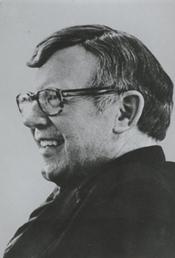
Historical · U.S. House · Wisconsin · District 8
Robert Cornell
Former U.S. Representative · Wisconsin District 8 · 1975–1979 · Democratic
Robert Cornell represented Wisconsin's District 8 in the United States House of Representatives (1975–1979) for the Democratic party. The page below collects sourced biographical facts, term history, committee roles, and provenance for Cornell.
Bioguide ID: C000782
Key facts
- Full name
- Robert Cornell
- State
- Wisconsin
- District
- District 8
- Party
- Democratic
- House service
- 1975–1979
- First House term
- 1975
- Status
- Left office
- Current term ends
- —
- Born
- 1919
- Bioguide ID
- C000782
- Committee assignments
- —
- Dataset version
- 1.20260605
Biographical narrative
894 words · sourced from the Wikipedia REST extract
Robert J. Cornell was an American politician and Catholic priest who served as a U.S. Representative for Wisconsin's 8th congressional district from 1975 to 1979. A member of the Democratic Party, he was notable for being the first Democrat to represent this district in three decades, as well as for his background in education and social justice advocacy. His tenure in Congress was marked by his involvement in various legislative initiatives, particularly in the areas of education, labor, and veterans' affairs. Cornell's unique position as a priest in Congress added a distinct perspective to his political career, which he later reflected upon in his memoir.
Early life and career
Robert John Cornell was born on December 16, 1919, in Gladstone, Michigan. He spent his early years in Green Bay, Wisconsin, where he attended parochial schools. His academic journey began at St. Norbert College in De Pere, Wisconsin, where he earned a Bachelor of Arts degree in 1941. He continued his education at The Catholic University of America in Washington, D.C., obtaining both a Master of Arts and a Ph.D. by 1957. His doctoral dissertation focused on the Coal Strike of 1902, reflecting his interest in labor issues and social justice.
Cornell was ordained as a priest of the Norbertine Order on June 17, 1944, after spending six years in the order. Following his ordination, he taught social sciences in parochial schools in Philadelphia from 1941 to 1947. He returned to Wisconsin, where he held teaching positions at St. Norbert High School, Abbot Pennings High School, and St. Norbert College. From 1947 until 1974, he served as a professor of history and political science at St. Norbert College, and he continued to teach there from 1979 until 2001 after his congressional tenure.
In addition to his academic responsibilities, Cornell was active in the local community. In the 1960s and 1970s, he organized concerts at the Brown County Arena, including performances by notable artists such as Johnny Cash. The proceeds from these events were directed to local charities, demonstrating his commitment to social causes.
House tenure
Cornell's political career began to take shape in the late 1960s when he became involved with the Democratic Party in Wisconsin. He served as the chairman of the Eighth Congressional District of the Democratic Party and was a member of the State Administrative Committee from 1969 to 1974. His initial foray into partisan politics was prompted by a negative reaction to a speech he delivered on social justice, which led him to conclude that advocating for public policy was essential for enacting meaningful change.
After unsuccessful attempts to secure a congressional seat in 1970 and 1972, Cornell was elected to the U.S. House of Representatives in 1974, representing Wisconsin's 8th congressional district. His victory was significant, as he became the first Democrat to hold this position in 30 years, defeating the incumbent Republican Harold Vernon Froehlich. Cornell secured the Democratic nomination by winning a primary contest against Brown County District Attorney Donald Zuidmulder.
During his first term in Congress, which began in January 1975, Cornell focused on various issues relevant to his constituents. He was re-elected in 1976, making history as the first Democrat to win a second term in the district in 62 years. However, his congressional career came to an end when he lost his bid for re-election in 1978 to Republican State Representative Toby Roth. Factors contributing to his defeat included low voter turnout among Democrats and a strong Republican gubernatorial candidate.
Legislative focus and committees
Throughout his time in Congress, Cornell served on two significant committees: the United States House Committee on Education and Labor and the United States House Committee on Veterans' Affairs. His work on these committees allowed him to address a range of issues affecting education, labor rights, and veterans' services. In 1978, he collaborated with Senator William Proxmire to pass the Wisconsin Wilderness Act, which expanded protected wilderness areas within the Chequamegon–Nicolet National Forest.
Cornell's legislative record was characterized by a strong pro-life stance, as he opposed abortion in all circumstances and supported the Hyde Amendment, which restricts federal funding for abortions. His views on social issues were informed by his background as a priest and his commitment to social justice, which he had championed throughout his career in education and politics.
After leaving Congress, Cornell sought to return to political life by challenging Roth again in 1980. However, he withdrew from the race following a directive from the Vatican that required all priests to step back from political involvement. This marked the end of his direct political aspirations, but he remained a notable figure due to his unique position as one of only two Catholic priests to serve as voting representatives in Congress.
In his later years, Cornell authored a memoir titled "Is There A Priest In The House?", which chronicled his experiences in Congress and offered insights into the issues he faced during his tenure. The memoir also included anecdotes that highlighted his sense of humor and reflections on his life as a priest and politician.
Cornell passed away on May 10, 2009, at the age of 89. He spent his final years in De Pere, Wisconsin, and was laid to rest on the grounds of St. Norbert Abbey, reflecting his lifelong connection to the Norbertine community and his commitment to both his faith and public service.
Notable legislation
Sponsored and co-sponsored legislation for Robert Cornell is pending operator curation. The biographical narrative above carries the same provenance trail until per-bill rows are written.
Sources
- [1]https://en.wikipedia.org/wiki/Robert_John_CornellWikipedia · retrieved 2026-06-05
Notable quotes
Sourced quotes for Robert Cornell are pending operator curation. Narrative-scope provenance remains attached below.
Sources
- [1]https://en.wikipedia.org/wiki/Robert_John_CornellWikipedia · retrieved 2026-06-05
Key positions
Curated policy positions for Robert Cornell are pending operator review. The biographical narrative above carries the same provenance trail until per-topic positions are written.
Sources
- [1]https://en.wikipedia.org/wiki/Robert_John_CornellWikipedia · retrieved 2026-06-05
Terms served
- 1975–1977U.S. House · Term 1 · Democratic
- 1977–1979U.S. House · Term 2 · Democratic
Sources & provenance
Every attributable claim above carries a per-section [N] marker that resolves to the corresponding URL below. Each entry records the upstream provider, the canonical URL, and the timestamp at which the source was retrieved by the ingest pipeline.
Key facts
- https://bioguide.congress.gov/search/bio/C000782bioguide · retrieved 2026-06-05
- https://www.govtrack.us/congress/members/402902govtrack · retrieved 2026-06-05
Biographical narrative
- https://en.wikipedia.org/wiki/Robert_John_Cornellwikipedia · retrieved 2026-06-05
Find your representative
Every U.S. state elects representatives by district. Browse Wisconsin’s delegation, the full former-representative roster, or explore the role and term length.
Related on The Candidate
- Preceded by Harold FroehlichEarlier holder of the Wisconsin District 8 House seat · Republican.Open
- Succeeded by Toby RothLater holder of the Wisconsin District 8 House seat · Republican.Open
- Charles WilliamsFormer U.S. Representative · Wisconsin District 1 · RepublicanOpen
- Clifford RandallFormer U.S. Representative · Wisconsin District 1 · RepublicanOpen
- Clinton BabbittFormer U.S. Representative · Wisconsin District 1 · DemocraticOpen
- Daniel Wells Jr.Former U.S. Representative · Wisconsin District 1 · DemocraticOpen