
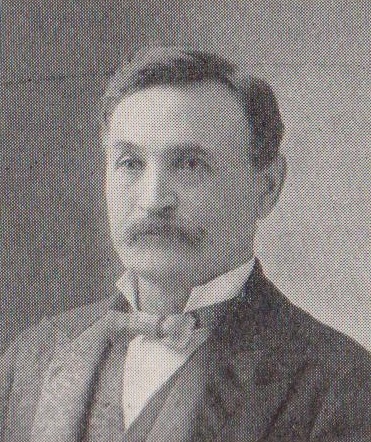
Historical · U.S. House · Wisconsin · District 9
Edward Minor
Former U.S. Representative · Wisconsin District 9 · 1895–1907 · Republican
Edward Minor represented Wisconsin's District 9 in the United States House of Representatives (1895–1907) for the Republican party. The page below collects sourced biographical facts, term history, committee roles, and provenance for Minor.
Bioguide ID: M000798
Key facts
- Full name
- Edward Minor
- State
- Wisconsin
- District
- District 9
- Party
- Republican
- House service
- 1895–1907
- First House term
- 1895
- Status
- Left office
- Current term ends
- —
- Born
- 1840
- Bioguide ID
- M000798
- Committee assignments
- —
- Dataset version
- 1.20260606
Biographical narrative
1,052 words · sourced from the Wikipedia REST extract
Edward Minor was a prominent American businessman and politician, serving as a Republican U.S. Representative for Wisconsin's 9th congressional district from 1902 until 1907. His political career spanned over a decade, during which he was elected to six terms in the U.S. House of Representatives. In addition to his congressional service, Minor held various local and state offices, including mayor of Sturgeon Bay and member of the Wisconsin Legislature. His early life was marked by significant contributions during the American Civil War, where he served as a cavalry officer in the Union Army.
Early life and career
Edward S. Minor was born on December 13, 1840, in Jefferson County, New York. He was the son of Martin Minor and Abigail St. Ores, and he was one of five children in the family. In his early years, Minor's family moved to the Wisconsin Territory, settling initially in Greenfield, Milwaukee County. They later relocated to Milwaukee, where his father worked as a ship calker. Edward received his education in the public schools of Milwaukee before the family moved to a homestead in Sheboygan County in 1852, where they engaged in farming.
In the spring of 1858, Minor ventured north to Door County, Wisconsin, to claim land from the United States General Land Office. He walked from Baileys Harbor to Fish Creek to secure a plot for his family, who joined him later that year. This early experience in land acquisition and settlement would later inform his political and business endeavors.
With the onset of the American Civil War, Minor enlisted in the Union Army, joining Company G of the 2nd Wisconsin Cavalry Regiment. His service included significant engagements in the western theater of the war. Throughout his military career, he rose through the ranks, starting as a private and eventually achieving the rank of first lieutenant by the end of the conflict. He mustered out of service in November 1865, having demonstrated leadership and commitment during a pivotal period in American history.
After the war, Minor transitioned to a civilian life as a merchant in Fish Creek, Wisconsin, where he specialized in timber products. His business acumen and community involvement laid the groundwork for his future political career. In 1877, he was elected to the Wisconsin State Assembly, representing Door County in the 31st Wisconsin Legislature. Although he did not seek re-election in 1878, he successfully ran again in 1879 and 1880. His political influence continued to grow, and in 1882, he was elected to the Wisconsin State Senate, where he represented the 1st State Senate district. During his tenure in the Senate, he served as president pro tempore in 1885 and was an advocate for the construction of the Sturgeon Bay Ship Canal.
Minor's role as superintendent of the canal, a position he held until 1891, further solidified his reputation in local governance and infrastructure development. He also served on the Wisconsin Fish Commission for four years, contributing to the management of the state's natural resources. In 1894, he was elected mayor of Sturgeon Bay, marking another significant milestone in his public service career.
House tenure
In 1894, Edward Minor was nominated as the Republican candidate for the United States House of Representatives, representing Wisconsin's 8th congressional district. He won the general election against incumbent Democrat Lyman E. Barnes, marking the beginning of his congressional career. Over the next several years, Minor was re-elected three times in this district, securing victories in 1896, 1898, and 1900. His electoral success was indicative of his strong support within his constituency and his ability to address local and national issues effectively.
Following the 1900 United States census, Wisconsin underwent redistricting, resulting in Minor's county being moved from the 8th congressional district to the newly established 9th congressional district. He successfully ran for two additional terms representing this new district in 1902 and 1904. However, his congressional career came to an end in 1906 when he was defeated in the primary election by Gustav Küstermann, who succeeded him in 1907.
During his time in Congress, Minor was an active member of the House Committee on Merchant Marine and Fisheries, where he focused on securing funding for the improvement of rivers and harbors. His leadership extended to his role as chairman of the Committee on Expenditures for the Department of the Interior during the 58th and 59th congresses. Minor was well-regarded among his peers in Washington, D.C., and was known to have a close relationship with President Theodore Roosevelt.
Legislative focus and committees
Throughout his six terms in the U.S. House of Representatives, Edward Minor's legislative focus primarily revolved around issues related to maritime commerce and infrastructure development. His involvement with the House Committee on Merchant Marine and Fisheries underscored his commitment to enhancing the nation's waterways, which were vital for trade and transportation. He advocated for policies that would improve the efficiency and safety of maritime operations, recognizing the importance of these initiatives for both local economies and national interests.
As chairman of the Committee on Expenditures for the Department of the Interior, Minor played a crucial role in overseeing the allocation of federal funds for various projects. His leadership in this capacity allowed him to influence decisions that affected not only his constituents but also broader national policies related to land management and resource allocation.
Minor's legislative efforts were characterized by a pragmatic approach to governance, focusing on practical solutions to the challenges faced by his district and the nation. His background as a businessman and his experiences in local government informed his understanding of the needs of his constituents, allowing him to advocate effectively for their interests in Congress.
After leaving office in 1907, Minor continued to engage in public service. He was appointed postmaster of Sturgeon Bay, serving from 1911 to 1915, and returned to the mayoral office in 1918. His contributions to his community and the state of Wisconsin extended well beyond his congressional tenure, reflecting a lifelong commitment to public service.
Edward S. Minor passed away on July 26, 1924, in Sturgeon Bay, Wisconsin, after a period of declining health. He was buried in Bayside Cemetery, leaving behind a legacy of service that encompassed military, business, and political realms. His life and career exemplified the spirit of civic engagement and dedication to the advancement of his community and country.
Notable legislation
Sponsored and co-sponsored legislation for Edward Minor is pending operator curation. The biographical narrative above carries the same provenance trail until per-bill rows are written.
Sources
- [1]https://en.wikipedia.org/wiki/Edward_S._MinorWikipedia · retrieved 2026-06-06
Notable quotes
Sourced quotes for Edward Minor are pending operator curation. Narrative-scope provenance remains attached below.
Sources
- [1]https://en.wikipedia.org/wiki/Edward_S._MinorWikipedia · retrieved 2026-06-06
Key positions
Curated policy positions for Edward Minor are pending operator review. The biographical narrative above carries the same provenance trail until per-topic positions are written.
Sources
- [1]https://en.wikipedia.org/wiki/Edward_S._MinorWikipedia · retrieved 2026-06-06
Terms served
- 1895–1897U.S. House · Term 1 · Republican
- 1897–1899U.S. House · Term 2 · Republican
- 1899–1901U.S. House · Term 3 · Republican
- 1901–1903U.S. House · Term 4 · Republican
- 1903–1905U.S. House · Term 5 · Republican
- 1905–1907U.S. House · Term 6 · Republican
Sources & provenance
Every attributable claim above carries a per-section [N] marker that resolves to the corresponding URL below. Each entry records the upstream provider, the canonical URL, and the timestamp at which the source was retrieved by the ingest pipeline.
Key facts
- https://bioguide.congress.gov/search/bio/M000798bioguide · retrieved 2026-06-06
- https://www.govtrack.us/congress/members/407774govtrack · retrieved 2026-06-06
Biographical narrative
- https://en.wikipedia.org/wiki/Edward_S._Minorwikipedia · retrieved 2026-06-06
Find your representative
Every U.S. state elects representatives by district. Browse Wisconsin’s delegation, the full former-representative roster, or explore the role and term length.
Related on The Candidate
- Preceded by Thomas LynchEarlier holder of the Wisconsin District 9 House seat · Democratic.Open
- Succeeded by Gustav KüstermannLater holder of the Wisconsin District 9 House seat · Republican.Open
- Charles WilliamsFormer U.S. Representative · Wisconsin District 1 · RepublicanOpen
- Clifford RandallFormer U.S. Representative · Wisconsin District 1 · RepublicanOpen
- Clinton BabbittFormer U.S. Representative · Wisconsin District 1 · DemocraticOpen
- Daniel Wells Jr.Former U.S. Representative · Wisconsin District 1 · DemocraticOpen