
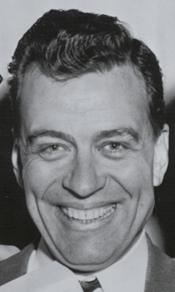
Historical · U.S. House · Wisconsin · District 9
Glenn Davis
Former U.S. Representative · Wisconsin District 9 · 1947–1975 · Republican
Glenn Davis represented Wisconsin's District 9 in the United States House of Representatives (1947–1975) for the Republican party. The page below collects sourced biographical facts, term history, committee roles, and provenance for Davis.
Bioguide ID: D000102
Key facts
- Full name
- Glenn Davis
- State
- Wisconsin
- District
- District 9
- Party
- Republican
- House service
- 1947–1975
- First House term
- 1947
- Status
- Left office
- Current term ends
- —
- Born
- 1914
- Bioguide ID
- D000102
- Committee assignments
- —
- Dataset version
- 1.20260605
Biographical narrative
1,021 words · sourced from the Wikipedia REST extract
Glenn R. Davis was an American lawyer and politician who served as a U.S. Representative from Wisconsin. A member of the Republican Party, Davis represented Wisconsin's 2nd congressional district from 1947 to 1957 and later served Wisconsin's 9th congressional district from 1965 until 1975. His political career spanned a total of ten terms in the U.S. House of Representatives, during which he was involved in various legislative matters and held significant committee positions. Davis's life journey from a modest farming background to a prominent political figure reflects his dedication to public service and community engagement.
Early life and career
Glenn Robert Davis was born on October 28, 1914, in Vernon, Wisconsin, to a family of modest means. Growing up on a small farm, he faced the challenges of rural life, including financial constraints. Despite these difficulties, Davis excelled academically, demonstrating a strong commitment to education. His father, however, encouraged him to abandon his studies in favor of farming. Undeterred, Davis managed to skip several grades and became a teacher for younger students in his one-room schoolhouse. He graduated from Mukwonago High School three years early, at the age of 15, in 1930.
Following high school, Davis attended Platteville State Teachers College, now known as the University of Wisconsin–Platteville. His mother played a crucial role in his education by secretly saving money to support his college aspirations. He majored in education and subsequently taught high school in Cottage Grove and Waupun for five years. After this period, Davis returned to academia and earned a Juris Doctor degree from the University of Wisconsin–Madison in 1940. Upon passing the bar examination, he established a law practice in Waukesha, Wisconsin.
Davis's initial foray into politics began with a successful campaign for the Wisconsin State Assembly in 1940. However, his legislative career was interrupted by World War II. Following the attack on Pearl Harbor, he resigned from the Assembly to enlist in the U.S. Navy. During the war, he served as a lieutenant and communications officer aboard the USS Sangamon (CVE-26), an escort carrier that endured a kamikaze attack near Okinawa.
House tenure
After being honorably discharged from the Navy in December 1945, Davis resumed his law practice and increased his political involvement. He served briefly as a local court commissioner and participated in Republican Party activities. His political career advanced significantly when he successfully ran in a special election in 1947 to fill the vacancy left by the late Congressman Robert Kirkland Henry. Davis represented Wisconsin's 2nd congressional district for five terms until 1957.
In 1956, Davis sought to elevate his political career by challenging incumbent Republican Senator Alexander Wiley in the primary election. This attempt was unsuccessful, leading him to return to his law practice. In 1957, he also ran for the Republican nomination in a special primary to replace the late Senator Joseph McCarthy but did not secure the nomination, which instead went to former Governor Walter J. Kohler Jr.
After an eight-year hiatus from Congress, Davis made a comeback in 1964 by winning the election for Wisconsin's newly drawn 9th congressional district, a seat that became available due to redistricting. He served four additional terms in the House until he lost in the 1974 primary election to State Senator Bob Kasten. Davis attributed his defeat, in part, to the political fallout from President Gerald Ford's pardon of Richard Nixon, which occurred shortly before the primary.
Throughout his congressional career, Davis was known for his conservative stance, although his positions became more moderate in the early 1970s. He was appointed to the prestigious Appropriations Committee during his third term and later became a "cardinal" by chairing the Subcommittee on Civil Functions and Military Construction. Following the Republican loss of the House in the 84th Congress, he served as the ranking Republican on the Subcommittee on Public Works. Davis's tenure on the committee was marked by a reputation for independence, often resisting pressures for cooperation and compromise from party leaders.
Davis's legislative record included notable votes in favor of significant civil rights legislation, such as the Voting Rights Act and the Civil Rights Act of 1968. His congressional service was characterized by a commitment to his constituents and a focus on issues relevant to his district. He remains the only individual from Waukesha County to have held a congressional office.
Legislative focus and committees
During his time in the House of Representatives, Davis was involved in various legislative initiatives and served on several important committees. His role on the Appropriations Committee allowed him to influence funding decisions for numerous programs and projects. As chair of the Subcommittee on Civil Functions and Military Construction, he played a key role in determining how federal resources were allocated for military and civil infrastructure projects.
Davis's approach to legislation was often marked by a conservative philosophy, particularly in the earlier years of his congressional career. However, as the political landscape evolved, he adapted his views, reflecting a more moderate stance on certain issues. His ability to navigate the complexities of congressional politics was evident in his relationships with both Republican and Democratic colleagues.
In addition to his legislative duties, Davis was known for his involvement in recreational activities, including being a member of the "Washington Senators," a baseball team composed of congressmen. His friendship with then-House Minority Leader Gerald Ford was notable, and their shared interests extended beyond politics to leisure activities such as golf.
After his congressional career ended in 1975, Davis transitioned to a consulting role at Potter International, Inc., where he worked until 1983. He then moved to Arlington, Virginia, where he lived until his death on September 21, 1988, at the age of 73.
Davis's legacy includes the Glenn R. Davis Charitable Foundation, which provides scholarships to graduating students in Waukesha County who have overcome significant challenges. This foundation reflects his commitment to education and support for young people, mirroring his own journey from humble beginnings to a prominent public figure. His family continued his legacy in public service, with his son, J. Mac Davis, serving as a Wisconsin state senator and later as a circuit court judge in Waukesha County.
Notable legislation
Sponsored and co-sponsored legislation for Glenn Davis is pending operator curation. The biographical narrative above carries the same provenance trail until per-bill rows are written.
Sources
- [1]https://en.wikipedia.org/wiki/Glenn_Robert_DavisWikipedia · retrieved 2026-06-05
Notable quotes
Sourced quotes for Glenn Davis are pending operator curation. Narrative-scope provenance remains attached below.
Sources
- [1]https://en.wikipedia.org/wiki/Glenn_Robert_DavisWikipedia · retrieved 2026-06-05
Key positions
Curated policy positions for Glenn Davis are pending operator review. The biographical narrative above carries the same provenance trail until per-topic positions are written.
Sources
- [1]https://en.wikipedia.org/wiki/Glenn_Robert_DavisWikipedia · retrieved 2026-06-05
Terms served
- 1947–1949U.S. House · Term 1 · Republican
- 1949–1951U.S. House · Term 2 · Republican
- 1951–1953U.S. House · Term 3 · Republican
- 1953–1955U.S. House · Term 4 · Republican
- 1955–1957U.S. House · Term 5 · Republican
- 1965–1967U.S. House · Term 6 · Republican
- 1967–1969U.S. House · Term 7 · Republican
- 1969–1971U.S. House · Term 8 · Republican
- 1971–1973U.S. House · Term 9 · Republican
- 1973–1975U.S. House · Term 10 · Republican
Sources & provenance
Every attributable claim above carries a per-section [N] marker that resolves to the corresponding URL below. Each entry records the upstream provider, the canonical URL, and the timestamp at which the source was retrieved by the ingest pipeline.
Key facts
- https://bioguide.congress.gov/search/bio/D000102bioguide · retrieved 2026-06-05
- https://www.govtrack.us/congress/members/403238govtrack · retrieved 2026-06-05
Biographical narrative
- https://en.wikipedia.org/wiki/Glenn_Robert_Daviswikipedia · retrieved 2026-06-05
Find your representative
Every U.S. state elects representatives by district. Browse Wisconsin’s delegation, the full former-representative roster, or explore the role and term length.
Related on The Candidate
- Preceded by James FrearEarlier holder of the Wisconsin District 9 House seat · Republican.Open
- Charles WilliamsFormer U.S. Representative · Wisconsin District 1 · RepublicanOpen
- Clifford RandallFormer U.S. Representative · Wisconsin District 1 · RepublicanOpen
- Clinton BabbittFormer U.S. Representative · Wisconsin District 1 · DemocraticOpen
- Daniel Wells Jr.Former U.S. Representative · Wisconsin District 1 · DemocraticOpen
- Republican PartyFederal candidates and office holders on the Republican line.Open