
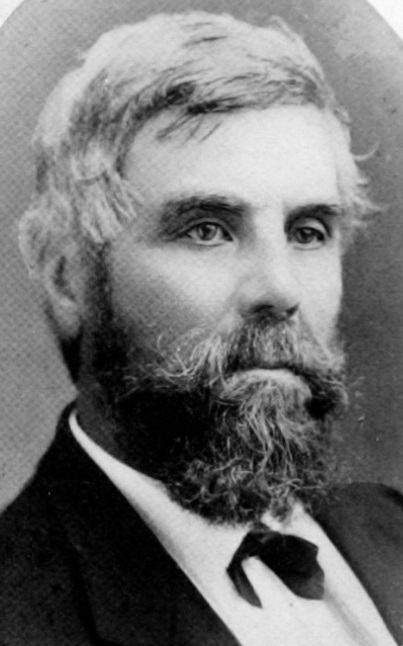
Historical · U.S. House · Wisconsin · At-Large
John Tweedy
Former U.S. Representative · Wisconsin At-Large · 1847–1849 · Whig
John Tweedy represented Wisconsin's At-Large in the United States House of Representatives (1847–1849) for the Whig party. The page below collects sourced biographical facts, term history, committee roles, and provenance for Tweedy.
Bioguide ID: T000441
Key facts
- Full name
- John Tweedy
- State
- Wisconsin
- District
- At-Large
- Party
- Whig
- House service
- 1847–1849
- First House term
- 1847
- Status
- Left office
- Current term ends
- —
- Born
- 1814
- Bioguide ID
- T000441
- Committee assignments
- —
- Dataset version
- 1.20260606
Biographical narrative
870 words · sourced from the Wikipedia REST extract
John Tweedy was a notable figure in the early political landscape of Wisconsin, serving as a U.S. Representative for the Wisconsin Territory during a pivotal time in its transition to statehood. A member of the Whig Party, Tweedy's political career was marked by his involvement in both territorial and state legislative bodies, as well as his engagement in business ventures related to railroads. His contributions to the governance of Wisconsin and its early development reflect the complexities of American politics in the mid-19th century.
Early life and career
John Tweedy was born on November 9, 1814, in Danbury, Connecticut. He pursued higher education at Yale University, graduating in 1834. During his time at Yale, he became a member of the prestigious secret society known as Skull and Bones, which has been associated with influential leaders in various fields. Following his graduation, Tweedy relocated to the Wisconsin Territory in 1836, where he began practicing law in Milwaukee. This move was part of a broader trend of migration to the western territories as individuals sought new opportunities in the expanding United States.
In addition to his legal career, Tweedy engaged in public service. He was elected to the Wisconsin Territorial Council, which served as the upper house of the Wisconsin Territorial Legislature, from 1841 to 1842. His involvement in the legislative process during this formative period for Wisconsin laid the groundwork for his later political endeavors. Tweedy also participated in the first Wisconsin Constitutional Convention in 1846, contributing to the establishment of the state's foundational legal framework.
After his time in the Territorial Council, Tweedy continued to be active in Wisconsin's political scene. He served in the Wisconsin State Assembly in 1853, further solidifying his role as a key player in the state's governance. His early career was characterized by a commitment to public service and an interest in the development of the region, which would later influence his legislative priorities.
House tenure
John Tweedy's tenure in the U.S. House of Representatives began when he was elected as a non-voting delegate to the Thirtieth Congress, representing the Wisconsin Territory. His term commenced on March 4, 1847, and continued until Wisconsin achieved statehood on May 29, 1848. As a delegate, Tweedy played a significant role in advocating for the interests of the Wisconsin Territory during a critical period of transition. His position allowed him to represent the concerns of his constituents in Congress, although, as a non-voting member, he did not have the same legislative powers as a full Representative.
During his time in Congress, Tweedy was involved in discussions and decisions that would shape the future of Wisconsin as it moved towards statehood. His participation in the legislative process was essential in ensuring that the voices of Wisconsin's residents were heard at the national level. Although his congressional career was relatively brief, it coincided with a transformative era in American history, as the nation grappled with issues related to expansion, governance, and the integration of new states into the Union.
After his congressional term, Tweedy continued to be active in public affairs and business, particularly in areas related to railroads, which were becoming increasingly important for transportation and commerce in the expanding United States. His engagement in these sectors reflected the broader economic trends of the time and underscored his commitment to the development of Wisconsin.
Legislative focus and committees
While specific details regarding the committees on which John Tweedy served during his time in the House are not documented, his legislative focus can be inferred from his background and the issues prevalent during his tenure. As a delegate representing a territory that was on the cusp of statehood, Tweedy likely prioritized matters related to infrastructure, land use, and governance that would facilitate Wisconsin's integration into the Union.
His involvement in the railroad industry suggests that he may have been particularly interested in transportation and economic development issues, which were critical for the growth of the region. Railroads were vital for connecting communities, facilitating trade, and promoting settlement in the western territories. Tweedy's business interests in this area would have aligned with the broader goals of promoting economic growth and stability in Wisconsin.
Additionally, Tweedy's participation in the Wisconsin Constitutional Convention indicates his commitment to establishing a strong legal and governmental framework for the new state. His experiences in both the territorial and state legislatures likely informed his understanding of the legislative process and the importance of effective governance.
After his congressional service, Tweedy remained engaged in public life, contributing to the political and economic development of Wisconsin. His legacy includes his role in shaping the early governance of the state and his involvement in the burgeoning railroad industry, which played a crucial role in the region's growth.
John Tweedy passed away on November 12, 1891, in Milwaukee, Wisconsin, at the age of 77. His contributions to Wisconsin's early political landscape and his engagement in public affairs left a lasting impact on the state. He was laid to rest in his hometown of Danbury, Connecticut. His son, John H. Tweedy, Jr., preserved his father's legacy by donating his papers to the Wisconsin Historical Society, ensuring that future generations would have access to the history of his life and career.
Notable legislation
Sponsored and co-sponsored legislation for John Tweedy is pending operator curation. The biographical narrative above carries the same provenance trail until per-bill rows are written.
Sources
- [1]https://en.wikipedia.org/wiki/John_Hubbard_TweedyWikipedia · retrieved 2026-06-06
Notable quotes
Sourced quotes for John Tweedy are pending operator curation. Narrative-scope provenance remains attached below.
Sources
- [1]https://en.wikipedia.org/wiki/John_Hubbard_TweedyWikipedia · retrieved 2026-06-06
Key positions
Curated policy positions for John Tweedy are pending operator review. The biographical narrative above carries the same provenance trail until per-topic positions are written.
Sources
- [1]https://en.wikipedia.org/wiki/John_Hubbard_TweedyWikipedia · retrieved 2026-06-06
Terms served
- 1847–1849U.S. House · Term 1 · Whig
Sources & provenance
Every attributable claim above carries a per-section [N] marker that resolves to the corresponding URL below. Each entry records the upstream provider, the canonical URL, and the timestamp at which the source was retrieved by the ingest pipeline.
Key facts
- https://bioguide.congress.gov/search/bio/T000441bioguide · retrieved 2026-06-06
- https://www.govtrack.us/congress/members/411009govtrack · retrieved 2026-06-06
Biographical narrative
- https://en.wikipedia.org/wiki/John_Hubbard_Tweedywikipedia · retrieved 2026-06-06
Find your representative
Every U.S. state elects representatives by district. Browse Wisconsin’s delegation, the full former-representative roster, or explore the role and term length.
Related on The Candidate
- Preceded by Morgan MartinEarlier holder of the Wisconsin At-Large House seat · Democratic.Open
- Succeeded by Henry CooperLater holder of the Wisconsin At-Large House seat · Republican.Open
- Charles WilliamsFormer U.S. Representative · Wisconsin District 1 · RepublicanOpen
- Clifford RandallFormer U.S. Representative · Wisconsin District 1 · RepublicanOpen
- Clinton BabbittFormer U.S. Representative · Wisconsin District 1 · DemocraticOpen
- Daniel Wells Jr.Former U.S. Representative · Wisconsin District 1 · DemocraticOpen