
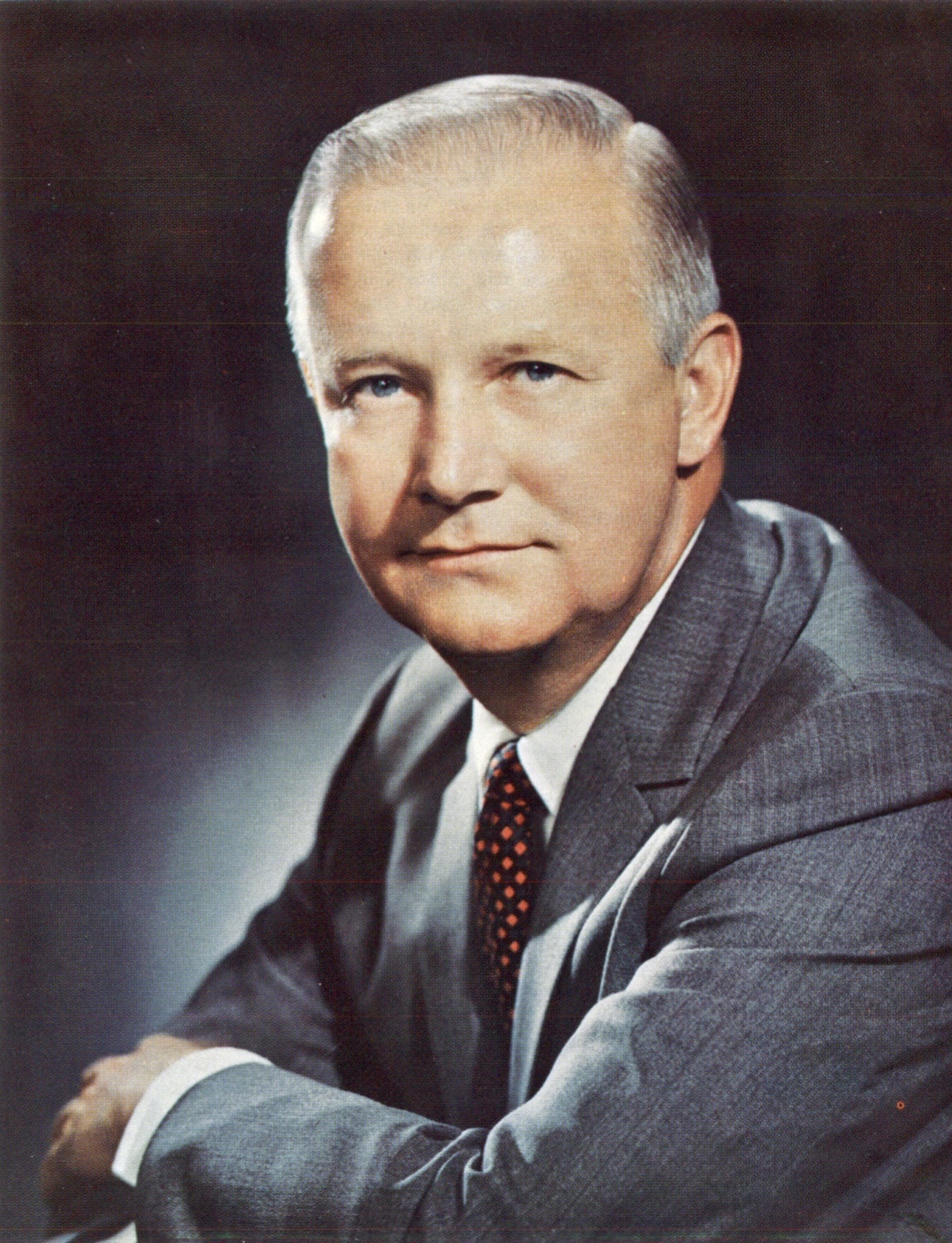
Historical · U.S. House · West Virginia · District 1
Arch Moore Jr.
Former U.S. Representative · West Virginia District 1 · 1957–1969 · Republican
Arch Moore Jr. represented West Virginia's District 1 in the United States House of Representatives (1957–1969) for the Republican party. The page below collects sourced biographical facts, term history, committee roles, and provenance for Jr..
Bioguide ID: M000892
Key facts
- Full name
- Arch Moore Jr.
- State
- West Virginia
- District
- District 1
- Party
- Republican
- House service
- 1957–1969
- First House term
- 1957
- Status
- Left office
- Current term ends
- —
- Born
- 1923
- Bioguide ID
- M000892
- Committee assignments
- —
- Dataset version
- 1.20260605
Biographical narrative
853 words · sourced from the Wikipedia REST extract
Arch Moore Jr. was a prominent American politician and lawyer who served as a U.S. Representative from West Virginia's 1st congressional district and later as the 28th and 30th governor of West Virginia. A member of the Republican Party, Moore's political career spanned several decades, during which he was known for his involvement in various legislative initiatives and his role in state governance. His tenure in the U.S. House of Representatives lasted from 1957 until 1969, after which he transitioned to the governorship, where he served two non-consecutive terms. Moore's career was marked by significant achievements as well as controversies that ultimately led to legal troubles and a conviction for corruption.
Early life and career
Arch Alfred Moore Jr. was born on April 16, 1923, in Moundsville, West Virginia, situated in the northern panhandle of the state. He was born into a politically active family; his grandfather, Forest Taylor Moore, served as a ten-term delegate and minority leader in the West Virginia House of Delegates, while his uncle, Everett Franklin Moore, was also involved in politics. Growing up, Moore demonstrated athletic talent, particularly in basketball, while attending Moundsville High School. After graduating, he worked in various jobs, including in a factory and on an oil pipeline.
Moore's academic journey began at Lafayette College in Easton, Pennsylvania, but his studies were interrupted when he was drafted into the U.S. Army during World War II. Initially training to be an engineer in the Army Specialized Training Program, he was later reassigned to the infantry. He served in the 334th Infantry Regiment of the 84th Infantry Division and was severely wounded in November 1944 during combat in Germany. After being left for dead for two days in a farmer's field, he was rescued and underwent facial reconstruction surgery in Liege, Belgium. His injuries affected his ability to speak for nearly a year, and he utilized public speaking as part of his rehabilitation. Moore was recognized for his service with several military honors, including the Purple Heart and the Bronze Star.
Following his military service, Moore attended West Virginia University, where he earned a bachelor's degree in 1948 and subsequently graduated from the university's law school in 1951. While at WVU, he was active in student government and founded "Mountaineer Week," an event celebrating West Virginia culture. After completing his education, he returned to Moundsville to practice law alongside his uncle.
House tenure
Moore's political career began in earnest when he was elected to the West Virginia House of Delegates in 1952. He made his first attempt to secure a seat in the U.S. Congress in 1954 but was unsuccessful against the incumbent Democratic Congressman Bob Mollohan. However, in 1956, he won election to the U.S. House of Representatives after Mollohan vacated the seat to run for governor. Moore's congressional career began in 1957 and continued until 1969, during which he served a total of six terms.
Throughout his time in the House, Moore was known for his support of public works projects and civil rights legislation. He voted in favor of several key civil rights measures, including the Civil Rights Acts of 1957, 1960, 1964, and 1968, as well as the Voting Rights Act of 1965 and the 24th Amendment to the U.S. Constitution. Despite these votes, Moore maintained a predominantly conservative voting record. In 1960, he became the ranking Republican on the House Subcommittee on Immigration and Nationality, further solidifying his influence within the party.
Moore's electoral success in Congress included a narrow victory in 1962 when his district was merged with that of longtime Democratic incumbent Cleveland M. Bailey. He won that election by a margin of just 762 votes. He was re-elected in 1964 and 1966, demonstrating his ability to navigate the political landscape of West Virginia, which had a strong Democratic presence at the time. In 1968, he chose to run for governor, concluding his congressional tenure.
Legislative focus and committees
During his time in the U.S. House of Representatives, Moore's legislative focus included a range of issues pertinent to his constituents and the broader national landscape. His support for civil rights legislation indicated a commitment to social justice, which was a significant topic during the 1960s. Moore's involvement in public works projects reflected his dedication to infrastructure development, an essential aspect of economic growth and community improvement in West Virginia.
As a member of the House, Moore participated in various committees, with his role as the ranking Republican on the Subcommittee on Immigration and Nationality highlighting his engagement with immigration policy. His legislative activities contributed to shaping policies that affected not only his district but also the nation as a whole.
Moore's congressional career laid the groundwork for his subsequent political endeavors, including his two terms as governor of West Virginia. His experience in the House provided him with valuable insights into governance and legislative processes, which he would later apply in his role as the state's chief executive. Throughout his political journey, Moore's actions and decisions were influenced by his background, experiences, and the political climate of the time, ultimately shaping his legacy in West Virginia politics.
Notable legislation
Sponsored and co-sponsored legislation for Arch Moore Jr. is pending operator curation. The biographical narrative above carries the same provenance trail until per-bill rows are written.
Sources
- [1]https://en.wikipedia.org/wiki/Arch_A._Moore_Jr.Wikipedia · retrieved 2026-06-05
Notable quotes
Sourced quotes for Arch Moore Jr. are pending operator curation. Narrative-scope provenance remains attached below.
Sources
- [1]https://en.wikipedia.org/wiki/Arch_A._Moore_Jr.Wikipedia · retrieved 2026-06-05
Key positions
Curated policy positions for Arch Moore Jr. are pending operator review. The biographical narrative above carries the same provenance trail until per-topic positions are written.
Sources
- [1]https://en.wikipedia.org/wiki/Arch_A._Moore_Jr.Wikipedia · retrieved 2026-06-05
Terms served
- 1957–1959U.S. House · Term 1 · Republican
- 1959–1961U.S. House · Term 2 · Republican
- 1961–1963U.S. House · Term 3 · Republican
- 1963–1965U.S. House · Term 4 · Republican
- 1965–1967U.S. House · Term 5 · Republican
- 1967–1969U.S. House · Term 6 · Republican
Sources & provenance
Every attributable claim above carries a per-section [N] marker that resolves to the corresponding URL below. Each entry records the upstream provider, the canonical URL, and the timestamp at which the source was retrieved by the ingest pipeline.
Key facts
- https://bioguide.congress.gov/search/bio/M000892bioguide · retrieved 2026-06-05
- https://www.govtrack.us/congress/members/407864govtrack · retrieved 2026-06-05
Biographical narrative
- https://en.wikipedia.org/wiki/Arch_A._Moore_Jr.wikipedia · retrieved 2026-06-05
Find your representative
Every U.S. state elects representatives by district. Browse West Virginia’s delegation, the full former-representative roster, or explore the role and term length.
Related on The Candidate
- Preceded by Robert RamsayEarlier holder of the West Virginia District 1 House seat · Democratic.Open
- Succeeded by Alan MollohanLater holder of the West Virginia District 1 House seat · Democratic.Open
- Andrew SchifflerFormer U.S. Representative · West Virginia District 1 · RepublicanOpen
- Benjamin RosenbloomFormer U.S. Representative · West Virginia District 1 · RepublicanOpen
- Benjamin WilsonFormer U.S. Representative · West Virginia District 1 · DemocraticOpen
- Republican PartyFederal candidates and office holders on the Republican line.Open