
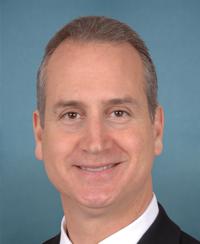
Serving · U.S. House · Florida · District 26
Mario Diaz-Balart
U.S. Representative · Florida District 26 · 2003–present · Republican
Mario Diaz-Balart represents Florida's District 26 in the United States House of Representatives (2003–present) for the Republican party. The page below collects sourced biographical facts, term history, committee roles, and provenance for Diaz-Balart.
Bioguide ID: D000600
Key facts
- Full name
- Mario Diaz-Balart
- State
- Florida
- District
- District 26
- Party
- Republican
- House service
- 2003–present
- First House term
- 2003
- Status
- Currently serving
- Current term ends
- 2027
- Born
- 1961
- Bioguide ID
- D000600
- Committee assignments
- 1
- Dataset version
- 1.20260604
Biographical narrative
845 words · sourced from the Wikipedia REST extract
Mario Díaz-Balart is an American politician currently serving as the U.S. Representative for Florida's 26th congressional district. A member of the Republican Party, he has been in office since 2003 and is recognized as the dean of Florida's congressional delegation since April 2021. His district encompasses much of northwestern Miami-Dade County, including the city of Hialeah and parts of the northern Everglades. Throughout his political career, Díaz-Balart has held various positions and has been involved in numerous legislative efforts, reflecting his long-standing commitment to public service.
Early life and career
Mario Rafael Díaz-Balart y Caballero was born on September 25, 1961, in Fort Lauderdale, Florida, to parents of Cuban descent. His father, Rafael Díaz-Balart, was a notable Cuban politician, and his mother, Hilda Caballero Brunet, contributed to a politically active family background. He is part of the Díaz-Balart family, which has historical ties to Cuba; his aunt, Mirta Díaz-Balart, was married to Fidel Castro, and his cousin, Fidel Ángel "Fidelito" Castro Díaz-Balart, is also known in Cuban history. His family includes two other brothers: Lincoln Díaz-Balart, who served as a U.S. Representative for Florida's 21st District from 1993 to 2011, and José Díaz-Balart, a journalist, along with Rafael Díaz-Balart, a banker.
Díaz-Balart pursued higher education at the University of South Florida, where he studied political science. His political career began in 1985 when he served as an aide to Miami Mayor Xavier Suárez. In the same year, he shifted his political affiliation from the Democratic Party to the Republican Party, marking a significant change in his political alignment.
His entry into elected office began in 1988 when he was elected to the Florida House of Representatives. He subsequently moved to the Florida Senate in 1992, where he served until returning to the Florida House in 2000. His experiences in state politics laid the groundwork for his future endeavors at the federal level.
House tenure
Díaz-Balart's tenure in the U.S. House of Representatives began in 2003 after he was elected to represent Florida's newly established 25th congressional district. This district included a significant portion of western Miami-Dade County, parts of Collier County, and the mainland section of Monroe County. He won his initial election with a substantial majority, receiving 64% of the vote. His popularity in the district was evident as he faced no opposition in the 2004 election and secured a third term in 2006 with 58% of the vote.
In the 2008 election cycle, Díaz-Balart faced a more formidable opponent in Joe García, a former executive director of the Cuban American National Foundation. Despite this challenge, he successfully won reelection with 53% of the vote. In 2010, he announced his candidacy for Florida's 21st congressional district, which was being vacated by his brother Lincoln. This district was known for its strong Republican leanings, and Díaz-Balart was unopposed in the general election.
He continued to serve in the House, winning reelection unopposed in 2012 and again in 2014. In the 2016 election, he faced Democrat Alina Valdes, whom he defeated with a significant margin. By 2018, he was challenged by former judge Mary Barzee Flores but again emerged victorious, securing 60.5% of the vote.
Díaz-Balart's congressional career has been marked by a consistent presence in the House, where he has served multiple terms and has established himself as a prominent figure within the Republican Party in Florida.
Legislative focus and committees
Throughout his time in Congress, Mario Díaz-Balart has been involved in various legislative initiatives and has held significant committee assignments. As of the 118th Congress, he serves on the Committee on Appropriations, which is responsible for determining the funding levels for federal programs and agencies. Within this committee, he holds positions on several subcommittees, including the Subcommittee on Defense, the Subcommittee on State, Foreign Operations, and Related Programs, where he serves as chair, and the Subcommittee on Transportation, Housing and Urban Development, and Related Agencies.
In addition to his committee work, Díaz-Balart is a member of several caucuses, reflecting his interests and legislative priorities. He is the chair of the Congressional Hispanic Conference, which focuses on issues pertinent to Hispanic Americans. He is also a founding member of the Protecting Families Online Initiative and the Washington Waste Watchers, indicating his commitment to accountability and transparency in government. His involvement in the Congressional Taiwan Caucus and the Congressional Cuba Democracy Caucus highlights his engagement with international issues, particularly those affecting the Cuban-American community.
Díaz-Balart's voting record demonstrates a strong alignment with his party, as he consistently votes in line with Republican positions. His legislative focus includes a range of issues, from appropriations to social policies. Notably, he has supported legislation aimed at prohibiting discrimination based on sexual orientation and gender identity, indicating a willingness to engage with contemporary social issues.
Overall, Mario Díaz-Balart's career reflects a long-standing commitment to public service, with a focus on representing the interests of his constituents in Florida's 26th congressional district. His extensive experience in both state and federal government positions him as a significant figure in American politics, particularly within the context of Florida's political landscape.
Committees & roles
- House Committee on AppropriationsChair · since 2025
Notable legislation
Sponsored and co-sponsored legislation for Mario Diaz-Balart is pending operator curation. The biographical narrative above carries the same provenance trail until per-bill rows are written.
Sources
- [1]https://en.wikipedia.org/wiki/Mario_D%C3%ADaz-BalartWikipedia · retrieved 2026-06-04
Notable quotes
Sourced quotes for Mario Diaz-Balart are pending operator curation. Narrative-scope provenance remains attached below.
Sources
- [1]https://en.wikipedia.org/wiki/Mario_D%C3%ADaz-BalartWikipedia · retrieved 2026-06-04
Key positions
Curated policy positions for Mario Diaz-Balart are pending operator review. The biographical narrative above carries the same provenance trail until per-topic positions are written.
Sources
- [1]https://en.wikipedia.org/wiki/Mario_D%C3%ADaz-BalartWikipedia · retrieved 2026-06-04
Terms served
- 2003–2005U.S. House · Term 1 · Republican
- 2005–2007U.S. House · Term 2 · Republican
- 2007–2009U.S. House · Term 3 · Republican
- 2009–2011U.S. House · Term 4 · Republican
- 2011–2013U.S. House · Term 5 · Republican
- 2013–2015U.S. House · Term 6 · Republican
- 2015–2017U.S. House · Term 7 · Republican
- 2017–2019U.S. House · Term 8 · Republican
- 2019–2021U.S. House · Term 9 · Republican
- 2021–2023U.S. House · Term 10 · Republican
- 2023–2025U.S. House · Term 11 · Republican
- 2025–2027U.S. House · Term 12 · Republican
Sources & provenance
Every attributable claim above carries a per-section [N] marker that resolves to the corresponding URL below. Each entry records the upstream provider, the canonical URL, and the timestamp at which the source was retrieved by the ingest pipeline.
Key facts
- https://bioguide.congress.gov/search/bio/D000600bioguide · retrieved 2026-06-04
- https://mariodiazbalart.house.gov/house.gov · retrieved 2026-06-04
Biographical narrative
- https://en.wikipedia.org/wiki/Mario_D%C3%ADaz-Balartwikipedia · retrieved 2026-06-04
Find your representative
Every U.S. state elects representatives by district. Browse Florida’s delegation, the full currently-serving-representative roster, or explore the role and term length.
Related on The Candidate
- Jimmy Patronis Jr.Serving U.S. Representative · Florida District 1 · RepublicanOpen
- Maxwell FrostServing U.S. Representative · Florida District 10 · DemocraticOpen
- Daniel WebsterServing U.S. Representative · Florida District 11 · RepublicanOpen
- Gus BilirakisServing U.S. Representative · Florida District 12 · RepublicanOpen
- Republican PartyFederal candidates and office holders on the Republican line.Open
- Representatives from FloridaEvery currently-serving U.S. Representative who has represented Florida.Open