
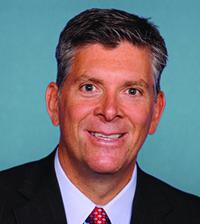
Serving · U.S. House · Illinois · District 16
Darin LaHood
U.S. Representative · Illinois District 16 · 2015–present · Republican
Darin LaHood represents Illinois's District 16 in the United States House of Representatives (2015–present) for the Republican party. The page below collects sourced biographical facts, term history, committee roles, and provenance for LaHood.
Bioguide ID: L000585
Key facts
- Full name
- Darin LaHood
- State
- Illinois
- District
- District 16
- Party
- Republican
- House service
- 2015–present
- First House term
- 2015
- Status
- Currently serving
- Current term ends
- 2027
- Born
- 1968
- Bioguide ID
- L000585
- Committee assignments
- 3
- Dataset version
- 1.20260604
Biographical narrative
923 words · sourced from the Wikipedia REST extract
Darin LaHood is an American attorney and politician currently serving as a U.S. Representative for Illinois's 16th congressional district. A member of the Republican Party, LaHood has been in office since 2015, initially representing the 18th congressional district until the district was eliminated during the 2022 redistricting process. He is the son of Ray LaHood, a former U.S. Secretary of Transportation and a long-serving U.S. Representative. LaHood's legislative career has been marked by a focus on fiscal conservatism and involvement in various congressional committees.
Early life and career
Darin LaHood was born on July 5, 1968, in Peoria, Illinois. He is the eldest of four children born to Kathy and Ray LaHood. His father, Ray LaHood, has a notable political background, having served as the U.S. Secretary of Transportation and as a U.S. Representative for Illinois. The elder LaHood has Lebanese and German ancestry, which contributes to the family's diverse heritage. Growing up in Peoria, Darin LaHood attended the Academy of Our Lady/Spalding Institute, a local educational institution.
After completing high school, LaHood pursued higher education at Loras College in Iowa, where he earned a bachelor's degree. He later attended John Marshall Law School in Chicago, obtaining his Juris Doctor. Following his legal education, LaHood began his career as a prosecutor in the Tazewell County state's attorney's office and subsequently worked for the United States Attorney's Office for the District of Nevada in Las Vegas. In 2005, he returned to Peoria to engage in private law practice, joining the law firm Miller, Hall & Triggs by 2011.
LaHood's initial foray into politics came in 2008 when he ran for Peoria County state's attorney but was unsuccessful against the incumbent. He remained active in Republican politics, supporting various campaigns, including those of Bill Brady for governor and Dan Rutherford for Illinois Treasurer. His political career took a significant turn when he was appointed to the Illinois Senate on February 27, 2011, filling the vacancy left by Dale Risinger. LaHood was sworn in on March 1, 2011, and subsequently won a full term in the 2012 election without opposition.
House tenure
Darin LaHood's tenure in the U.S. House of Representatives began in 2015 when he was elected to represent Illinois's 18th congressional district. He won a special election on September 10, 2015, to fill the vacancy created by the resignation of Aaron Schock. LaHood secured the Republican nomination with a significant majority in the primary and continued to build on that support in the general election, defeating his Democratic opponent by a wide margin. He was sworn into office shortly thereafter.
In the subsequent elections, LaHood maintained a strong presence in his district, winning re-election in 2016, 2018, and 2020 with substantial majorities. His electoral success can be attributed to his alignment with the Republican Party's values and his focus on issues pertinent to his constituents. However, the 2022 redistricting process led to the elimination of the 18th congressional district, prompting LaHood to run for the newly drawn 16th congressional district, which he successfully secured.
Throughout his time in the House, LaHood has positioned himself as a fiscal conservative, emphasizing budgetary issues and advocating for policies that he believes will benefit his constituents. His legislative actions and voting record reflect his commitment to these principles.
Legislative focus and committees
Darin LaHood's legislative focus has primarily revolved around fiscal conservatism and economic issues. He has served on the House Ways and Means Committee, which is responsible for taxation and revenue generation, and has also been a member of the Committee on the Chinese Communist Party. His involvement in these committees underscores his commitment to addressing economic challenges and promoting fiscal responsibility.
LaHood has introduced and supported various pieces of legislation during his time in Congress. Notably, he introduced the Networking and Information Technology Research and Development (NITRD) Modernization Act of 2016, which aims to enhance the federal government's research portfolio in high-end computing and cybersecurity. This legislation reflects his interest in advancing technology and innovation.
In addition to his legislative initiatives, LaHood has been involved in significant bipartisan efforts. He cosponsored the Great American Outdoors Act during the 116th Congress, which established a fund for priority maintenance projects on federal lands. This act is intended to address deferred maintenance needs and support conservation efforts across the country.
LaHood's committee assignments for the 119th Congress include the Ways and Means Committee, where he serves on the Subcommittee on Trade and chairs the Subcommittee on Work and Welfare. He is also a member of the Permanent Select Committee on Intelligence, where he holds the position of Vice Chairman on the Subcommittee on the Central Intelligence Agency. These roles allow him to engage with critical national issues, including trade, welfare, and intelligence operations.
Despite his legislative work, LaHood has faced criticism from constituents regarding his accessibility. He has been urged to hold town hall meetings to engage directly with voters on various issues. While he has expressed a commitment to being accessible, there have been instances where he did not attend town halls, leading to dissatisfaction among some constituents.
Overall, Darin LaHood's career in the U.S. House of Representatives has been characterized by a focus on fiscal conservatism, active participation in key committees, and a commitment to legislative initiatives that align with his party's values. His background in law and politics, combined with his family legacy, has shaped his approach to governance and public service. As he continues his tenure, LaHood remains a prominent figure in Illinois politics, representing the interests of his constituents in Congress.
Committees & roles
- House Committee on Ways and MeansMember · since 2025
- House Permanent Select Committee on IntelligenceMember · since 2025
- House Select Committee on the Strategic Competition Between the United States and the Chinese Communist PartyMember · since 2025
Notable legislation
Sponsored and co-sponsored legislation for Darin LaHood is pending operator curation. The biographical narrative above carries the same provenance trail until per-bill rows are written.
Sources
- [1]https://en.wikipedia.org/wiki/Darin_LaHoodWikipedia · retrieved 2026-06-04
Notable quotes
Sourced quotes for Darin LaHood are pending operator curation. Narrative-scope provenance remains attached below.
Sources
- [1]https://en.wikipedia.org/wiki/Darin_LaHoodWikipedia · retrieved 2026-06-04
Key positions
Curated policy positions for Darin LaHood are pending operator review. The biographical narrative above carries the same provenance trail until per-topic positions are written.
Sources
- [1]https://en.wikipedia.org/wiki/Darin_LaHoodWikipedia · retrieved 2026-06-04
Terms served
- 2015–2017U.S. House · Term 1 · Republican
- 2017–2019U.S. House · Term 2 · Republican
- 2019–2021U.S. House · Term 3 · Republican
- 2021–2023U.S. House · Term 4 · Republican
- 2023–2025U.S. House · Term 5 · Republican
- 2025–2027U.S. House · Term 6 · Republican
Sources & provenance
Every attributable claim above carries a per-section [N] marker that resolves to the corresponding URL below. Each entry records the upstream provider, the canonical URL, and the timestamp at which the source was retrieved by the ingest pipeline.
Key facts
- https://bioguide.congress.gov/search/bio/L000585bioguide · retrieved 2026-06-04
- https://lahood.house.gov/house.gov · retrieved 2026-06-04
Biographical narrative
- https://en.wikipedia.org/wiki/Darin_LaHoodwikipedia · retrieved 2026-06-04
Find your representative
Every U.S. state elects representatives by district. Browse Illinois’s delegation, the full currently-serving-representative roster, or explore the role and term length.
Related on The Candidate
- Jonathan JacksonServing U.S. Representative · Illinois District 1 · DemocraticOpen
- Brad SchneiderServing U.S. Representative · Illinois District 10 · DemocraticOpen
- Bill FosterServing U.S. Representative · Illinois District 11 · DemocraticOpen
- Mike BostServing U.S. Representative · Illinois District 12 · RepublicanOpen
- Republican PartyFederal candidates and office holders on the Republican line.Open
- Representatives from IllinoisEvery currently-serving U.S. Representative who has represented Illinois.Open