
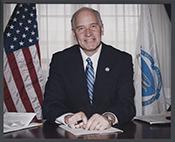
Serving · U.S. House · Massachusetts · District 9
William Keating
U.S. Representative · Massachusetts District 9 · 2011–present · Democratic
William Keating represents Massachusetts's District 9 in the United States House of Representatives (2011–present) for the Democratic party. The page below collects sourced biographical facts, term history, committee roles, and provenance for Keating.
Bioguide ID: K000375
Key facts
- Full name
- William Keating
- State
- Massachusetts
- District
- District 9
- Party
- Democratic
- House service
- 2011–present
- First House term
- 2011
- Status
- Currently serving
- Current term ends
- 2027
- Born
- 1952
- Bioguide ID
- K000375
- Committee assignments
- 2
- Dataset version
- 1.20260603
Biographical narrative
827 words · sourced from the Wikipedia REST extract
William R. Keating is an American lawyer and politician currently serving as the U.S. Representative for Massachusetts's 9th congressional district. A member of the Democratic Party, he has held this position since 2013, following his initial election to Congress in 2011. Keating's political career spans several decades, during which he has focused on various issues, including criminal justice reform, public safety, and the interests of his constituents in southeastern Massachusetts, particularly in areas such as Cape Cod and the South Coast.
Early life and career
William R. Keating was born on September 6, 1952, in Norwood, Massachusetts. He grew up in Sharon, Massachusetts, where he completed his secondary education at Sharon High School. Following high school, Keating pursued higher education at Boston College, earning a Bachelor of Arts degree in 1974. He later obtained a Master of Business Administration in 1982. Keating continued his academic journey at Suffolk University Law School, where he received his Juris Doctor in 1985. After passing the bar exam, he became a partner at the law firm Keating & Fishman.
Keating's political career began in 1977 when he was elected to the Massachusetts House of Representatives, representing the 19th Norfolk district. He served in this capacity for one year before being elected to represent the 8th Norfolk district, where he remained from 1979 to 1984. During his time in the House, he became known for his involvement in criminal justice issues and was eventually appointed vice chairman of the House Criminal Justice Committee.
In 1984, Keating transitioned to the Massachusetts State Senate after winning a special election to fill the seat vacated by State Senator Joseph F. Timilty. He campaigned on a platform that emphasized crime prevention and educational resources, securing approximately 64% of the vote against his Republican opponent. As a senator, Keating was appointed chairman of the joint Public Safety Committee, where he played a significant role in advocating for a statewide seat belt law and authored a drug sentencing reform package that was signed into law in 1988. This legislation aimed to lower thresholds for possession charges and established minimum sentences for certain drug offenses.
Throughout his Senate career, Keating continued to focus on criminal justice reform, serving as vice chairman of the joint Criminal Justice Committee and co-chairman of the Taxation Committee. He was instrumental in pushing for significant legislative changes, including a 1991 sentencing reform bill that made it easier to try juveniles as adults for serious crimes. His tenure in the Senate also included a failed attempt to unseat Senate President William Bulger in 1994, an effort that, despite its lack of success, contributed to his recognition within the political landscape of Massachusetts.
House tenure
Keating's congressional career began in 2011 when he was elected to represent Massachusetts's 10th congressional district. He succeeded Bill Delahunt, who had served in the House for many years. Keating's initial term in Congress was marked by his focus on issues relevant to his constituents, including economic development, public safety, and environmental concerns. In 2012, following redistricting that altered the congressional landscape in Massachusetts, Keating chose to run for the newly drawn 9th congressional district, which included parts of his previous district and new areas along the South Coast.
Since taking office, Keating has been re-elected multiple times, demonstrating a consistent level of support from his constituents. His district encompasses a diverse range of communities, including Cape Cod, and he has worked to address the unique challenges faced by these areas, particularly in relation to the fishing industry and nuclear safety.
Legislative focus and committees
During his time in the U.S. House of Representatives, Keating has served on several important committees, including the House Armed Services Committee and the Foreign Affairs Committee. His work on these committees has allowed him to engage with a variety of issues, including national security, foreign relations, and defense matters. Keating's legislative focus has often centered on domestic concerns that directly impact his district, such as the fishing industry, which is vital to the local economy, and nuclear safety, reflecting the presence of nuclear facilities in his constituency.
In addition to his committee work, Keating has been an advocate for criminal justice reform, a theme that has persisted throughout his political career. He has sought to address issues related to sentencing, rehabilitation, and public safety, drawing on his extensive background in law and his experience as a former district attorney.
Overall, William R. Keating's career has been characterized by a commitment to public service and a focus on the needs of his constituents in Massachusetts. His background in law and his long-standing involvement in politics have shaped his approach to governance, allowing him to navigate complex legislative issues while advocating for the interests of the communities he represents. As he continues his service in the U.S. House of Representatives, Keating remains engaged with the pressing issues facing his district and the nation. His current term is set to conclude on January 3, 2027.
Committees & roles
- House Committee on Armed ServicesMember · since 2025
- House Committee on Foreign AffairsMember · since 2025
Notable legislation
Sponsored and co-sponsored legislation for William Keating is pending operator curation. The biographical narrative above carries the same provenance trail until per-bill rows are written.
Sources
- [1]https://en.wikipedia.org/wiki/Bill_KeatingWikipedia · retrieved 2026-06-03
Notable quotes
Sourced quotes for William Keating are pending operator curation. Narrative-scope provenance remains attached below.
Sources
- [1]https://en.wikipedia.org/wiki/Bill_KeatingWikipedia · retrieved 2026-06-03
Key positions
Curated policy positions for William Keating are pending operator review. The biographical narrative above carries the same provenance trail until per-topic positions are written.
Sources
- [1]https://en.wikipedia.org/wiki/Bill_KeatingWikipedia · retrieved 2026-06-03
Terms served
- 2011–2013U.S. House · Term 1 · Democratic
- 2013–2015U.S. House · Term 2 · Democratic
- 2015–2017U.S. House · Term 3 · Democratic
- 2017–2019U.S. House · Term 4 · Democratic
- 2019–2021U.S. House · Term 5 · Democratic
- 2021–2023U.S. House · Term 6 · Democratic
- 2023–2025U.S. House · Term 7 · Democratic
- 2025–2027U.S. House · Term 8 · Democratic
Sources & provenance
Every attributable claim above carries a per-section [N] marker that resolves to the corresponding URL below. Each entry records the upstream provider, the canonical URL, and the timestamp at which the source was retrieved by the ingest pipeline.
Key facts
- https://bioguide.congress.gov/search/bio/K000375bioguide · retrieved 2026-06-03
- https://keating.house.gov/house.gov · retrieved 2026-06-03
Biographical narrative
- https://en.wikipedia.org/wiki/Bill_Keatingwikipedia · retrieved 2026-06-03
Find your representative
Every U.S. state elects representatives by district. Browse Massachusetts’s delegation, the full currently-serving-representative roster, or explore the role and term length.
Related on The Candidate
- Richard NealServing U.S. Representative · Massachusetts District 1 · DemocraticOpen
- Jim McGovernServing U.S. Representative · Massachusetts District 2 · DemocraticOpen
- Lori TrahanServing U.S. Representative · Massachusetts District 3 · DemocraticOpen
- Jake AuchinclossServing U.S. Representative · Massachusetts District 4 · DemocraticOpen
- Democratic PartyFederal candidates and office holders on the Democratic line.Open
- Representatives from MassachusettsEvery currently-serving U.S. Representative who has represented Massachusetts.Open