
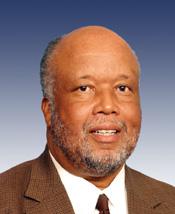
Serving · U.S. House · Mississippi · District 2
Bennie Thompson
U.S. Representative · Mississippi District 2 · 1993–present · Democratic
Bennie Thompson represents Mississippi's District 2 in the United States House of Representatives (1993–present) for the Democratic party. The page below collects sourced biographical facts, term history, committee roles, and provenance for Thompson.
Bioguide ID: T000193
Key facts
- Full name
- Bennie Thompson
- State
- Mississippi
- District
- District 2
- Party
- Democratic
- House service
- 1993–present
- First House term
- 1993
- Status
- Currently serving
- Current term ends
- 2027
- Born
- 1948
- Bioguide ID
- T000193
- Committee assignments
- 1
- Dataset version
- 1.20260604
Biographical narrative
995 words · sourced from the Wikipedia REST extract
Bennie G. Thompson is an American politician and educator currently serving as the U.S. Representative for Mississippi's 2nd congressional district. A member of the Democratic Party, Thompson has held this position since 1993, making him one of the longest-serving members of Congress. Throughout his tenure, he has been recognized for his leadership roles, including serving as the chair of the Committee on Homeland Security during two separate periods. Thompson's district, which encompasses most of Jackson, Mississippi, is notable for being the only majority-black congressional district in the state.
Early life and career
Bennie Gordon Thompson was born on January 28, 1948, in Bolton, Mississippi, to Will Thompson and Annie (Lauris) Thompson. He received his early education in Hinds County public schools and graduated from Hinds County Agricultural High School. Following high school, Thompson pursued higher education at Tougaloo College, where he earned a Bachelor of Arts degree in political science in 1968. He later obtained a Master of Science degree in educational administration from Jackson State University in 1972.
Thompson began his professional career as a schoolteacher in Madison, Mississippi. His political career commenced in local government, where he served as an alderman in Bolton from 1969 to 1973. He then became the mayor of Bolton, holding that position from 1973 to 1980. Following his tenure as mayor, Thompson was elected to the Hinds County Board of Supervisors, where he served from 1980 until 1993. His extensive experience in local governance laid the foundation for his subsequent election to the U.S. House of Representatives.
House tenure
Thompson entered the U.S. House of Representatives in 1993 after winning a special election to succeed Mike Espy, who had resigned to become Secretary of Agriculture. In the initial primary election, Thompson finished second among several Democratic candidates, ultimately defeating Republican Hayes Dent in a runoff election. Since then, he has been re-elected multiple times, demonstrating a strong electoral base within his district. Over the course of his congressional career, Thompson has faced significant opposition only a few times, notably from journalist Clinton LeSueur in the early 2000s.
Following the devastation caused by Hurricanes Katrina and Rita in 2005, Thompson emerged as a vocal advocate for the Gulf Coast. His position on the Homeland Security Committee allowed him to push for accountability from the Federal Emergency Management Agency (FEMA) and to scrutinize the role of the Red Cross during disaster recovery efforts. He has also been a proponent of ensuring that small businesses, particularly those located in the Gulf Coast region, receive support during the recovery and rebuilding processes. Thompson is recognized as the founding member of the bipartisan Gulf Coast Recovery & Rebuilding Caucus in the House.
Thompson's legislative career has been marked by a focus on various issues, including homeland security, civil rights, agriculture, education, and healthcare reform. He has been an advocate for the adequate funding of predominantly black educational institutions in Mississippi, having been one of the original plaintiffs in the Ayers Case in 1975. Additionally, he authored legislation that established the National Center for Minority Health and Health Care Disparities in 2000.
During his time as chair of the Homeland Security Committee, Thompson prioritized the needs of state and local officials, as well as first responders, ensuring they had the necessary resources to protect their communities. His background as a volunteer firefighter and local elected official for over two decades informed his commitment to these issues.
Thompson's congressional actions have included significant votes and legislative initiatives. He was one of the House Democrats who objected to the certification of the 2004 presidential election results in Ohio, citing concerns over alleged irregularities. He also participated in a legal action against President George W. Bush regarding the constitutionality of the Deficit Reduction Act of 2005, although the case was ultimately dismissed.
One of Thompson's notable legislative achievements was the introduction of H.R.1, the "Implementing the 9/11 Commission Recommendations Act of 2007," which was the first bill introduced in the 110th Congress. This legislation aimed to implement the remaining recommendations of the 9/11 Commission, focusing on enhancing aviation and border security, improving resources for first responders, and expanding diplomatic and educational strategies to counter terrorism. The bill received bipartisan support and was signed into law in August 2007, marking a significant accomplishment in Thompson's career.
Legislative focus and committees
Throughout his tenure in Congress, Thompson has maintained a strong focus on several key areas of legislation. His work in homeland security has been particularly prominent, especially following the events of September 11, 2001, and the subsequent challenges posed by natural disasters. As chair of the Committee on Homeland Security, he worked to ensure that local governments and first responders were adequately equipped to handle emergencies, reflecting his commitment to public safety and community resilience.
In addition to homeland security, Thompson has been an advocate for civil rights, emphasizing the importance of equal access to education and healthcare. His involvement in the Ayers Case highlights his dedication to addressing historical inequities in funding for educational institutions serving African American students. He has consistently supported initiatives aimed at improving health outcomes for minority populations, recognizing the disparities that exist in healthcare access and quality.
Thompson's legislative agenda also includes a focus on agricultural issues, which are vital to his constituents in Mississippi. He has worked to support rural communities and promote policies that benefit local farmers and agricultural workers. His experience in local governance has informed his understanding of the challenges faced by rural areas, allowing him to advocate effectively for their needs.
Overall, Bennie G. Thompson's long-standing service in the U.S. House of Representatives reflects his commitment to addressing the diverse needs of his constituents and advocating for policies that promote equity and security. His leadership roles and legislative achievements underscore his influence within Congress, particularly in matters related to homeland security and civil rights. As he continues to serve, Thompson remains a prominent figure in Mississippi politics and a significant voice on national issues.
Committees & roles
- House Committee on Homeland SecurityRanking Member · since 2025
Notable legislation
Sponsored and co-sponsored legislation for Bennie Thompson is pending operator curation. The biographical narrative above carries the same provenance trail until per-bill rows are written.
Sources
- [1]https://en.wikipedia.org/wiki/Bennie_ThompsonWikipedia · retrieved 2026-06-04
Notable quotes
Sourced quotes for Bennie Thompson are pending operator curation. Narrative-scope provenance remains attached below.
Sources
- [1]https://en.wikipedia.org/wiki/Bennie_ThompsonWikipedia · retrieved 2026-06-04
Key positions
Curated policy positions for Bennie Thompson are pending operator review. The biographical narrative above carries the same provenance trail until per-topic positions are written.
Sources
- [1]https://en.wikipedia.org/wiki/Bennie_ThompsonWikipedia · retrieved 2026-06-04
Terms served
- 1993–1995U.S. House · Term 1 · Democratic
- 1995–1997U.S. House · Term 2 · Democratic
- 1997–1999U.S. House · Term 3 · Democratic
- 1999–2001U.S. House · Term 4 · Democratic
- 2001–2003U.S. House · Term 5 · Democratic
- 2003–2005U.S. House · Term 6 · Democratic
- 2005–2007U.S. House · Term 7 · Democratic
- 2007–2009U.S. House · Term 8 · Democratic
- 2009–2011U.S. House · Term 9 · Democratic
- 2011–2013U.S. House · Term 10 · Democratic
- 2013–2015U.S. House · Term 11 · Democratic
- 2015–2017U.S. House · Term 12 · Democratic
- 2017–2019U.S. House · Term 13 · Democratic
- 2019–2021U.S. House · Term 14 · Democratic
- 2021–2023U.S. House · Term 15 · Democratic
- 2023–2025U.S. House · Term 16 · Democratic
- 2025–2027U.S. House · Term 17 · Democratic
Sources & provenance
Every attributable claim above carries a per-section [N] marker that resolves to the corresponding URL below. Each entry records the upstream provider, the canonical URL, and the timestamp at which the source was retrieved by the ingest pipeline.
Key facts
- https://bioguide.congress.gov/search/bio/T000193bioguide · retrieved 2026-06-04
- https://benniethompson.house.gov/house.gov · retrieved 2026-06-04
Biographical narrative
- https://en.wikipedia.org/wiki/Bennie_Thompsonwikipedia · retrieved 2026-06-04
Find your representative
Every U.S. state elects representatives by district. Browse Mississippi’s delegation, the full currently-serving-representative roster, or explore the role and term length.
Related on The Candidate
- Trent KellyServing U.S. Representative · Mississippi District 1 · RepublicanOpen
- Michael GuestServing U.S. Representative · Mississippi District 3 · RepublicanOpen
- Mike EzellServing U.S. Representative · Mississippi District 4 · RepublicanOpen
- Democratic PartyFederal candidates and office holders on the Democratic line.Open
- Representatives from MississippiEvery currently-serving U.S. Representative who has represented Mississippi.Open
- All serving representativesEvery individual currently serving in the U.S. House, grouped by state and district.Open