
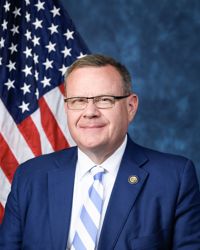
Serving · U.S. House · North Carolina · District 14
Tim Moore
U.S. Representative · North Carolina District 14 · 2025–present · Republican
Tim Moore represents North Carolina's District 14 in the United States House of Representatives (2025–present) for the Republican party. The page below collects sourced biographical facts, term history, committee roles, and provenance for Moore.
Bioguide ID: M001236
Key facts
- Full name
- Tim Moore
- State
- North Carolina
- District
- District 14
- Party
- Republican
- House service
- 2025–present
- First House term
- 2025
- Status
- Currently serving
- Current term ends
- 2027
- Born
- 1970
- Bioguide ID
- M001236
- Committee assignments
- 2
- Dataset version
- 1.20260603
Biographical narrative
1,051 words · sourced from the Wikipedia REST extract
Tim Moore is an American attorney and politician currently serving as the U.S. Representative for North Carolina's 14th congressional district. A member of the Republican Party, he began his term in the House of Representatives in 2025. Prior to his election to Congress, Moore had a significant political career in North Carolina, including a tenure as the Speaker of the North Carolina House of Representatives from 2015 to 2025. His legislative experience and leadership roles have established him as a prominent figure in state politics, particularly within the Republican Party.
Early life and career
Tim Moore was born on October 2, 1970, in Kings Mountain, North Carolina, located in the western region of the state. He grew up in a politically engaged environment, which influenced his future career in public service. Moore attended Kings Mountain High School, where he began to develop his interest in politics. As a teenager, he gained early exposure to the legislative process by working as a page at the North Carolina General Assembly. This experience was complemented by an internship with a state senator, further solidifying his interest in a political career.
Moore's higher education journey began at Campbell College, where he became involved with the College Republicans. After two years, he transferred to the University of North Carolina at Chapel Hill, where he completed his Bachelor of Arts degree in 1992. During his time at UNC, he was active in student government and notably took a case to the university's Supreme Court, advocating for an increase in the membership of the Student Congress.
In 1995, Moore earned his law degree from Oklahoma City University School of Law. Following his graduation, he joined a law firm in Shelby, North Carolina. In 2009, he established his own law practice in Kings Mountain, where he represented both business and individual clients. His legal career also included a role as an attorney for the Cleveland County Commission, a position he held concurrently with his responsibilities as Speaker of the North Carolina House.
In addition to his legal career, Moore co-owns a metal recycling business in Forsyth County, known as 67 Motors. His entrepreneurial ventures have contributed to his understanding of business and economic issues, which would later inform his legislative priorities.
Moore's political involvement began at a young age when he was elected chair of the Cleveland County Republican Party in 1997 at the age of 26. That same year, he was appointed to the University of North Carolina Board of Governors, making him the youngest individual to hold that position. This early engagement in politics set the stage for his subsequent electoral success.
House tenure
Tim Moore's political career in the North Carolina House of Representatives began when he was first elected in 2002, defeating the incumbent House Majority Whip, Democratic Representative Andy Dedmon. Initially, Moore served in the minority party, as Democrats held control of the House during his first four terms. However, the political landscape shifted in 2010 when Republicans regained control, leading to Moore's appointment as chairman of the Rules Committee by Speaker Thom Tillis. In this influential role, he became known for his assertive management of legislative debates.
Throughout his time in the North Carolina House, Moore was recognized as a staunch conservative and played a key role in advancing significant legislative initiatives. He was part of the Republican leadership team that enacted extensive reforms aimed at reducing taxes for businesses, tightening regulations on abortion and voting, and opposing the expansion of Medicaid coverage for uninsured residents in the state. His legislative actions reflected the priorities of the Republican Party in North Carolina during this period.
Moore's influence in the House grew, and in 2015, he was elected Speaker of the North Carolina House of Representatives. His leadership was marked by his ability to raise substantial campaign funds, which contributed to his election as Speaker. Under his guidance, the House passed various measures, including controversial legislation such as House Bill 2, which restricted transgender individuals' access to restrooms corresponding to their gender identity. This bill drew national attention and legal challenges, highlighting the contentious nature of social issues in North Carolina politics.
In subsequent years, Moore continued to navigate complex political landscapes, including debates over gerrymandering and school safety. He established a Select Committee on School Safety in response to mass shootings, although he faced criticism for not addressing gun control measures. His tenure also included scrutiny over ethical concerns related to his business interests, particularly regarding a chicken processing plant he co-owned.
Moore's leadership in the North Carolina House was characterized by a commitment to conservative principles and a focus on economic issues, which resonated with his constituents. He was re-elected multiple times as Speaker, reflecting his influence and the support he garnered within the Republican caucus.
Legislative focus and committees
As a member of the U.S. House of Representatives, Tim Moore has continued to align with the Republican Party's legislative priorities. His tenure in Congress began in 2025, and he has since focused on issues that reflect his conservative values and the interests of his constituents in North Carolina's 14th congressional district. While specific details of his legislative initiatives in Congress are not available, it is expected that he will draw upon his extensive experience in state politics to inform his work at the federal level.
Moore's background in law and his experience as a state legislator position him well to engage in discussions surrounding legal and regulatory matters. His previous roles in the North Carolina House, particularly as Speaker, have equipped him with a deep understanding of legislative processes and the importance of coalition-building among lawmakers.
In Congress, Moore is likely to participate in committees that align with his interests and expertise, focusing on issues such as business regulation, taxation, and social policy. His previous positions indicate a commitment to conservative fiscal policies and a cautious approach to social issues, which will likely shape his contributions to national debates.
As he continues his service in the U.S. House, Moore's legislative focus will be closely watched by both supporters and critics, as he navigates the complexities of federal governance while representing the interests of his North Carolina constituents. His ongoing career reflects a blend of legal acumen, political experience, and a dedication to the principles of the Republican Party.
Committees & roles
- House Committee on Financial ServicesMember · since 2025
- House Committee on the BudgetMember · since 2025
Notable legislation
Sponsored and co-sponsored legislation for Tim Moore is pending operator curation. The biographical narrative above carries the same provenance trail until per-bill rows are written.
Sources
- [1]https://en.wikipedia.org/wiki/Tim_Moore_(North_Carolina_politician)Wikipedia · retrieved 2026-06-03
Notable quotes
Sourced quotes for Tim Moore are pending operator curation. Narrative-scope provenance remains attached below.
Sources
- [1]https://en.wikipedia.org/wiki/Tim_Moore_(North_Carolina_politician)Wikipedia · retrieved 2026-06-03
Key positions
Curated policy positions for Tim Moore are pending operator review. The biographical narrative above carries the same provenance trail until per-topic positions are written.
Sources
- [1]https://en.wikipedia.org/wiki/Tim_Moore_(North_Carolina_politician)Wikipedia · retrieved 2026-06-03
Terms served
- 2025–2027U.S. House · Term 1 · Republican
Sources & provenance
Every attributable claim above carries a per-section [N] marker that resolves to the corresponding URL below. Each entry records the upstream provider, the canonical URL, and the timestamp at which the source was retrieved by the ingest pipeline.
Key facts
- https://bioguide.congress.gov/search/bio/M001236bioguide · retrieved 2026-06-03
- https://timmoore.house.gov/house.gov · retrieved 2026-06-03
Biographical narrative
- https://en.wikipedia.org/wiki/Tim_Moore_(North_Carolina_politician)wikipedia · retrieved 2026-06-03
Find your representative
Every U.S. state elects representatives by district. Browse North Carolina’s delegation, the full currently-serving-representative roster, or explore the role and term length.
Related on The Candidate
- Donald DavisServing U.S. Representative · North Carolina District 1 · DemocraticOpen
- Pat HarriganServing U.S. Representative · North Carolina District 10 · RepublicanOpen
- Charles (Chuck) EdwardsServing U.S. Representative · North Carolina District 11 · RepublicanOpen
- Alma AdamsServing U.S. Representative · North Carolina District 12 · DemocraticOpen
- Republican PartyFederal candidates and office holders on the Republican line.Open
- Representatives from North CarolinaEvery currently-serving U.S. Representative who has represented North Carolina.Open