
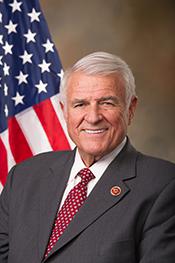
Serving · U.S. House · Texas · District 31
John Carter
U.S. Representative · Texas District 31 · 2003–present · Republican
John Carter represents Texas's District 31 in the United States House of Representatives (2003–present) for the Republican party. The page below collects sourced biographical facts, term history, committee roles, and provenance for Carter.
Bioguide ID: C001051
Key facts
- Full name
- John Carter
- State
- Texas
- District
- District 31
- Party
- Republican
- House service
- 2003–present
- First House term
- 2003
- Status
- Currently serving
- Current term ends
- 2027
- Born
- 1941
- Bioguide ID
- C001051
- Committee assignments
- 1
- Dataset version
- 1.20260604
Biographical narrative
847 words · sourced from the Wikipedia REST extract
John Carter is an American politician currently serving as a U.S. Representative for Texas's 31st congressional district, a position he has held since 2003. A member of the Republican Party, Carter represents a district that encompasses the northern suburbs of Austin and includes Fort Hood, a significant military installation. Over his extensive political career, he has participated in numerous legislative initiatives and has been involved in various committees, focusing on issues pertinent to his constituents and the broader national landscape.
Early life and career
John Carter was born on November 6, 1941, in Houston, Texas. He spent most of his formative years in central Texas, where he developed a strong connection to the region. He pursued higher education at Texas Tech University, earning a degree in history in 1964. Following his undergraduate studies, he attended the University of Texas School of Law, where he obtained his Juris Doctor in 1969. This educational background laid the foundation for his subsequent career in law and public service.
After completing his legal education, Carter began his professional career as the first general counsel for the Agriculture Committee of the Texas House of Representatives. This role provided him with valuable experience in legislative processes and state governance. He later established a private law practice in Round Rock, Texas, where he served the local community and gained further insights into the legal and political needs of his constituents.
In 1981, Carter was appointed as the judge of the 277th District Court in Williamson County. He made history by becoming the first Republican to be elected to a countywide position in the county, securing reelection four times. During his tenure as a judge, he presided over several high-profile cases, including the trial of Genene Jones, a nurse convicted of murdering an infant. This case garnered significant media attention and highlighted Carter's judicial capabilities.
Carter's judicial career provided him with a platform to transition into politics. In 2001, he retired from the bench to pursue a congressional seat in the newly established 31st District of Texas. His legal background and experience in public service positioned him as a strong candidate for the role.
House tenure
Carter's congressional career began in 2003 when he was elected to represent Texas's 31st congressional district. His initial term spanned from 2003 to 2005, during which he represented a district that extended from the suburbs of Austin to western Houston, including College Station, home to Texas A&M University. Following the 2010 census, redistricting altered the boundaries of his district, reducing it primarily to Bell and Williamson counties and incorporating Fort Hood.
Throughout his tenure, Carter has faced various electoral challenges. In 2016, he was reelected with a significant majority, receiving over half of the total votes cast. The following election in 2018 proved to be more competitive, as he narrowly defeated his Democratic opponent, marking the smallest victory margin of his career.
Carter's time in the House has been marked by his involvement in numerous legislative initiatives. He sponsored the Identity Theft Penalty Enhancement Act, which was signed into law in 2004. His legislative focus has included a range of issues, from military and veterans' affairs to social policies.
Legislative focus and committees
During his time in Congress, Carter has served on various committees and has been involved in multiple legislative efforts. He was a sponsor of several significant bills, including the Military Spouses Residency Relief Act and the Terrorist Death Penalty Act of 2008. His legislative agenda has often reflected the interests and concerns of his constituents, particularly those related to military families and veterans.
Carter's involvement in the House has also included co-sponsoring legislation aimed at addressing issues of national importance. For instance, he co-sponsored a bill requiring presidential candidates to produce a birth certificate, which emerged in response to conspiracy theories regarding President Barack Obama's citizenship. Additionally, he has been vocal about ethical concerns within Congress, notably criticizing perceived inconsistencies in how members were held accountable for ethical violations.
In 2018, Carter was appointed as the chair of the Military Construction and Veterans Affairs Subcommittee on Appropriations, a role that allowed him to influence funding and policy decisions affecting military installations and veterans' services. He had previously chaired the Homeland Security Subcommittee on Appropriations, further demonstrating his commitment to issues related to national security and military readiness.
Carter's voting record has aligned closely with his party's positions on various contentious issues. He voted against both articles of impeachment against former President Donald Trump and opposed certifying the results of the 2020 presidential election, reflecting his alignment with the Republican Party's stance during those critical moments.
Throughout his congressional career, John Carter has maintained a focus on issues that resonate with his constituents, particularly those related to military affairs, public safety, and ethical governance. His extensive experience in law and public service has informed his legislative priorities and shaped his approach to representing Texas's 31st congressional district. As he continues his service in the House, Carter remains a prominent figure in Texas politics, with a legacy shaped by over two decades of public service.
Committees & roles
- House Committee on AppropriationsMember · since 2025
Notable legislation
Sponsored and co-sponsored legislation for John Carter is pending operator curation. The biographical narrative above carries the same provenance trail until per-bill rows are written.
Sources
- [1]https://en.wikipedia.org/wiki/John_Carter_(Texas_politician)Wikipedia · retrieved 2026-06-04
Notable quotes
Sourced quotes for John Carter are pending operator curation. Narrative-scope provenance remains attached below.
Sources
- [1]https://en.wikipedia.org/wiki/John_Carter_(Texas_politician)Wikipedia · retrieved 2026-06-04
Key positions
Curated policy positions for John Carter are pending operator review. The biographical narrative above carries the same provenance trail until per-topic positions are written.
Sources
- [1]https://en.wikipedia.org/wiki/John_Carter_(Texas_politician)Wikipedia · retrieved 2026-06-04
Terms served
- 2003–2005U.S. House · Term 1 · Republican
- 2005–2007U.S. House · Term 2 · Republican
- 2007–2009U.S. House · Term 3 · Republican
- 2009–2011U.S. House · Term 4 · Republican
- 2011–2013U.S. House · Term 5 · Republican
- 2013–2015U.S. House · Term 6 · Republican
- 2015–2017U.S. House · Term 7 · Republican
- 2017–2019U.S. House · Term 8 · Republican
- 2019–2021U.S. House · Term 9 · Republican
- 2021–2023U.S. House · Term 10 · Republican
- 2023–2025U.S. House · Term 11 · Republican
- 2025–2027U.S. House · Term 12 · Republican
Sources & provenance
Every attributable claim above carries a per-section [N] marker that resolves to the corresponding URL below. Each entry records the upstream provider, the canonical URL, and the timestamp at which the source was retrieved by the ingest pipeline.
Key facts
- https://bioguide.congress.gov/search/bio/C001051bioguide · retrieved 2026-06-04
- https://carter.house.gov/house.gov · retrieved 2026-06-04
Biographical narrative
- https://en.wikipedia.org/wiki/John_Carter_(Texas_politician)wikipedia · retrieved 2026-06-04
Find your representative
Every U.S. state elects representatives by district. Browse Texas’s delegation, the full currently-serving-representative roster, or explore the role and term length.
Related on The Candidate
- Nathaniel MoranServing U.S. Representative · Texas District 1 · RepublicanOpen
- Michael McCaulServing U.S. Representative · Texas District 10 · RepublicanOpen
- August Pfluger IIServing U.S. Representative · Texas District 11 · RepublicanOpen
- Craig GoldmanServing U.S. Representative · Texas District 12 · RepublicanOpen
- Republican PartyFederal candidates and office holders on the Republican line.Open
- Representatives from TexasEvery currently-serving U.S. Representative who has represented Texas.Open