
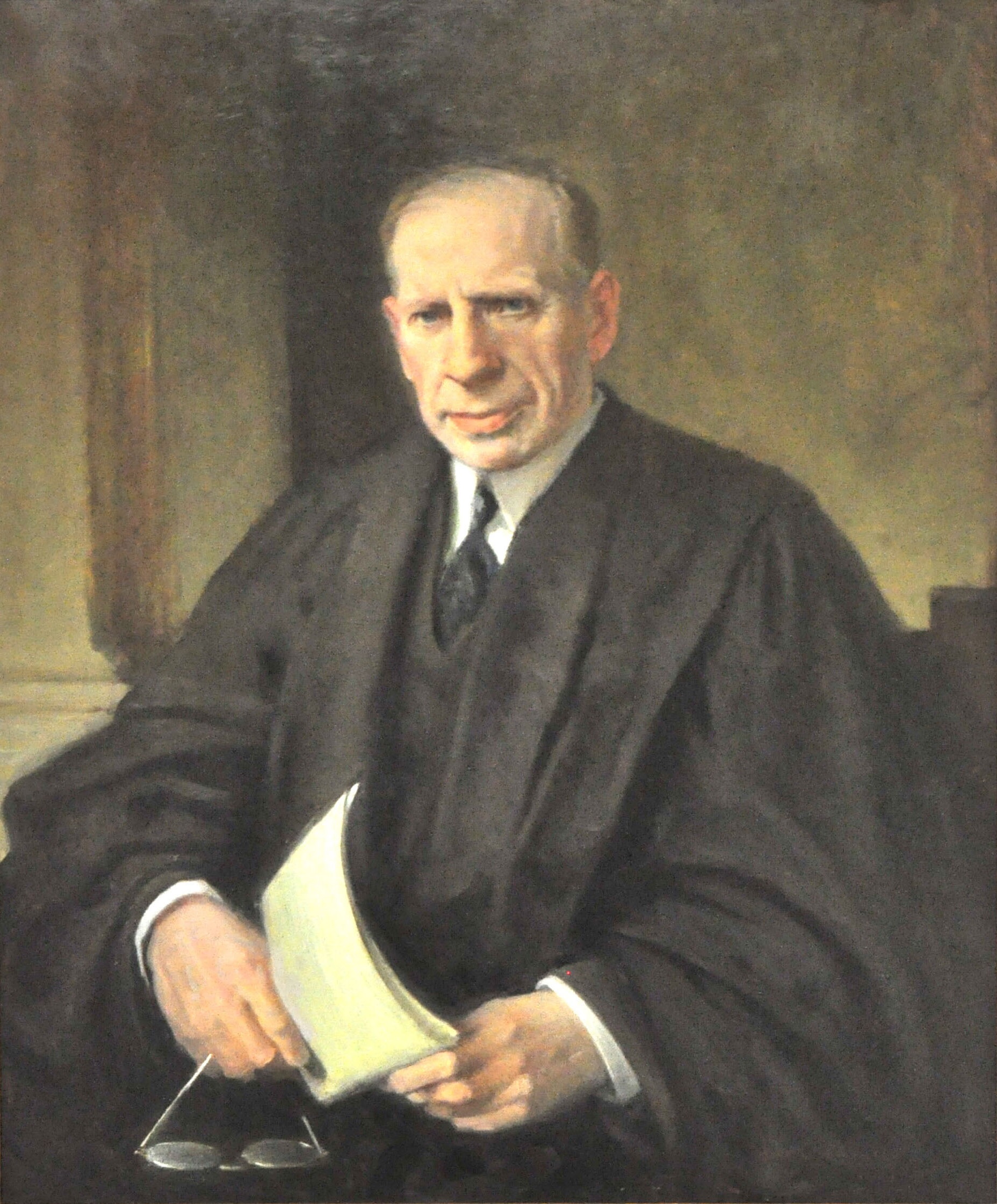
Historical · U.S. Court of Appeals for the District of Columbia Circuit
Duncan Lawrence Groner
Former Circuit Judge · U.S. Court of Appeals for the District of Columbia Circuit · 1931–1957 · Appointed by Franklin D Roosevelt
Duncan Lawrence Groner served as a circuit judge of the U.S. Court of Appeals for the District of Columbia Circuit (1931–1957). Groner was appointed by Franklin D Roosevelt.
Key facts
- Full name
- Duncan Lawrence Groner
- Court
- U.S. Court of Appeals for the District of Columbia Circuit
- Office
- Circuit Judge (U.S. Court of Appeals)
- Status
- Former circuit judge
- Duty status
- Not serving
- Appointment
- Senate-confirmed
- FJC seat
- CADC0105
- Tenure
- 1931–1957
- Confirmed
- 1937-12-03
- Born
- 1873-09-06
- Died
- 1957-07-17
- First year on the bench
- 1931
- Dataset version
- 1.20260711
Appointment & service record
U.S. Court of Appeals for the District of Columbia Circuit · 1931–1938
- Seat
- CADC0501
- Appointment
- Senate-confirmed
- Appointing president
- Herbert Hoover
- Confirmed
- 1931-02-10
- Commissioned
- 1931-02-21
- Senior status
- —
U.S. Court of Appeals for the District of Columbia Circuit · 1937–1948
- Seat
- CADC0105
- Appointment
- Senate-confirmed
- Appointing president
- Franklin D Roosevelt
- Confirmed
- 1937-12-03
- Commissioned
- 1937-12-07
- Senior status
- 1948-03-08
Court, FJC seat, appointment type (Senate-confirmed or recess), appointing president, confirmation and commission dates, and senior-status date are drawn from the Federal Judicial Center Biographical Directory and Wikidata.[1][2][3]
Sources
- [1]https://www.fjc.gov/node/1381546fjc · retrieved 2026-07-11
- [2]https://www.fjc.gov/history/judges/biographical-directory-article-iii-federal-judges-exportfjc-directory · retrieved 2026-07-11
- [3]https://www.wikidata.org/wiki/Q5314427Wikidata · retrieved 2026-07-11
Biographical narrative
1,412 words · sourced from the Wikipedia REST extract
Duncan Lawrence Groner was a federal judge who served on the United States Court of Appeals for the District of Columbia Circuit from 1931 until his death in 1957, including a decade as Chief Justice of that court. Born in Virginia in 1873, he built a career in private practice and federal prosecution before ascending to the federal bench, first as a district judge and later as an appellate jurist. His judicial service spanned three presidential administrations and included significant contributions to civil rights jurisprudence during the early twentieth century.
Early life and legal career
Duncan Lawrence Groner was born on September 6, 1873, in Norfolk, Virginia. He pursued his higher education at two prominent Virginia institutions, attending both the University of Virginia and Washington and Lee University, though the specific details of his degrees and graduation dates are not recorded in available sources. Following his legal education, Groner established himself in private practice in his hometown of Norfolk beginning in 1894, building a legal career that would span more than a quarter century in various capacities.
Groner's early career demonstrated both his legal acumen and his engagement with the political process. He maintained his private practice in Norfolk from 1894 to 1910, establishing himself as a respected member of the Virginia bar. His involvement in Republican Party politics was extensive and sustained; he served as a delegate to every Republican National Convention from 1904 through 1920, a period encompassing five consecutive conventions during a transformative era in American politics. This level of consistent participation reflected both his standing within the party and his commitment to the political process during the Progressive Era and World War I period.
In 1910, Groner transitioned from private practice to federal service when he was appointed United States Attorney for the Eastern District of Virginia. He served in this prosecutorial role for three years, from 1910 to 1913, gaining valuable experience in federal litigation and courtroom practice. This position provided him with extensive knowledge of federal criminal and civil procedure, as well as familiarity with the federal court system that would later prove invaluable in his judicial career. After completing his service as United States Attorney, Groner returned to private practice in Norfolk, where he continued to work from 1913 to 1921, further developing his expertise and reputation in the legal community.
President Warren G. Harding nominated Groner to serve as a United States District Judge for the Eastern District of Virginia on May 26, 1921. The Senate confirmed his nomination on June 2, 1921, and he received his commission the same day, beginning a new chapter in his career as a member of the federal judiciary. Groner served on the district court for nearly a decade, presiding over cases in the trial court until March 3, 1931. During his tenure on the district bench, he authored at least one notable decision addressing voting rights, ruling that Virginia's white primary system, which had been established in 1912, violated constitutional principles. This decision was subsequently upheld on appeal, and it preceded by fourteen years the Supreme Court's comprehensive prohibition of white primaries in similar cases, demonstrating Groner's willingness to address civil rights issues during a period when such rulings were uncommon in Southern federal courts.
Federal appellate service
Groner's elevation to the appellate bench came through a nomination by President Herbert Hoover, a Republican. On January 5, 1931, Hoover nominated Groner to the Court of Appeals of the District of Columbia, to fill a newly created Associate Justice seat that had been authorized by federal statute. The Senate confirmed the nomination on February 10, 1931, and Groner received his commission on February 21, 1931, concluding his service on the district court. This appointment marked the beginning of what would become more than a quarter century of service on the District of Columbia Circuit, one of the most important federal appellate courts given its jurisdiction over challenges to federal agency actions and other matters of national significance.
Groner served as an Associate Justice on the court from 1931 until December 7, 1937. During this initial period of appellate service, the court itself underwent a statutory redesignation, becoming known as the United States Court of Appeals for the District of Columbia effective June 4, 1937. This change reflected broader reorganization of the federal judiciary during the New Deal era. Groner's service in this initial seat concluded when he was elevated to the position of Chief Justice of the same court.
President Franklin D. Roosevelt, a Democrat, nominated Groner to serve as Chief Justice of the United States Court of Appeals for the District of Columbia on November 26, 1937. This nomination came to fill the seat that had been vacated by Chief Justice George Ewing Martin. The Senate confirmed Groner's elevation on December 3, 1937, and he received his commission on December 7, 1937. The appointment represented a notable instance of a Democratic president elevating a judge who had been initially appointed by a Republican president, suggesting recognition of Groner's judicial qualifications and temperament across party lines.
As Chief Justice, Groner led the court during a critical period in American history, including the latter years of the Great Depression, World War II, and the early Cold War era. He served in this leadership capacity from 1937 until 1948. Beyond his duties on the circuit, Groner participated in the broader administration of the federal judiciary through his membership on the Conference of Senior Circuit Judges, which later became the Judicial Conference of the United States. He served in this capacity from 1938 to 1947, contributing to the development of judicial policy and administration at the national level during a period of significant expansion and evolution of the federal court system.
The court underwent another statutory redesignation during Groner's tenure as Chief Justice, becoming known as the United States Court of Appeals for the District of Columbia Circuit effective June 25, 1948. On March 8, 1948, Groner assumed senior status, a form of semi-retirement that allows federal judges to continue hearing cases with a reduced caseload. He continued to serve in senior status until his death on July 17, 1957, concluding more than three decades of service on the federal bench.
Jurisprudence and legacy
Groner's judicial career spanned a transformative period in American law and society, from the early 1920s through the late 1950s. His service encompassed the Prohibition era, the Great Depression, the New Deal's expansion of federal administrative agencies, World War II, and the beginning of the modern civil rights movement. As a member and later leader of the D.C. Circuit, he participated in the development of administrative law and other areas of federal jurisprudence during decades when the role of the federal government expanded dramatically.
His earlier decision as a district judge regarding Virginia's white primary demonstrated a willingness to enforce constitutional principles in the area of voting rights at a time when such decisions were rare in the South. This ruling, which preceded the Supreme Court's later comprehensive treatment of the issue by more than a decade, reflected an approach to constitutional interpretation that recognized the rights of African American voters despite prevailing regional attitudes. The decision's affirmance on appeal indicated that it was grounded in sound legal reasoning that withstood appellate scrutiny.
Groner's lengthy tenure on the D.C. Circuit, particularly his decade as Chief Justice, positioned him as an influential figure in the development of that court's jurisprudence. The D.C. Circuit's unique role in reviewing actions of federal agencies meant that the court's decisions during his tenure helped shape the relationship between the judiciary and the executive branch during a period of unprecedented growth in administrative governance. His service under appointments from presidents of both major parties—first Hoover and then Roosevelt—and his elevation to Chief Justice by a president of a different party than his initial appointing president, suggests that his judicial work was regarded as sound and non-partisan by officials across the political spectrum.
His participation in the Conference of Senior Circuit Judges during nine years of his chief judgeship allowed him to contribute to the institutional development of the federal judiciary beyond his own circuit. This body, which evolved into the modern Judicial Conference, played an important role in coordinating judicial administration and policy during a period when the federal court system was adapting to increased caseloads and expanding responsibilities. Groner's service concluded with his death in 1957, ending a judicial career that had spanned thirty-six years on the federal bench.
Sources & provenance
Every quantitative or attributable claim above carries a per-section [N] marker that resolves to the corresponding URL below. Each entry records the upstream provider, the canonical URL, and the timestamp at which the underlying source was retrieved.
Key facts
- https://www.fjc.gov/node/1381546fjc · retrieved 2026-07-11
- https://www.fjc.gov/history/judges/biographical-directory-article-iii-federal-judges-exportfjc-directory · retrieved 2026-07-11
- https://www.wikidata.org/wiki/Q5314427Wikidata · retrieved 2026-07-11
Biographical narrative
- https://en.wikipedia.org/wiki/D._Lawrence_GronerWikipedia · retrieved 2026-07-11
Explore the federal judiciary
The U.S. Courts of Appeals are the intermediate appellate courts of the federal judiciary — thirteen circuits sitting between the district courts and the Supreme Court. Browse the full roster of judges on the U.S. Court of Appeals for the District of Columbia Circuit, or explore how the appointed federal judiciary fits into the federal government.