
Historical · U.S. Court of Appeals for the Eighth Circuit
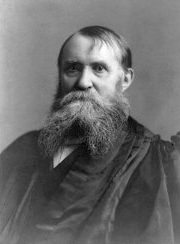
Henry Clay Caldwell
Former Circuit Judge · U.S. Court of Appeals for the Eighth Circuit · 1891–1903 · Appointed by None Assignment
Henry Clay Caldwell served as a circuit judge of the U.S. Court of Appeals for the Eighth Circuit (1891–1903). Caldwell was appointed by None Assignment.
Key facts
- Full name
- Henry Clay Caldwell
- Court
- U.S. Court of Appeals for the Eighth Circuit
- Office
- Circuit Judge (U.S. Court of Appeals)
- Status
- Former circuit judge
- Duty status
- Not serving
- Appointment
- Recess appointment
- FJC seat
- CA80101
- Tenure
- 1891–1903
- Confirmed
- —
- Born
- 1832-09-04
- Died
- 1915-02-15
- First year on the bench
- 1891
- Dataset version
- 1.20260711
Appointment & service record
U.S. Court of Appeals for the Eighth Circuit · 1891–1903
- Seat
- CA80101
- Appointment
- Recess appointment
- Appointing president
- None Assignment
- Confirmed
- Recess appointment
- Commissioned
- 1891-06-16
- Senior status
- —
Court, FJC seat, appointment type (Senate-confirmed or recess), appointing president, confirmation and commission dates, and senior-status date are drawn from the Federal Judicial Center Biographical Directory and Wikidata.[1][2][3]
Sources
- [1]https://www.fjc.gov/node/1378736fjc · retrieved 2026-07-11
- [2]https://www.fjc.gov/history/judges/biographical-directory-article-iii-federal-judges-exportfjc-directory · retrieved 2026-07-11
- [3]https://www.wikidata.org/wiki/Q13414799Wikidata · retrieved 2026-07-11
Biographical narrative
1,124 words · sourced from the Wikipedia REST extract
Henry Clay Caldwell was a United States Circuit Judge who served on the United States Court of Appeals for the Eighth Circuit from 1891 to 1903. Born in 1832 in what is now West Virginia, he had a distinguished career that included military service during the American Civil War, state legislative experience, and more than a quarter-century on the federal bench. Appointed initially as a federal district judge by President Abraham Lincoln during the Civil War, Caldwell later received elevation to the circuit courts by President Benjamin Harrison, a Republican, and subsequently served on the newly created Court of Appeals for the Eighth Circuit following passage of the Evarts Act.
Early life and legal career
Henry Clay Caldwell was born on September 4, 1832, in Marshall County, Virginia, in territory that would later become part of West Virginia. He pursued legal education through the traditional method of reading law, completing this course of study in 1851. The following year, at age twenty, Caldwell established a private law practice in Keosauqua, Iowa, where he practiced for four years until 1856. His legal work in this small Iowa community provided the foundation for his subsequent career in public service.
Caldwell's entry into public life began with his election as prosecutor for Van Buren County, Iowa, a position he held from 1856 to 1858. This prosecutorial experience gave him practical courtroom skills and familiarity with criminal law that would prove valuable throughout his judicial career. Following his tenure as county prosecutor, Caldwell sought and won election to the Iowa House of Representatives, serving as a state legislator from 1859 to 1861. His time in the state legislature coincided with the tumultuous period leading up to and including the outbreak of the American Civil War.
When the Civil War began, Caldwell left his legislative duties to serve in the United States Army from 1861 to 1864. He attained the rank of Colonel and commanded the 3rd Iowa Volunteer Cavalry Regiment. His military service included combat operations in Missouri, where his regiment engaged forces under the command of Colonel Joseph C. Porter, who led the 1st Northeast Missouri Cavalry. Caldwell's military leadership during this critical period in American history demonstrated his commitment to the Union cause and added to his credentials as a public servant.
Federal appellate service
Caldwell's federal judicial career began while he was still in military service. President Abraham Lincoln, a Republican, nominated him on May 2, 1864, to fill a vacancy on both the United States District Court for the Eastern District of Arkansas and the United States District Court for the Western District of Arkansas. The vacancy had been created by the departure of Judge Daniel Ringo. The United States Senate confirmed Caldwell's nomination on May 28, 1864, and he received his commission on June 20, 1864, while the Civil War was still ongoing. His appointment reflected the Lincoln administration's need to establish federal judicial authority in Arkansas, a state that had been part of the Confederacy but was being brought back under Union control.
Caldwell served as a district judge for more than a quarter-century. His initial appointment covered both Arkansas districts, but on March 3, 1871, his assignment was modified by operation of law so that he served only in the Eastern District of Arkansas. He continued in this capacity until 1890, presiding over federal cases during the challenging Reconstruction era and the subsequent decades of social and economic transformation in Arkansas. His lengthy tenure on the district court established him as an experienced jurist with deep knowledge of federal law.
In 1890, Caldwell received elevation to the circuit courts. President Benjamin Harrison, a Republican, nominated him on February 27, 1890, to a seat on the United States Circuit Courts for the Eighth Circuit that had been vacated by Judge David Josiah Brewer. The Senate confirmed this nomination rapidly, on March 4, 1890, and Caldwell received his commission the same day. His service terminated on March 13, 1890, at the district court level due to this elevation.
A significant development in Caldwell's judicial career occurred with the passage of the Evarts Act in 1891, legislation that reorganized the federal court system and created the modern Courts of Appeals. On June 16, 1891, Caldwell was assigned by operation of law to additional and concurrent service on the newly established United States Court of Appeals for the Eighth Circuit, filling a new seat authorized by the statute. This assignment meant he served on both the circuit courts and the new appellate court simultaneously, as was common during the transitional period following the Evarts Act.
Caldwell served on the Eighth Circuit appellate courts until June 4, 1903, when his service terminated due to retirement. His twelve years on the Court of Appeals, combined with his earlier district court service, gave him nearly four decades of experience on the federal bench. He retired at approximately age seventy, having witnessed enormous changes in American law and society during his judicial tenure.
Jurisprudence and legacy
Caldwell's judicial work spanned a transformative period in American legal history, from the Civil War and Reconstruction through the Gilded Age and into the Progressive Era. His writings indicate engagement with significant legal issues of his time. He authored a work titled "Railroad Receiverships in the Federal Courts of the United States," published in 1896, which addressed the important and frequently litigated question of how federal courts should handle railroad bankruptcies and receiverships during a period of rapid railroad expansion and frequent financial failures in that industry.
Later in his life, Caldwell contributed to public discourse on fundamental questions of judicial procedure. In 1910, he published an article titled "Trial by Judge and Jury" in the American Federationist, examining the jury system and its role in American justice. This publication in a labor-oriented journal suggests his interest in making legal concepts accessible to broader audiences beyond the legal profession.
Contemporary observers took note of Caldwell's judicial service. A biographical sketch titled "A Just Judge: Being a Brief Sketch of Henry Clay Caldwell of the United States Circuit Court" appeared in The Arena magazine in 1896, indicating that his work attracted attention during his active service. His career was also documented in various legal and biographical reference works of the period, reflecting his standing within the legal community.
After his retirement from the bench in 1903, Caldwell lived for another twelve years. He died on February 15, 1915, in Los Angeles, California, at the age of eighty-two. His nearly four decades of federal judicial service, spanning from the Civil War era through the early twentieth century, made him one of the longer-serving federal judges of his generation and a significant figure in the development of federal law in the Eighth Circuit.
Sources & provenance
Every quantitative or attributable claim above carries a per-section [N] marker that resolves to the corresponding URL below. Each entry records the upstream provider, the canonical URL, and the timestamp at which the underlying source was retrieved.
Key facts
- https://www.fjc.gov/node/1378736fjc · retrieved 2026-07-11
- https://www.fjc.gov/history/judges/biographical-directory-article-iii-federal-judges-exportfjc-directory · retrieved 2026-07-11
- https://www.wikidata.org/wiki/Q13414799Wikidata · retrieved 2026-07-11
Biographical narrative
- https://en.wikipedia.org/wiki/Henry_Clay_CaldwellWikipedia · retrieved 2026-07-11
Explore the federal judiciary
The U.S. Courts of Appeals are the intermediate appellate courts of the federal judiciary — thirteen circuits sitting between the district courts and the Supreme Court. Browse the full roster of judges on the U.S. Court of Appeals for the Eighth Circuit, or explore how the appointed federal judiciary fits into the federal government.