
Historical · U.S. Court of Appeals for the Eighth Circuit
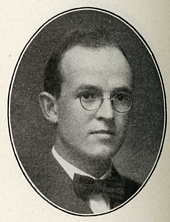
John Benjamin Sanborn
Former Circuit Judge · U.S. Court of Appeals for the Eighth Circuit · 1932–1964 · Appointed by Herbert Hoover
John Benjamin Sanborn served as a circuit judge of the U.S. Court of Appeals for the Eighth Circuit (1932–1964). Sanborn was appointed by Herbert Hoover.
Key facts
- Full name
- John Benjamin Sanborn
- Court
- U.S. Court of Appeals for the Eighth Circuit
- Office
- Circuit Judge (U.S. Court of Appeals)
- Status
- Former circuit judge
- Duty status
- Not serving
- Appointment
- Senate-confirmed
- FJC seat
- CA80602
- Tenure
- 1932–1964
- Confirmed
- 1932-01-19
- Born
- 1883-11-09
- Died
- 1964-03-07
- First year on the bench
- 1932
- Dataset version
- 1.20260711
Appointment & service record
U.S. Court of Appeals for the Eighth Circuit · 1932–1959
- Seat
- CA80602
- Appointment
- Senate-confirmed
- Appointing president
- Herbert Hoover
- Confirmed
- 1932-01-19
- Commissioned
- 1932-01-23
- Senior status
- 1959-06-30
Court, FJC seat, appointment type (Senate-confirmed or recess), appointing president, confirmation and commission dates, and senior-status date are drawn from the Federal Judicial Center Biographical Directory and Wikidata.[1][2][3]
Sources
- [1]https://www.fjc.gov/node/1387346fjc · retrieved 2026-07-11
- [2]https://www.fjc.gov/history/judges/biographical-directory-article-iii-federal-judges-exportfjc-directory · retrieved 2026-07-11
- [3]https://www.wikidata.org/wiki/Q6220118Wikidata · retrieved 2026-07-11
Biographical narrative
1,161 words · sourced from the Wikipedia REST extract
John Benjamin Sanborn Jr. was a United States circuit judge who served on the United States Court of Appeals for the Eighth Circuit from 1932 until his death in 1964. Born in Saint Paul, Minnesota, in 1883, he had a distinguished career in both state and federal judicial service spanning more than four decades. Before his elevation to the federal appellate bench, he served as a United States district judge, a Minnesota state trial court judge, and held several important positions in Minnesota state government. He was appointed to the Eighth Circuit by President Herbert Hoover, a Republican, and his lengthy tenure on that court made him one of the most experienced federal appellate judges in the circuit during the mid-twentieth century.
Early life and legal career
John Benjamin Sanborn Jr. was born on November 9, 1883, in Saint Paul, Minnesota. He was the son of John B. Sanborn, a prominent attorney and Civil War general, which placed him in a family with deep roots in Minnesota's legal and military history. Sanborn pursued his undergraduate education at the University of Minnesota, where he earned a Bachelor of Arts degree in 1905. He then attended the St. Paul College of Law, an institution that would later become Mitchell Hamline School of Law, receiving his Bachelor of Laws degree in 1907.
Following his admission to the bar, Sanborn entered private legal practice in Saint Paul in 1907, where he would remain for nearly a decade. During a portion of this period, he practiced with a law firm that included two attorneys who would later achieve national prominence: Pierce Butler, who would go on to serve as an Associate Justice of the United States Supreme Court, and William D. Mitchell, who would serve as United States Attorney General. This early association with such distinguished legal figures provided Sanborn with valuable experience and professional connections.
Sanborn's career soon expanded beyond private practice into public service. He served as a member of the Minnesota House of Representatives from 1913 to 1915, gaining experience in the legislative process and state governance. Following his legislative service, he was appointed Comptroller of Insurance for the State of Minnesota, a position he held from 1917 to 1918 and again from 1919 to 1920.
His service as insurance commissioner was interrupted by World War I. On August 12, 1918, Sanborn resigned from his position as insurance commissioner to join the United States Army. He initially enlisted as a private and was stationed at Fort Pike, Arkansas, where he attended the Infantry Central Officers Training School. He was commissioned as a first lieutenant on November 30, 1918, just days before the armistice that ended the war. He was honorably discharged on December 3, 1918, after only four days as a commissioned officer, reflecting the rapid demobilization that followed the war's conclusion.
After his military service, Sanborn returned to public service in Minnesota, serving as a member of the Minnesota Tax Commission from 1920 to 1921. His career then moved into the judiciary when he was appointed as a judge of the Minnesota District Court, where he served from 1922 to 1925. This state trial court experience provided him with a foundation in judicial decision-making that would prove valuable throughout his subsequent federal judicial career.
Federal appellate service
Sanborn's federal judicial career began when President Calvin Coolidge, a Republican, nominated him to serve as a United States district judge for the United States District Court for the District of Minnesota. The nomination came on March 18, 1925, to fill a vacancy left by Judge Wilbur F. Booth. The United States Senate confirmed the nomination on the same day, and Sanborn received his commission immediately, demonstrating the swift approval his nomination received. He served as a federal district judge for nearly seven years, presiding over trials and handling the full range of civil and criminal matters that came before the federal trial court in Minnesota.
Sanborn's service on the district court ended when he was elevated to the federal appellate bench. President Herbert Hoover, a Republican, nominated him on December 19, 1931, to a seat on the United States Court of Appeals for the Eighth Circuit. Notably, this was the same seat previously held by Judge Wilbur F. Booth, whose vacancy Sanborn had filled on the district court years earlier. The Senate confirmed Sanborn's appointment on January 19, 1932, and he received his commission on January 23, 1932.
Sanborn's service on the Eighth Circuit would span nearly three decades, making him one of the court's longest-serving judges during that era. The Eighth Circuit, which hears appeals from federal district courts across a multi-state region in the central United States, provided Sanborn with a broad range of legal issues to address. Throughout his active service, he participated in the appellate review of cases involving federal law, contributing to the development of legal precedent in the circuit.
On June 30, 1959, Sanborn assumed senior status, a form of semi-retirement that allows federal judges to continue hearing cases on a reduced basis while creating a vacancy for a new active judge to be appointed. He continued to serve in senior status until his death on March 7, 1964, in Ramsey County, Minnesota, at the age of eighty. His total service on the Eighth Circuit, including both active and senior status, exceeded thirty-two years.
Jurisprudence and legacy
Beyond his judicial work, Sanborn maintained connections to legal education in Minnesota. He played an active role in the merger that officially created William Mitchell College of Law, the institution that evolved from the St. Paul College of Law where he had received his own legal education. This involvement demonstrated his continued commitment to the legal profession and legal education in his home state even while serving on the federal bench.
Sanborn's lengthy tenure on the Eighth Circuit placed him on the court during a period of significant change in American law and society. His service spanned from the early years of the Great Depression through the post-World War II era and into the early 1960s, a time that saw substantial developments in federal jurisprudence across many areas of law. As a circuit judge during these decades, he would have participated in the appellate review of cases reflecting the major legal and social issues of the mid-twentieth century.
His career trajectory from state legislative service through state administrative positions, state trial court judging, federal trial court service, and finally to the federal appellate bench provided him with a comprehensive understanding of the American legal system at multiple levels. This breadth of experience across different branches and levels of government was relatively uncommon and likely informed his approach to appellate decision-making.
Sanborn's death in 1964 ended more than four decades of continuous judicial service at both the state and federal levels. His extended tenure on the Eighth Circuit contributed to the stability and continuity of that court during a formative period in the development of modern federal appellate jurisprudence.
Sources & provenance
Every quantitative or attributable claim above carries a per-section [N] marker that resolves to the corresponding URL below. Each entry records the upstream provider, the canonical URL, and the timestamp at which the underlying source was retrieved.
Key facts
- https://www.fjc.gov/node/1387346fjc · retrieved 2026-07-11
- https://www.fjc.gov/history/judges/biographical-directory-article-iii-federal-judges-exportfjc-directory · retrieved 2026-07-11
- https://www.wikidata.org/wiki/Q6220118Wikidata · retrieved 2026-07-11
Biographical narrative
- https://en.wikipedia.org/wiki/John_B._Sanborn_Jr.Wikipedia · retrieved 2026-07-11
Explore the federal judiciary
The U.S. Courts of Appeals are the intermediate appellate courts of the federal judiciary — thirteen circuits sitting between the district courts and the Supreme Court. Browse the full roster of judges on the U.S. Court of Appeals for the Eighth Circuit, or explore how the appointed federal judiciary fits into the federal government.