
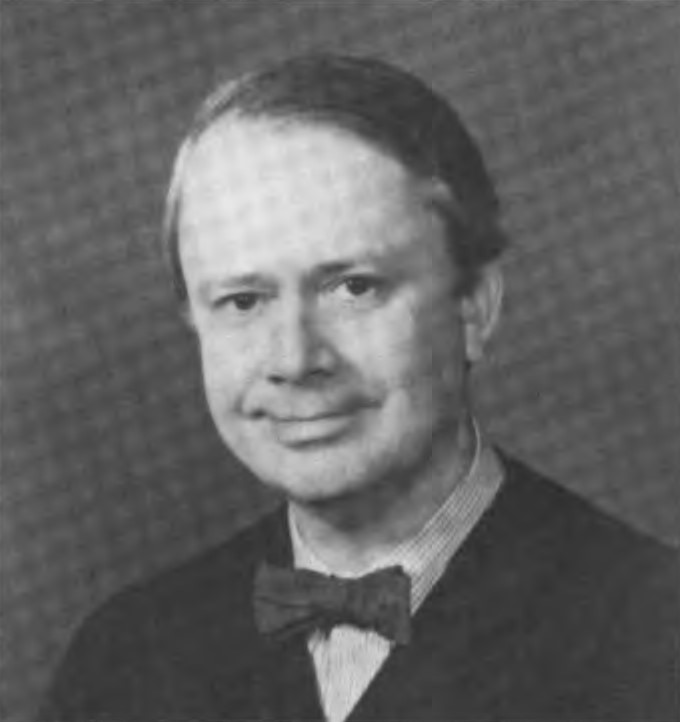
Historical · U.S. Court of Appeals for the Eighth Circuit
Richard Sheppard Arnold
Former Circuit Judge · U.S. Court of Appeals for the Eighth Circuit · 1980–2004 · Appointed by Jimmy Carter
Richard Sheppard Arnold served as a circuit judge of the U.S. Court of Appeals for the Eighth Circuit (1980–2004). Arnold was appointed by Jimmy Carter.
Key facts
- Full name
- Richard Sheppard Arnold
- Court
- U.S. Court of Appeals for the Eighth Circuit
- Office
- Circuit Judge (U.S. Court of Appeals)
- Status
- Former circuit judge
- Duty status
- Not serving
- Appointment
- Senate-confirmed
- FJC seat
- CA81201
- Tenure
- 1980–2004
- Confirmed
- 1980-02-20
- Born
- 1936-03-26
- Died
- 2004-09-23
- First year on the bench
- 1980
- Dataset version
- 1.20260711
Appointment & service record
U.S. Court of Appeals for the Eighth Circuit · 1980–2001
- Seat
- CA81201
- Appointment
- Senate-confirmed
- Appointing president
- Jimmy Carter
- Confirmed
- 1980-02-20
- Commissioned
- 1980-02-20
- Senior status
- 2001-04-01
- Chief Judge
- 1992–1998
Court, FJC seat, appointment type (Senate-confirmed or recess), appointing president, confirmation and commission dates, and senior-status date are drawn from the Federal Judicial Center Biographical Directory and Wikidata.[1][2][3]
Sources
- [1]https://www.fjc.gov/node/1377271fjc · retrieved 2026-07-11
- [2]https://www.fjc.gov/history/judges/biographical-directory-article-iii-federal-judges-exportfjc-directory · retrieved 2026-07-11
- [3]https://www.wikidata.org/wiki/Q7328805Wikidata · retrieved 2026-07-11
Biographical narrative
1,089 words · sourced from the Wikipedia REST extract
Richard Sheppard Arnold was a United States Circuit Judge who served on the United States Court of Appeals for the Eighth Circuit from 1980 until his death in 2004. Appointed by President Jimmy Carter, a Democrat, Arnold served as Chief Judge of the Eighth Circuit from 1992 to 1998 and was widely regarded as one of the most distinguished federal appellate judges of his generation. His judicial career spanned more than two decades on the federal bench, including a brief prior tenure as a district court judge. He was considered for appointment to the United States Supreme Court during the presidency of Bill Clinton, with whom he had developed a friendship during Clinton's tenure as Governor of Arkansas.
Early life and legal career
Richard Sheppard Arnold was born on March 26, 1936, in Texarkana, Texas, a city straddling the Texas-Arkansas border. He pursued his undergraduate education at Yale University, where he earned a Bachelor of Arts degree in 1957. During his time at Yale, Arnold was a member of the Calliopean Society, one of the university's debate and literary organizations. Following his graduation from Yale, he attended Harvard Law School, one of the nation's premier legal institutions, where he received his Bachelor of Laws degree in 1960.
Upon completing his legal education, Arnold secured a prestigious clerkship with Justice William J. Brennan Jr. of the Supreme Court of the United States, serving from 1960 to 1961. This clerkship provided Arnold with invaluable experience at the highest level of the federal judiciary and exposure to constitutional law and appellate decision-making during a formative period in the Court's history. After his clerkship concluded, Arnold entered private legal practice in Washington, D.C., where he worked from 1961 to 1964.
In 1964, Arnold relocated to Texarkana, Arkansas, where he continued his private law practice for nearly a decade, from 1964 to 1973. During this period, he became involved in Arkansas civic affairs and constitutional reform. He served as a delegate to the seventh Arkansas constitutional convention from 1969 to 1970, participating in efforts to modernize the state's governing document.
Arnold's career then shifted toward public service in the executive and legislative branches. From 1973 to 1974, he served as legislative secretary for Dale Bumpers, who was then serving as Governor of Arkansas. When Bumpers was elected to the United States Senate, Arnold followed him to Washington, serving as legislative assistant to Senator Bumpers from 1975 to 1978. This experience in both state and federal government provided Arnold with practical insight into the legislative process and policy-making that would later inform his judicial work.
Federal appellate service
Arnold's federal judicial career began at the district court level. President Jimmy Carter, a Democrat, nominated him on August 14, 1978, to a joint seat on the United States District Court for the Eastern District of Arkansas and the United States District Court for the Western District of Arkansas. This seat had been vacated by Judge Terry Lee Shell. The United States Senate confirmed Arnold's nomination on September 20, 1978, and he received his commission two days later, on September 22, 1978. His service as a district judge was relatively brief, as he was soon elevated to the appellate bench.
On December 19, 1979, President Carter nominated Arnold to the United States Court of Appeals for the Eighth Circuit. This nomination was to fill a new seat that had been authorized by federal statute. The Senate confirmed Arnold's appointment on February 20, 1980, and he received his commission the same day. His district court service terminated on March 7, 1980, upon his elevation to the circuit court.
Arnold served as an active judge on the Eighth Circuit for more than two decades. In 1992, he was elevated to the position of Chief Judge of the Eighth Circuit, a role he held until 1998. As Chief Judge, Arnold was responsible for the administrative leadership of the court, which hears appeals from federal district courts in Arkansas, Iowa, Minnesota, Missouri, Nebraska, North Dakota, and South Dakota. During his tenure as Chief Judge, he also served as a member of the Judicial Conference of the United States, the principal policy-making body for the federal court system, which addresses administrative and procedural issues affecting the federal judiciary.
Arnold assumed senior status on April 1, 2001, a form of semi-retirement that allows federal judges to continue hearing cases with a reduced caseload. He continued to serve in this capacity until his death on September 23, 2004, in Rochester, Minnesota. His service on the Eighth Circuit spanned nearly a quarter-century, during which he participated in numerous cases involving a wide range of federal legal issues.
Jurisprudence and legacy
Arnold developed a reputation as a thoughtful and scholarly jurist during his years on the federal bench. His background as a Supreme Court clerk and his extensive experience in both private practice and public service informed his approach to judicial decision-making. While specific case names and holdings are not available in the reference materials, his tenure on the Eighth Circuit coincided with significant developments in federal law across multiple domains, and his work contributed to the body of appellate jurisprudence in the circuit.
Arnold's relationship with Bill Clinton, who served as Governor of Arkansas before becoming President of the United States, brought him national attention in the context of potential Supreme Court appointments. The two had developed a friendship during Clinton's governorship, and when Clinton became President, he considered appointing Arnold to the Supreme Court. According to accounts by legal commentator Jeffrey Toobin, Clinton was deeply affected by the decision not to nominate Arnold, reportedly weeping when he informed Arnold of this decision. The reference materials indicate that Arnold's health was a factor in this consideration, though specific details of his medical condition are not provided in the available sources.
Despite not receiving a Supreme Court appointment, Arnold's influence on federal law through his appellate work and his leadership of the Eighth Circuit established his legacy within the federal judiciary. His service as Chief Judge during a six-year period in the 1990s placed him in a position of significant administrative responsibility within the circuit and gave him a voice in national judicial policy through his membership in the Judicial Conference.
Arnold's career trajectory—from Supreme Court clerk to private practitioner, from legislative aide to district judge, and finally to circuit judge and chief judge—reflected a deep engagement with multiple aspects of the American legal system. His death in 2004 ended more than four decades of involvement in legal practice and the federal judiciary.
Sources & provenance
Every quantitative or attributable claim above carries a per-section [N] marker that resolves to the corresponding URL below. Each entry records the upstream provider, the canonical URL, and the timestamp at which the underlying source was retrieved.
Key facts
- https://www.fjc.gov/node/1377271fjc · retrieved 2026-07-11
- https://www.fjc.gov/history/judges/biographical-directory-article-iii-federal-judges-exportfjc-directory · retrieved 2026-07-11
- https://www.wikidata.org/wiki/Q7328805Wikidata · retrieved 2026-07-11
Biographical narrative
- https://en.wikipedia.org/wiki/Richard_S._ArnoldWikipedia · retrieved 2026-07-11
Explore the federal judiciary
The U.S. Courts of Appeals are the intermediate appellate courts of the federal judiciary — thirteen circuits sitting between the district courts and the Supreme Court. Browse the full roster of judges on the U.S. Court of Appeals for the Eighth Circuit, or explore how the appointed federal judiciary fits into the federal government.