
Historical · U.S. Court of Appeals for the Eighth Circuit
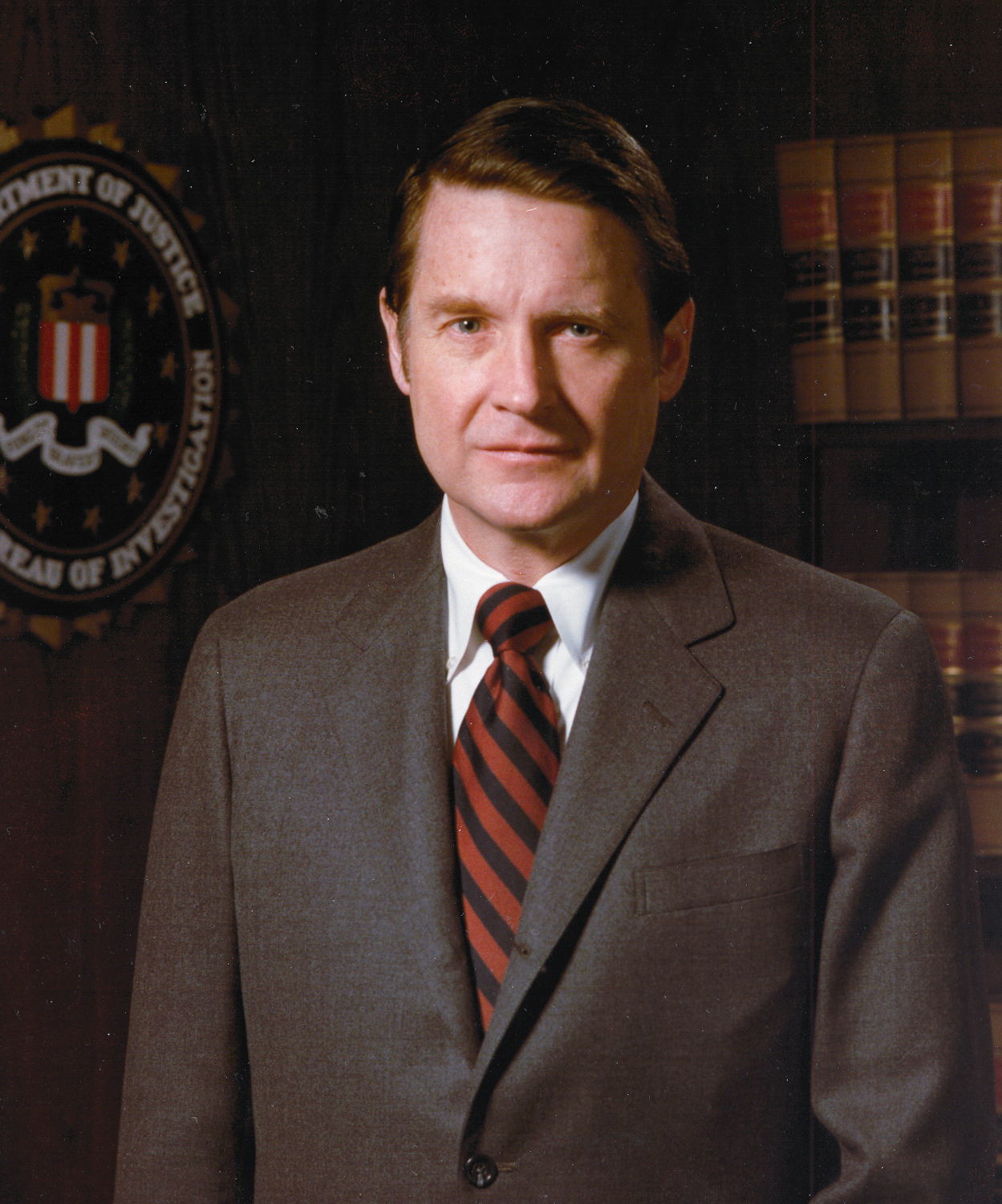
William Hedgcock Webster
Former Circuit Judge · U.S. Court of Appeals for the Eighth Circuit · 1973–1978 · Appointed by Richard Nixon
William Hedgcock Webster served as a circuit judge of the U.S. Court of Appeals for the Eighth Circuit (1973–1978). Webster was appointed by Richard Nixon.
Key facts
- Full name
- William Hedgcock Webster
- Court
- U.S. Court of Appeals for the Eighth Circuit
- Office
- Circuit Judge (U.S. Court of Appeals)
- Status
- Former circuit judge
- Duty status
- Not serving
- Appointment
- Senate-confirmed
- FJC seat
- CA80307
- Tenure
- 1973–1978
- Confirmed
- 1973-07-13
- Born
- 1924-03-06
- Died
- 2025-08-08
- First year on the bench
- 1973
- Dataset version
- 1.20260711
Appointment & service record
U.S. Court of Appeals for the Eighth Circuit · 1973–1978
- Seat
- CA80307
- Appointment
- Senate-confirmed
- Appointing president
- Richard Nixon
- Confirmed
- 1973-07-13
- Commissioned
- 1973-07-18
- Senior status
- —
Court, FJC seat, appointment type (Senate-confirmed or recess), appointing president, confirmation and commission dates, and senior-status date are drawn from the Federal Judicial Center Biographical Directory and Wikidata.[1][2][3]
Sources
- [1]https://www.fjc.gov/node/1389516fjc · retrieved 2026-07-11
- [2]https://www.fjc.gov/history/judges/biographical-directory-article-iii-federal-judges-exportfjc-directory · retrieved 2026-07-11
- [3]https://www.wikidata.org/wiki/Q368720Wikidata · retrieved 2026-07-11
Biographical narrative
1,216 words · sourced from the Wikipedia REST extract
William Hedgcock Webster was a distinguished American jurist and public servant who served as a United States Circuit Judge on the Eighth Circuit Court of Appeals from 1973 to 1978. Born on March 6, 1924, and passing away on August 8, 2025, Webster had a remarkable career in public service that extended well beyond the federal bench. He was appointed to the Eighth Circuit by President Richard M. Nixon, a Republican, and was confirmed by the United States Senate on July 13, 1973. Webster's tenure as a circuit judge, though relatively brief, formed an important chapter in a career that would later see him become the only person in American history to serve as director of both the Federal Bureau of Investigation and the Central Intelligence Agency.
Early life and legal career
Webster was born in St. Louis, Missouri, to Thomas Milliken Webster and Katherine Hedgcock. He received his early education in Webster Groves, Missouri, a suburb of St. Louis where he grew up. His formative years were interrupted by World War II, during which he served as a lieutenant in the United States Navy, demonstrating an early commitment to public service that would characterize his entire professional life.
Following his naval service in World War II, Webster pursued higher education at Amherst College in Amherst, Massachusetts, where he earned his Bachelor of Arts degree in 1947. During his time at Amherst, he was a member of the Psi Upsilon fraternity. He then returned to his home state of Missouri to attend the Washington University School of Law, from which he received his Juris Doctor in 1949. After completing law school, Webster was called to serve his country once again, this time during the Korean War, where he served in the Navy for a second period of military duty.
Upon completing his military obligations, Webster entered private legal practice, joining the St. Louis law firm Armstrong Teasdale. However, his time in private practice was relatively short-lived, as he soon transitioned to a career focused on public service. From 1960 to 1961, he served as the United States Attorney for the Eastern District of Missouri, gaining valuable experience in federal prosecution and the administration of justice. Following this role, he served on the Missouri Board of Law Examiners from 1964 to 1969, contributing to the regulation and standards of the legal profession in his home state.
Federal appellate service
Webster's career in the federal judiciary began when President Richard M. Nixon nominated him to serve as a United States District Judge for the United States District Court for the Eastern District of Missouri. He was nominated on December 8, 1970, to fill a newly created seat authorized by federal statute. The Senate confirmed his nomination on December 17, 1970, and he received his commission on December 21, 1970. Webster served in this trial court capacity for approximately two and a half years, presiding over cases in the federal district that included his hometown of St. Louis.
His service as a district judge was terminated on August 10, 1973, when he was elevated to the United States Court of Appeals for the Eighth Circuit. President Nixon nominated Webster to the appellate court on June 13, 1973, to fill a vacancy created by the departure of Judge Marion Charles Matthes. The Senate confirmed his nomination on July 13, 1973, and he received his commission on July 18, 1973, beginning his service on the circuit court that hears appeals from federal district courts across seven states in the upper Midwest and Great Plains regions.
During his tenure on the Eighth Circuit, Webster gained recognition for his judicial abilities and temperament. His work on the appellate bench brought him to national attention, and in 1975, when Justice William O. Douglas retired from the Supreme Court, Webster was included on Attorney General Edward H. Levi's final list of candidates from which President Gerald Ford would select a nominee. Levi characterized Webster as having proven himself to be a highly competent judge who was energetic, careful, and intelligent in his approach to the law. Although Webster was ultimately not selected—President Ford chose John Paul Stevens, who was rated more highly than Webster along with other candidates including Arlin Adams and Philip Willis Tone—his consideration for the nation's highest court reflected the respect he had earned during his relatively brief time on the federal appellate bench.
Webster's service on the Eighth Circuit came to an end on February 22, 1978, when he resigned from his judgeship. His departure from the bench was occasioned by his appointment to lead the Federal Bureau of Investigation, marking a significant transition from the judicial branch to the executive branch of the federal government.
Jurisprudence and legacy
Webster's time on the Eighth Circuit, while shorter than that of many federal appellate judges, represented an important phase in a career dedicated to public service and the rule of law. His judicial service provided him with deep experience in the federal court system and the interpretation of federal law, experience that would later inform his leadership of major federal law enforcement and intelligence agencies.
Following his resignation from the bench, Webster assumed the position of FBI Director on February 23, 1978, having been appointed by President Jimmy Carter, a Democrat, despite Webster's registration as a Republican. This bipartisan appointment reflected the respect Webster had earned across political lines during his judicial career. He served as FBI Director for nearly a decade, from 1978 to 1987, before being appointed by President Ronald Reagan to serve as Director of Central Intelligence, a position he held from May 26, 1987, until his retirement on August 31, 1991.
Webster's post-judicial career continued to be marked by significant public service. After leaving the CIA, he practiced law at Milbank, specializing in arbitration, mediation, and internal investigation. In 2002, he briefly served as the first chairman of the Public Company Accounting Oversight Board, though he resigned from that position within weeks amid controversy. From 2005 to 2020, he chaired the Homeland Security Advisory Council, continuing to contribute his expertise to national security matters well into his eighties and nineties.
Throughout his career, Webster received numerous honors recognizing his contributions to law and public service. Washington University granted him an Alumni Citation in 1972 and the William Greenleaf Eliot Society Award in 1981. He received the Distinguished Alumnus Award from the university's law school in 1977, and in 1999, the law school created the Webster Society, an outstanding scholars program named in his honor. In 1984, he received the U.S. Senator John Heinz Award for Greatest Public Service by an Elected or Appointed Official. In 1991, he was presented with the Distinguished Intelligence Medal, the Presidential Medal of Freedom, and the National Security Medal. He also received honorary degrees from multiple institutions and the William J. Donovan Award from the OSS Society in 2005.
Webster's legacy extends beyond his specific accomplishments in any single role. His career trajectory—from naval officer to lawyer, from federal prosecutor to district judge, from circuit judge to director of the FBI and CIA—exemplified a life devoted to public service and the institutions of American government. His willingness to serve under presidents of both parties underscored a commitment to nonpartisan professionalism in law enforcement and intelligence work that transcended political divisions.
Sources & provenance
Every quantitative or attributable claim above carries a per-section [N] marker that resolves to the corresponding URL below. Each entry records the upstream provider, the canonical URL, and the timestamp at which the underlying source was retrieved.
Key facts
- https://www.fjc.gov/node/1389516fjc · retrieved 2026-07-11
- https://www.fjc.gov/history/judges/biographical-directory-article-iii-federal-judges-exportfjc-directory · retrieved 2026-07-11
- https://www.wikidata.org/wiki/Q368720Wikidata · retrieved 2026-07-11
Biographical narrative
- https://en.wikipedia.org/wiki/William_H._WebsterWikipedia · retrieved 2026-07-11
Explore the federal judiciary
The U.S. Courts of Appeals are the intermediate appellate courts of the federal judiciary — thirteen circuits sitting between the district courts and the Supreme Court. Browse the full roster of judges on the U.S. Court of Appeals for the Eighth Circuit, or explore how the appointed federal judiciary fits into the federal government.