
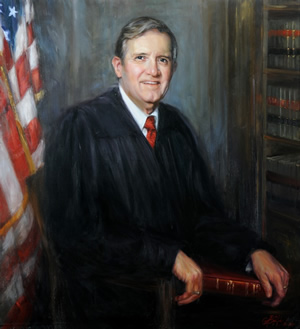
Historical · U.S. Court of Appeals for the Eleventh Circuit
John Cooper Godbold
Former Circuit Judge · U.S. Court of Appeals for the Eleventh Circuit · 1966–2009 · Appointed by None Reassignment
John Cooper Godbold served as a circuit judge of the U.S. Court of Appeals for the Eleventh Circuit (1966–2009). Godbold was appointed by None Reassignment.
Key facts
- Full name
- John Cooper Godbold
- Court
- U.S. Court of Appeals for the Eleventh Circuit
- Office
- Circuit Judge (U.S. Court of Appeals)
- Status
- Former circuit judge
- Duty status
- Not serving
- Appointment
- Recess appointment
- FJC seat
- CA110101
- Tenure
- 1966–2009
- Confirmed
- —
- Born
- 1920-03-24
- Died
- 2009-12-22
- First year on the bench
- 1966
- Dataset version
- 1.20260711
Appointment & service record
U.S. Court of Appeals for the Fifth Circuit · 1966–1981
- Seat
- CA50503
- Appointment
- Senate-confirmed
- Appointing president
- Lyndon B Johnson
- Confirmed
- 1966-07-22
- Commissioned
- 1966-07-22
- Senior status
- —
- Chief Judge
- 1981–1981
U.S. Court of Appeals for the Eleventh Circuit · 1981–1987
- Seat
- CA110101
- Appointment
- Recess appointment
- Appointing president
- None Reassignment
- Confirmed
- Recess appointment
- Commissioned
- 1981-10-01
- Senior status
- 1987-10-23
- Chief Judge
- 1981–1986
Court, FJC seat, appointment type (Senate-confirmed or recess), appointing president, confirmation and commission dates, and senior-status date are drawn from the Federal Judicial Center Biographical Directory and Wikidata.[1][2][3]
Sources
- [1]https://www.fjc.gov/node/1381301fjc · retrieved 2026-07-11
- [2]https://www.fjc.gov/history/judges/biographical-directory-article-iii-federal-judges-exportfjc-directory · retrieved 2026-07-11
- [3]https://www.wikidata.org/wiki/Q6227061Wikidata · retrieved 2026-07-11
Biographical narrative
1,126 words · sourced from the Wikipedia REST extract
John Cooper Godbold was a United States circuit judge who served on the United States Court of Appeals for the Fifth Circuit and later the United States Court of Appeals for the Eleventh Circuit. Born in 1920 in Alabama, he had a distinguished legal career that spanned more than four decades on the federal bench. Appointed by President Lyndon B. Johnson, a Democrat, in 1966, Godbold served as a circuit judge during a transformative period in American jurisprudence and played a significant administrative role in the federal judiciary, including serving as Chief Judge of both the Fifth and Eleventh Circuits and later as Director of the Federal Judicial Center.
Early life and legal career
John Cooper Godbold was born on March 24, 1920, in Coy, Alabama, a small community in the southern part of the state. He pursued his undergraduate education at Auburn University, where he earned a Bachelor of Science degree in 1940. His academic career was interrupted by World States involvement in World War II. Godbold served in the United States Army from 1941 to 1946, attaining the rank of Major and serving with Division Artillery Headquarters during the war. This military service placed him among the generation of lawyers whose professional formation was shaped by the experience of wartime service.
Following his discharge from military service in 1946, Godbold enrolled at Harvard Law School, one of the nation's most prestigious legal institutions. He completed his legal education there, receiving his Juris Doctor degree in 1948. After graduating from Harvard, he returned to Alabama to begin his legal career. Godbold established himself in private practice in Montgomery, the state capital, where he practiced law for eighteen years from 1948 to 1966. During this period, Montgomery and Alabama more broadly were at the center of significant social and legal developments, particularly concerning civil rights, though the specific nature of Godbold's private practice is not detailed in available records. His nearly two decades of practice in Alabama provided him with substantial experience in the law before his appointment to the federal bench.
Federal appellate service
Godbold's career took a significant turn in 1966 when President Lyndon B. Johnson, a Democrat, nominated him to serve on the United States Court of Appeals for the Fifth Circuit. The nomination, made on June 28, 1966, was to fill a seat that had been vacated by Judge Richard Rives. The United States Senate confirmed Godbold's appointment on July 22, 1966, and he received his commission the same day, beginning his service on the federal appellate bench. At the time of his appointment, the Fifth Circuit was one of the most important federal appellate courts in the nation, with jurisdiction over several southern states and responsibility for many significant cases arising from the civil rights era.
Godbold served on the Fifth Circuit for fifteen years, from 1966 to 1981. During this tenure, he also took on administrative responsibilities within the broader federal judicial system. From 1976 to 1981, he served as a board member of the Federal Judicial Center, the research and education agency of the federal judicial system. This role gave him insight into judicial administration and education that would prove valuable in his later leadership positions.
In 1981, Godbold was elevated to the position of Chief Judge of the Fifth Circuit, assuming that role on February 2, 1981. However, his tenure as Chief Judge of the Fifth Circuit was brief due to a major reorganization of the federal appellate system. On October 1, 1981, Congress split the Fifth Circuit, creating the new United States Court of Appeals for the Eleventh Circuit. This reorganization was undertaken because the Fifth Circuit had become unwieldy due to its large geographic jurisdiction and heavy caseload. By operation of law, Godbold was reassigned to the newly formed Eleventh Circuit, which assumed jurisdiction over Alabama, Georgia, and Florida.
Upon the creation of the Eleventh Circuit, Godbold became its first Chief Judge, a position he held from October 1, 1981, until September 3, 1986. His leadership during the circuit's formative years was significant, as he helped establish the administrative structures and procedures of the new court. Notably, he stepped down from the chief judgeship several days before Judge Paul Hitch Roney's eligibility for the position was set to expire, a decision that reflected considerations about judicial administration and succession. Godbold continued to serve as an active circuit judge on the Eleventh Circuit until he assumed senior status on October 23, 1987.
Following his assumption of senior status, Godbold took on another significant administrative role in the federal judiciary. From 1987 to 1990, he served as Director of the Federal Judicial Center, the position for which he had previously served as a board member. In this capacity, he led the agency responsible for conducting research on federal judicial procedures and providing education and training for federal judges and court personnel. He continued to serve in senior status on the Eleventh Circuit until his death on December 22, 2009, in Montgomery, Alabama, marking the end of more than forty-three years of federal judicial service.
Jurisprudence and legacy
While specific case names and holdings from Godbold's extensive judicial career are not detailed in available records, his service spanned a period of profound change in American law. Appointed to the Fifth Circuit in 1966, he joined the court during the height of the civil rights era, when federal appellate courts in the South played crucial roles in interpreting and enforcing civil rights legislation and constitutional protections. His tenure on both the Fifth and Eleventh Circuits encompassed decades of evolving jurisprudence across numerous areas of federal law.
Beyond his work as a jurist, Godbold maintained a commitment to legal education throughout much of his career. Concurrent with his federal judicial service, he served as a professor of law at the Cumberland School of Law at Samford University beginning in 1990, a position he held until his death in 2009. This teaching role allowed him to share his extensive experience with future generations of lawyers and demonstrated his dedication to the legal profession beyond his judicial duties.
Godbold's legacy is marked by his lengthy service on the federal bench and his significant contributions to judicial administration. His service as Chief Judge of both the Fifth Circuit and the Eleventh Circuit, as well as his leadership of the Federal Judicial Center, placed him in positions of considerable influence over the operation and development of the federal court system. The length of his service—more than four decades—placed him among the longer-serving federal appellate judges in American history. He died in Montgomery, Alabama, on December 22, 2009, at the age of eighty-nine, bringing to a close a judicial career that had begun during the Johnson administration and continued into the twenty-first century.
Sources & provenance
Every quantitative or attributable claim above carries a per-section [N] marker that resolves to the corresponding URL below. Each entry records the upstream provider, the canonical URL, and the timestamp at which the underlying source was retrieved.
Key facts
- https://www.fjc.gov/node/1381301fjc · retrieved 2026-07-11
- https://www.fjc.gov/history/judges/biographical-directory-article-iii-federal-judges-exportfjc-directory · retrieved 2026-07-11
- https://www.wikidata.org/wiki/Q6227061Wikidata · retrieved 2026-07-11
Biographical narrative
- https://en.wikipedia.org/wiki/John_Cooper_GodboldWikipedia · retrieved 2026-07-11
Explore the federal judiciary
The U.S. Courts of Appeals are the intermediate appellate courts of the federal judiciary — thirteen circuits sitting between the district courts and the Supreme Court. Browse the full roster of judges on the U.S. Court of Appeals for the Eleventh Circuit, or explore how the appointed federal judiciary fits into the federal government.