
Historical · U.S. Court of Appeals for the Eleventh Circuit
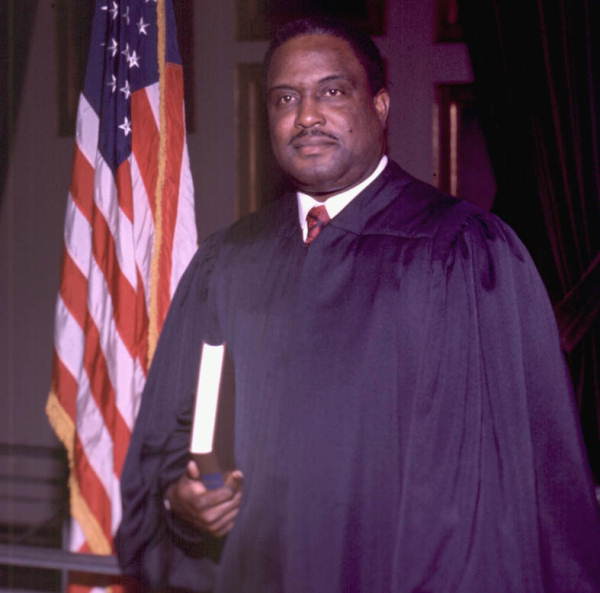
Joseph Woodrow Hatchett
Former Circuit Judge · U.S. Court of Appeals for the Eleventh Circuit · 1979–1999 · Appointed by None Reassignment
Joseph Woodrow Hatchett served as a circuit judge of the U.S. Court of Appeals for the Eleventh Circuit (1979–1999). Hatchett was appointed by None Reassignment.
Key facts
- Full name
- Joseph Woodrow Hatchett
- Court
- U.S. Court of Appeals for the Eleventh Circuit
- Office
- Circuit Judge (U.S. Court of Appeals)
- Status
- Former circuit judge
- Duty status
- Not serving
- Appointment
- Recess appointment
- FJC seat
- CA111101
- Tenure
- 1979–1999
- Confirmed
- —
- Born
- 1932-09-17
- Died
- 2021-04-30
- First year on the bench
- 1979
- Dataset version
- 1.20260711
Appointment & service record
U.S. Court of Appeals for the Fifth Circuit · 1979–1981
- Seat
- CA52101
- Appointment
- Senate-confirmed
- Appointing president
- Jimmy Carter
- Confirmed
- 1979-07-12
- Commissioned
- 1979-07-13
- Senior status
- —
U.S. Court of Appeals for the Eleventh Circuit · 1981–1999
- Seat
- CA111101
- Appointment
- Recess appointment
- Appointing president
- None Reassignment
- Confirmed
- Recess appointment
- Commissioned
- 1981-10-01
- Senior status
- —
- Chief Judge
- 1996–1999
Court, FJC seat, appointment type (Senate-confirmed or recess), appointing president, confirmation and commission dates, and senior-status date are drawn from the Federal Judicial Center Biographical Directory and Wikidata.[1][2][3]
Sources
- [1]https://www.fjc.gov/node/1381931fjc · retrieved 2026-07-11
- [2]https://www.fjc.gov/history/judges/biographical-directory-article-iii-federal-judges-exportfjc-directory · retrieved 2026-07-11
- [3]https://www.wikidata.org/wiki/Q6287675Wikidata · retrieved 2026-07-11
Biographical narrative
1,214 words · sourced from the Wikipedia REST extract
Joseph Woodrow Hatchett was a United States circuit judge who served on the United States Court of Appeals for the Fifth Circuit and later the Eleventh Circuit, where he served as Chief Judge from 1996 to 1999. Born in 1932 in Florida, he became a pioneering figure in the federal judiciary as the first African American to serve on a federal appellate court in the Deep South. Before his federal appellate service, he was the first African American justice on the Florida Supreme Court and the first to be retained in a statewide election in Florida. His career spanned private practice, federal prosecution, state judicial service, and nearly two decades on the federal appellate bench before his retirement in 1999. He passed away in 2021.
Early life and legal career
Joseph Woodrow Hatchett was born on September 17, 1932, in Clearwater, Florida. He grew up during the era of segregation and attended Pinellas High School, which was a segregated institution at the time. His family valued public service, and his siblings also pursued careers in that field. After completing his secondary education, Hatchett enrolled at Florida A&M University, a historically Black institution, where he earned a Bachelor of Arts degree in 1954.
Following his undergraduate studies, Hatchett served in the United States Army as a lieutenant from 1954 to 1956. After completing his military service, he pursued legal education at Howard University School of Law, one of the nation's premier institutions for training African American lawyers during that period. He received his Juris Doctor degree in 1959 and began his legal career in private practice in Daytona Beach, Florida, where he practiced from 1959 to 1966.
During his years in private practice, Hatchett became involved in civil rights work, serving as a cooperating attorney for the NAACP Legal Defense Fund from 1960 to 1966. This work placed him at the forefront of legal efforts to challenge segregation and discrimination during a critical period of the civil rights movement. He also served as a consultant for the Daytona Beach Urban Renewal Department from 1963 to 1966, contributing to local government initiatives.
In 1966, Hatchett transitioned to federal service when he became an Assistant United States Attorney for the Middle District of Florida. He was promoted to First Assistant United States Attorney in 1967, a position he held until 1971. During this period, he also served as a special hearing officer for conscientious objectors in the United States Department of Justice from 1967 to 1968. His commitment to military service continued throughout his career; he served in the United States Marine Corps Reserve as a lieutenant colonel and judge advocate from 1977 to 1988.
Hatchett's judicial career began in 1971 when he was appointed as a United States Magistrate for the United States District Court for the Middle District of Florida, a position he held until 1975. In 1975, Florida Governor Reubin Askew appointed him to an associate justice seat on the Florida Supreme Court, filling a vacancy created by the resignation of a justice who had left the court while under investigation for corruption. The governor publicly acknowledged that Hatchett's race was a major consideration in the appointment, which came during a period of increasing attention to diversity in the judiciary following the appointment of Thurgood Marshall to the United States Supreme Court. Hatchett made history as the first African American to serve on the Florida Supreme Court. In 1976, he faced a retention election and became the first African American justice successfully retained by Florida voters in a statewide election. He served on the state's highest court until 1979.
Federal appellate service
President Jimmy Carter, a Democrat, nominated Hatchett to the United States Court of Appeals for the Fifth Circuit on May 17, 1979, to fill a newly created seat authorized by federal statute. The United States Senate confirmed his nomination on July 12, 1979, and he received his commission the following day. His appointment marked another historic milestone: he became the first African American to serve on a federal appellate court in the Deep South, breaking a significant barrier in the federal judiciary.
Hatchett's service on the Fifth Circuit was relatively brief due to a major reorganization of the federal appellate system. On October 1, 1981, his service on the Fifth Circuit terminated when he was reassigned by operation of law to the newly created United States Court of Appeals for the Eleventh Circuit. This reassignment was part of a congressional restructuring that split the Fifth Circuit, which had become overburdened with cases, into two separate circuits. The new Eleventh Circuit assumed jurisdiction over appeals from federal district courts in Georgia, Florida, and Alabama, while the Fifth Circuit retained jurisdiction over Louisiana, Mississippi, and Texas.
Hatchett served on the Eleventh Circuit for nearly eighteen years. During this period, he handled the full range of federal appellate matters that came before the court, including civil and criminal appeals, administrative law cases, and constitutional questions. In 1996, he was elevated to the position of Chief Judge of the Eleventh Circuit, the administrative head of the court responsible for managing its operations and representing it in the broader federal judiciary. He served as Chief Judge from 1996 to 1999, a period during which he also served as a member of the Judicial Conference of the United States from 1997 to 1999. The Judicial Conference is the principal policymaking body for the federal court system, and membership on it reflects the significant responsibilities entrusted to chief judges of the circuit courts.
Hatchett's active service on the Eleventh Circuit terminated on May 14, 1999, when he retired from the bench after two decades of federal appellate service.
Jurisprudence and legacy
Following his retirement from the federal bench, Hatchett returned to private legal practice. In April 2018, he joined the law firm Akerman LLP in Tallahassee, Florida, bringing his extensive judicial experience to the firm's practice. He continued in this role until his death on April 30, 2021.
Throughout his career, Hatchett received recognition for his contributions to the legal profession and public service. He was awarded honorary Doctor of Laws degrees from four institutions: Florida Memorial College in 1978, Stetson Law School in 1980, Florida A&M University in 1996, and Howard University in 1998. These honors reflected the esteem in which he was held by the legal and academic communities.
After his death, efforts were undertaken to honor his legacy through a permanent memorial. Legislation was introduced to rename the United States Courthouse in Tallahassee after him. The bill passed the United States House of Representatives on June 24, 2022, and President Joe Biden signed it into law as part of the Bipartisan Safer Communities Act on June 25, 2022. The federal courthouse in Florida's capital now bears the name Joseph Hatchett United States Courthouse, ensuring that his contributions to the federal judiciary will be remembered by future generations of lawyers, judges, and citizens who enter its halls.
Hatchett's career represented a series of pioneering achievements that helped open doors for greater diversity in the American judiciary. His path from segregated schools in Florida to the highest levels of the state and federal courts illustrated both his personal accomplishments and the gradual transformation of American legal institutions during the latter half of the twentieth century.
Sources & provenance
Every quantitative or attributable claim above carries a per-section [N] marker that resolves to the corresponding URL below. Each entry records the upstream provider, the canonical URL, and the timestamp at which the underlying source was retrieved.
Key facts
- https://www.fjc.gov/node/1381931fjc · retrieved 2026-07-11
- https://www.fjc.gov/history/judges/biographical-directory-article-iii-federal-judges-exportfjc-directory · retrieved 2026-07-11
- https://www.wikidata.org/wiki/Q6287675Wikidata · retrieved 2026-07-11
Biographical narrative
- https://en.wikipedia.org/wiki/Joseph_W._HatchettWikipedia · retrieved 2026-07-11
Explore the federal judiciary
The U.S. Courts of Appeals are the intermediate appellate courts of the federal judiciary — thirteen circuits sitting between the district courts and the Supreme Court. Browse the full roster of judges on the U.S. Court of Appeals for the Eleventh Circuit, or explore how the appointed federal judiciary fits into the federal government.