
Historical · U.S. Court of Appeals for the Eleventh Circuit
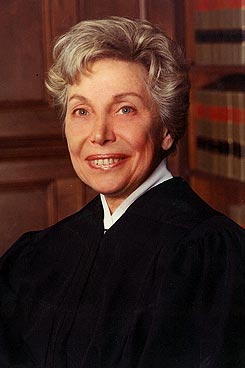
Phyllis A. Kravitch
Former Circuit Judge · U.S. Court of Appeals for the Eleventh Circuit · 1979–2017 · Appointed by None Reassignment
Phyllis A. Kravitch served as a circuit judge of the U.S. Court of Appeals for the Eleventh Circuit (1979–2017). Kravitch was appointed by None Reassignment.
Key facts
- Full name
- Phyllis A. Kravitch
- Court
- U.S. Court of Appeals for the Eleventh Circuit
- Office
- Circuit Judge (U.S. Court of Appeals)
- Status
- Former circuit judge
- Duty status
- Not serving
- Appointment
- Recess appointment
- FJC seat
- CA110701
- Tenure
- 1979–2017
- Confirmed
- —
- Born
- 1920-08-23
- Died
- 2017-06-15
- First year on the bench
- 1979
- Dataset version
- 1.20260711
Appointment & service record
U.S. Court of Appeals for the Fifth Circuit · 1979–1981
- Seat
- CA50703
- Appointment
- Senate-confirmed
- Appointing president
- Jimmy Carter
- Confirmed
- 1979-03-21
- Commissioned
- 1979-03-23
- Senior status
- —
U.S. Court of Appeals for the Eleventh Circuit · 1981–1996
- Seat
- CA110701
- Appointment
- Recess appointment
- Appointing president
- None Reassignment
- Confirmed
- Recess appointment
- Commissioned
- 1981-10-01
- Senior status
- 1996-12-31
Court, FJC seat, appointment type (Senate-confirmed or recess), appointing president, confirmation and commission dates, and senior-status date are drawn from the Federal Judicial Center Biographical Directory and Wikidata.[1][2][3]
Sources
- [1]https://www.fjc.gov/node/1383511fjc · retrieved 2026-07-11
- [2]https://www.fjc.gov/history/judges/biographical-directory-article-iii-federal-judges-exportfjc-directory · retrieved 2026-07-11
- [3]https://www.wikidata.org/wiki/Q7188517Wikidata · retrieved 2026-07-11
Biographical narrative
1,215 words · sourced from the Wikipedia REST extract
Phyllis A. Kravitch was a United States circuit judge who served on the United States Court of Appeals for the Fifth Circuit and subsequently the United States Court of Appeals for the Eleventh Circuit. Born in 1920 in Savannah, Georgia, she became one of the earliest women to serve on a federal appellate court when President Jimmy Carter, a Democrat, appointed her to the Fifth Circuit in 1979. She was reassigned to the newly created Eleventh Circuit in 1981, where she continued to serve until assuming senior status in 1996. Over her decades on the federal bench, she contributed to the development of federal law in the southeastern United States and mentored numerous law clerks, several of whom went on to clerk at the United States Supreme Court. She remained in senior status until her death in 2017 at the age of 96.
Early life and legal career
Phyllis Adele Kravitch was born on August 23, 1920, in Savannah, Georgia, into a family with strong legal roots. She was one of four daughters born to Aaron Kravitch, an attorney, and Ella B. Wiseman. Her father had graduated from the University of Pennsylvania Law School in 1917, establishing a legal tradition that would influence his daughter's career path. The family was Jewish, and Kravitch grew up in the Savannah community during a period when few women pursued legal careers.
Kravitch's educational journey began locally at Armstrong Junior College in Savannah, where she earned an Associate of Arts degree in 1939. She then attended Goucher College, a women's liberal arts college in Maryland, receiving her Bachelor of Arts degree in 1941. Following in her father's footsteps, she enrolled at the University of Pennsylvania Law School, the same institution from which her father had graduated more than two decades earlier. During her time at Penn Law, she distinguished herself academically and served on the Law Review Board of Editors, a prestigious position typically reserved for top-performing students. She graduated with a Bachelor of Laws degree in 1943, at a time when women represented only a small fraction of law school graduates nationwide.
After completing her legal education, Kravitch entered private practice in 1944. She maintained a private law practice for more than three decades, from 1944 to 1976, building a career during an era when women attorneys faced significant barriers to professional advancement. Her long tenure in private practice provided her with extensive experience in various areas of law and established her reputation within Georgia's legal community.
In 1977, Kravitch transitioned to the judiciary when she was appointed to serve as a judge of the Superior Court of the Eastern Judicial Circuit of Georgia. This state court position gave her trial court experience and marked her entry into full-time judicial service. She served in this capacity for approximately two years, presiding over cases in Georgia's state court system before her nomination to the federal bench.
Federal appellate service
President Jimmy Carter, a Democrat and fellow Georgian, nominated Kravitch to the United States Court of Appeals for the Fifth Circuit on January 19, 1979. She was nominated to fill a seat that had been vacated by Judge Lewis Render Morgan. The United States Senate confirmed her nomination on March 21, 1979, and she received her commission two days later, on March 23, 1979. With this appointment, Kravitch became the third woman to serve as a United States circuit judge, joining a small group of pioneering women on the federal appellate bench at a time when such appointments were still relatively rare.
Kravitch's service on the Fifth Circuit was relatively brief due to a major reorganization of the federal appellate court system. On October 1, 1981, her service on the Fifth Circuit terminated when she was reassigned by operation of law to the newly created United States Court of Appeals for the Eleventh Circuit. This reassignment was part of a congressional restructuring that split the Fifth Circuit, which had grown unwieldy as it covered a large geographic area. The new Eleventh Circuit was established to hear appeals from federal district courts in Georgia, Florida, and Alabama, while the reconstituted Fifth Circuit retained jurisdiction over Louisiana, Mississippi, and Texas.
The reassignment to the Eleventh Circuit seat was authorized by federal statute and took effect automatically. Kravitch thus became one of the initial judges of the new circuit, helping to establish its institutional practices and jurisprudence from its inception. She served in active status on the Eleventh Circuit for fifteen years, hearing cases and writing opinions on a wide range of federal legal issues.
On December 31, 1996, Kravitch assumed senior status, a form of semi-retirement available to federal judges who meet certain age and service requirements. Senior status allowed her to continue hearing cases on a reduced schedule while creating a vacancy for a new active judge to be appointed. She remained in senior status for more than two decades, continuing to contribute to the work of the Eleventh Circuit well into her nineties. Her service finally terminated on June 15, 2017, when she died at Piedmont Hospital in Atlanta at the age of 96.
Jurisprudence and legacy
Throughout her tenure on the federal bench, Kravitch participated in the adjudication of numerous appeals covering the full spectrum of federal law. As a circuit judge, she would have reviewed decisions from federal district courts, considered questions of federal statutory interpretation, constitutional law, and procedural matters, and contributed to the body of precedent that guides lower courts within the circuit's jurisdiction. Her service spanned nearly four decades if senior status is included, giving her one of the longer tenures in the history of the Eleventh Circuit.
One significant aspect of Kravitch's legacy lies in her role as a mentor to law clerks. Four of her former law clerks went on to secure clerkships at the United States Supreme Court, a notable achievement that reflects both the quality of her chambers and her ability to train young attorneys. These clerks included Steven L. Chanenson, Beth Brinkmann, Joseph L. Hoffmann, and Paul H. Schwartz, each of whom progressed to the highest level of the federal judicial clerkship system. Judges whose clerks frequently obtain Supreme Court clerkships are sometimes referred to as "feeder judges," and Kravitch's record in this regard demonstrates her influence on the next generation of legal professionals.
As one of the earliest women to serve on a federal circuit court, Kravitch was part of a pioneering generation that opened the federal appellate bench to greater diversity. Her appointment in 1979 came during a period of gradual but significant change in the composition of the federal judiciary, and her long career helped normalize the presence of women in senior judicial positions. Her path from private practice through state court service to a lengthy federal appellate career illustrated one route by which accomplished attorneys could reach the circuit bench.
Kravitch's service on both the Fifth and Eleventh Circuits placed her at the center of federal appellate jurisprudence in the southeastern United States during a period of significant legal and social change. Her work contributed to the development of circuit law during the final decades of the twentieth century and into the twenty-first century, and her continued service in senior status well into her nineties demonstrated a sustained commitment to the federal judiciary.
Sources & provenance
Every quantitative or attributable claim above carries a per-section [N] marker that resolves to the corresponding URL below. Each entry records the upstream provider, the canonical URL, and the timestamp at which the underlying source was retrieved.
Key facts
- https://www.fjc.gov/node/1383511fjc · retrieved 2026-07-11
- https://www.fjc.gov/history/judges/biographical-directory-article-iii-federal-judges-exportfjc-directory · retrieved 2026-07-11
- https://www.wikidata.org/wiki/Q7188517Wikidata · retrieved 2026-07-11
Biographical narrative
- https://en.wikipedia.org/wiki/Phyllis_A._KravitchWikipedia · retrieved 2026-07-11
Explore the federal judiciary
The U.S. Courts of Appeals are the intermediate appellate courts of the federal judiciary — thirteen circuits sitting between the district courts and the Supreme Court. Browse the full roster of judges on the U.S. Court of Appeals for the Eleventh Circuit, or explore how the appointed federal judiciary fits into the federal government.