
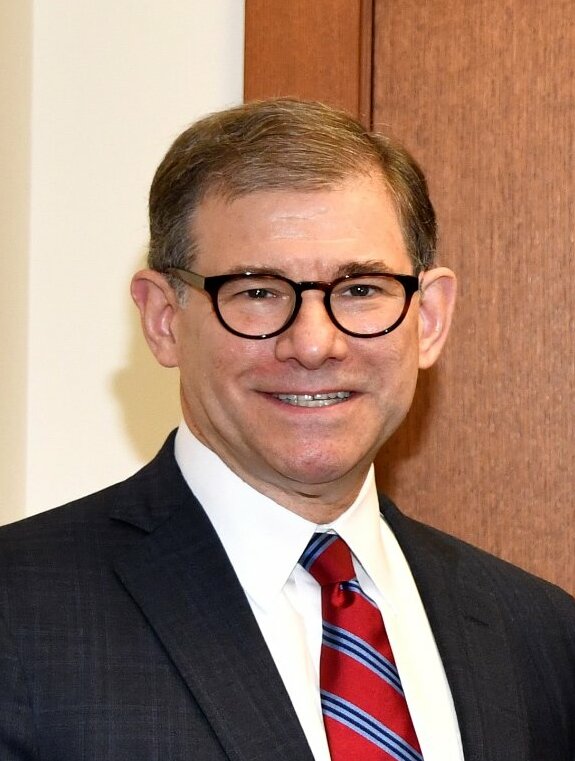
Currently serving · U.S. Court of Appeals for the Eleventh Circuit
William Holcombe Pryor Jr.
Currently serving
Circuit Judge · U.S. Court of Appeals for the Eleventh Circuit · 2005–present · Appointed by George W Bush
William Holcombe Pryor Jr. serves as a circuit judge of the U.S. Court of Appeals for the Eleventh Circuit (2005–present). Jr. was appointed by George W Bush.
Key facts
- Full name
- William Holcombe Pryor Jr.
- Court
- U.S. Court of Appeals for the Eleventh Circuit
- Office
- Circuit Judge (U.S. Court of Appeals)
- Status
- Active circuit judge
- Duty status
- Active
- Appointment
- Senate-confirmed
- FJC seat
- CA110103
- Tenure
- 2005–present
- Confirmed
- 2005-06-09
- Born
- 1962
- Died
- —
- First year on the bench
- 2005
- Dataset version
- 1.20260705
Appointment & service record
U.S. Court of Appeals for the Eleventh Circuit · 2005–present
- Seat
- CA110103
- Appointment
- Senate-confirmed
- Appointing president
- George W Bush
- Confirmed
- 2005-06-09
- Commissioned
- 2005-06-10
- Senior status
- —
- Chief Judge
- 2020–present
Court, FJC seat, appointment type (Senate-confirmed or recess), appointing president, confirmation and commission dates, and senior-status date are drawn from the Federal Judicial Center Biographical Directory and Wikidata.[1][2][3]
Sources
- [1]https://www.fjc.gov/node/1392086fjc · retrieved 2026-07-05
- [2]https://www.fjc.gov/history/judges/biographical-directory-article-iii-federal-judges-exportfjc-directory · retrieved 2026-07-05
- [3]https://www.wikidata.org/wiki/Q8010558Wikidata · retrieved 2026-07-05
Biographical narrative
1,235 words · sourced from the Wikipedia REST extract
William Holcombe Pryor Jr., born in 1962, is an American jurist who has served on the United States Court of Appeals for the Eleventh Circuit since 2005 and has been its chief judge since 2020. Prior to his federal judicial service he held the office of Alabama attorney general from 1997 to 2004 and was a commissioner of the United States Sentencing Commission. His career spans private practice, academia, and state‑level executive leadership, and his appointment to the appellate bench followed a contentious confirmation process that included a recess appointment by President George W. Bush.
Early life and legal career
William H. Pryor Jr. was born in Mobile, Alabama, into a Roman Catholic family; his parents were William Holcombe Pryor and Laura Louise Bowles. He attended the local McGill–Toolen Catholic High School before enrolling at Northeast Louisiana University (now the University of Louisiana at Monroe) on a band scholarship. He graduated magna cum laude in 1984 with a Bachelor of Arts degree.
Pryor pursued legal studies at Tulane University Law School, where he distinguished himself as editor‑in‑chief of the Tulane Law Review and again earned magna cum laude honors upon receiving his Juris Doctor in 1987. After law school he clerked for Judge John Minor Wisdom of the United States Court of Appeals for the Fifth Circuit from 1987 to 1988, gaining experience at the federal appellate level.
Following his clerkship, Pryor entered private practice with the Birmingham firm Cabaniss, Johnston, Gardner, Dumas & O'Neal. Concurrently he began a career in legal education, serving as an adjunct professor of maritime law at Samford University’s Cumberland School of Law from 1989 until 1995. His academic involvement continued later in his career; he holds a visiting professorship at the University of Alabama School of Law and remains an adjunct faculty member at Cumberland.
Pryor’s entry into public service was facilitated by his association with Jeff Sessions, then campaigning for Alabama attorney general. After Sessions won election, Pryor served as deputy attorney general of Alabama from 1995 to 1997. When Sessions moved to the United States Senate in 1997, Governor Fob James appointed Pryor as Alabama’s attorney general, making him the youngest state attorney general in the nation at that time. He was subsequently elected to a full term in 1998 and re‑elected in 2002, winning nearly 59 percent of the vote—the highest share for any statewide candidate in that election cycle.
During his tenure as attorney general, Pryor became nationally visible for his role in the removal of Alabama Supreme Court Chief Justice Roy Moore. After a federal court ordered the Ten Commandments monument removed from the state judicial building, Moore defied the order; Pryor, while personally supportive of displaying the monument, emphasized his duty to enforce the court’s injunction and initiated ethics proceedings that led to Moore’s removal by the Alabama Court of the Judiciary.
Pryor also faced criticism for his handling of a longstanding wrongful‑conviction claim. In 2002 he opposed renewed efforts by Anthony Ray Hinton, who had been convicted in 1985, to challenge his conviction on the basis of ineffective assistance of counsel. Pryor argued that new expert testimony did not establish innocence and that the state retained confidence in Hinton’s guilt. The case later resulted in Hinton’s release after a United States Supreme Court decision found his original trial lawyer constitutionally deficient.
In addition to his executive responsibilities, Pryor contributed to federal policy as a commissioner of the United States Sentencing Commission, where he participated in shaping guidelines that govern criminal sentencing across the nation.
Federal appellate service
President George W. Bush nominated Pryor to the Eleventh Circuit on April 9 2003 to fill the vacancy created when Judge Emmett Ripley Cox assumed senior status. The nomination followed an earlier, stalled attempt to seat William H. Steele in the same position; Steele’s nomination had been withdrawn after opposition from civil‑rights groups.
Pryor’s confirmation process was marked by partisan disagreement. Although the Senate at that time was controlled by the president’s party, Democratic senators objected to Pryor on ideological grounds, labeling him an extremist and citing past statements that were critical of the Supreme Court and of landmark decisions such as Roe v. Wade. Additional controversy arose from an amicus brief he filed in 2003 on behalf of Alabama in the United States Supreme Court case Lawrence v. Texas; the brief urged the Court to uphold a Texas statute criminalizing homosexual conduct and argued that recognizing a constitutional right to consensual sodomy could logically extend to other activities.
When Senate Democrats employed a filibuster to block his confirmation, President Bush exercised his recess‑appointment authority on February 20 2004, installing Pryor as an Eleventh Circuit judge without immediate Senate approval. Pryor resigned as Alabama attorney general the same day and took the judicial oath for a term that would have concluded at the end of the first session of the 109th Congress (December 22 2005) had he not been subsequently confirmed.
A bipartisan compromise known as the “Gang of 14” emerged in May 2005, wherein seven Republican and seven Democratic senators agreed to allow an up‑or‑down vote on Pryor and two other Bush nominees. The Senate voted to confirm Pryor on June 9 2005 by a margin of 53–45. He received his commission the following day, June 10 2005, and has served continuously on the Eleventh Circuit since that time.
In 2020 Pryor succeeded as chief judge of the Eleventh Circuit, assuming administrative leadership of the court while continuing to hear appeals. His tenure as chief judge reflects seniority and experience within the circuit, and he remains an active member of the federal judiciary.
Jurisprudence and legacy
Judge Pryor’s judicial record reflects a conservative approach to constitutional interpretation, consistent with statements made during his confirmation hearings. He has expressed skepticism toward the notion of a broad substantive due‑process right to engage in private sexual conduct, emphasizing a more limited view of fundamental rights. While specific opinions authored by him are not detailed here, his participation in cases involving federal criminal law and sentencing guidelines aligns with his prior work on the United States Sentencing Commission.
His academic contributions continue alongside his judicial duties. As a visiting professor at the University of Alabama School of Law and an adjunct instructor at Samford University’s Cumberland School of Law, Pryor imparts practical appellate experience to law students, particularly in areas such as maritime law and federal procedure. This dual role reinforces the connection between the bench and legal education.
Pryor’s legacy also includes his involvement in high‑profile state matters that tested the balance between personal belief and the rule of law. The Roy Moore episode demonstrated his willingness to enforce judicial orders despite personal agreement with the underlying sentiment, a stance that underscores an adherence to procedural authority. Conversely, his opposition to reopening the Anthony Ray Hinton case illustrates the complexities judges face when evaluating claims of ineffective assistance of counsel.
Overall, William Holcombe Pryor Jr.’s career spans significant public service at both state and federal levels. His progression from private practice and academia to the highest office in Alabama’s executive branch, followed by a lengthy tenure on the Eleventh Circuit—including service as chief judge—exemplifies a trajectory shaped by legal scholarship, policy involvement, and judicial decision‑making. As an active circuit judge, his influence persists through appellate rulings that shape federal law within the Eleventh Circuit’s jurisdiction and through mentorship of future lawyers in the classroom.
Sources & provenance
Every quantitative or attributable claim above carries a per-section [N] marker that resolves to the corresponding URL below. Each entry records the upstream provider, the canonical URL, and the timestamp at which the underlying source was retrieved.
Key facts
- https://www.fjc.gov/node/1392086fjc · retrieved 2026-07-05
- https://www.fjc.gov/history/judges/biographical-directory-article-iii-federal-judges-exportfjc-directory · retrieved 2026-07-05
- https://www.wikidata.org/wiki/Q8010558Wikidata · retrieved 2026-07-05
Biographical narrative
- https://en.wikipedia.org/wiki/William_H._Pryor_Jr.Wikipedia · retrieved 2026-07-05
Explore the federal judiciary
The U.S. Courts of Appeals are the intermediate appellate courts of the federal judiciary — thirteen circuits sitting between the district courts and the Supreme Court. Browse the full roster of judges on the U.S. Court of Appeals for the Eleventh Circuit, or explore how the appointed federal judiciary fits into the federal government.