
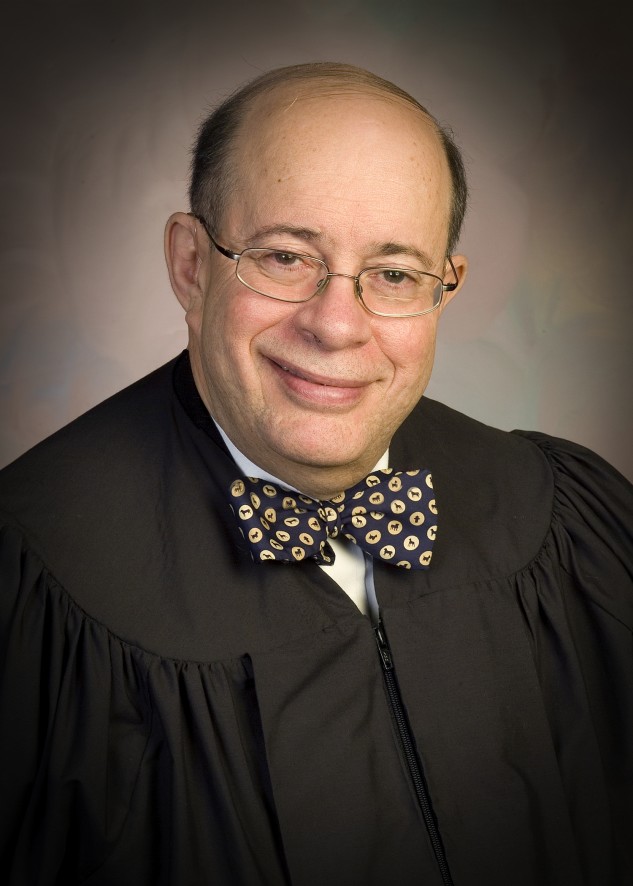
Currently serving · U.S. Court of Appeals for the Federal Circuit
Evan Jonathan Wallach
Currently servingSenior status
Senior Circuit Judge · U.S. Court of Appeals for the Federal Circuit · 2011–present · Appointed by Barack Obama
Evan Jonathan Wallach serves as a senior circuit judge of the U.S. Court of Appeals for the Federal Circuit (2011–present). Wallach was appointed by Barack Obama. Wallach assumed senior status in 2021 and continues to hear cases.
Key facts
- Full name
- Evan Jonathan Wallach
- Court
- U.S. Court of Appeals for the Federal Circuit
- Office
- Circuit Judge (U.S. Court of Appeals)
- Status
- Senior circuit judge (still serving)
- Duty status
- Senior
- Appointment
- Senate-confirmed
- FJC seat
- CAFC0303
- Tenure
- 2011–present
- Confirmed
- 2011-11-08
- Born
- 1949
- Died
- —
- First year on the bench
- 2011
- Dataset version
- 1.20260705
Appointment & service record
U.S. Court of Appeals for the Federal Circuit · 2011–present
- Seat
- CAFC0303
- Appointment
- Senate-confirmed
- Appointing president
- Barack Obama
- Confirmed
- 2011-11-08
- Commissioned
- 2011-11-18
- Senior status
- 2021-05-31 (still serving)
Court, FJC seat, appointment type (Senate-confirmed or recess), appointing president, confirmation and commission dates, and senior-status date are drawn from the Federal Judicial Center Biographical Directory and Wikidata.[1][2][3]
Sources
- [1]https://www.fjc.gov/node/1392931fjc · retrieved 2026-07-05
- [2]https://www.fjc.gov/history/judges/biographical-directory-article-iii-federal-judges-exportfjc-directory · retrieved 2026-07-05
- [3]https://www.wikidata.org/wiki/Q5415563Wikidata · retrieved 2026-07-05
Biographical narrative
1,211 words · sourced from the Wikipedia REST extract
Evan Jonathan Wallach (born 1949) is a senior United States circuit judge on the Court of Appeals for the Federal Circuit. After a career that combined private practice, military legal service, and extensive academic work, he was appointed to the federal bench in the mid‑1990s and later elevated to the Federal Circuit, where he has served both as an active judge and, since 2021, as a senior judge continuing to hear cases. Wallach is widely recognized for his scholarship on the law of war and war crimes, and he has contributed to legal education through teaching positions at several law schools and by publishing articles that address contemporary issues such as autonomous weapons systems and interrogation practices.
Early life and legal career
Wallach was born in Superior, Arizona, where his father worked as a mill employee for the Magma Copper Company and his mother was active in local cultural institutions, including the town library and Little Theater group. After completing secondary education, he entered the University of Arizona, receiving a Bachelor of Arts degree in 1973. He then pursued legal studies at the University of California, Berkeley, earning a Juris Doctor in 1976.
His early professional life began with an associate position at Lionel Sawyer & Collins, a Las Vegas law firm, later advancing to partnership in 1982—a role he retained until 1995. While practicing law, Wallach continued his military involvement. He served in the United States Army during the Vietnam War and was decorated for that service. Following his initial legal education, he obtained a Bachelor of Laws with honors in International Law from Hughes Hall, Cambridge, in 1981.
Wallach’s military legal career included attendance at the Judge Advocate General’s Legal Center and School at the University of Virginia and subsequent assignment to the United States Army Judge Advocate General’s Corps. During the Gulf War, he worked in the International Affairs Division of the Office of The Judge Advocate General at the Pentagon, where he assisted with advisory functions on the law of war and participated in investigations concerning alleged war crimes by Iraqi officials. He also completed both the basic and advanced courses for JAG officers.
From 1989 to 1995, Wallach served as a major in the Nevada Army National Guard, holding the position of Judge Advocate General. In that capacity he delivered annual lectures to Military Police on legal obligations related to the treatment of prisoners, reinforcing compliance with international humanitarian standards.
Parallel to his military and private‑practice responsibilities, Wallach cultivated an academic career focused on the law of war. Beginning in 1997, he held adjunct professorships at New York Law School and Brooklyn Law School, teaching courses that examined the legal frameworks governing armed conflict. Between 2001 and 2012 he was a visiting professor at the University of Münster, where his instruction continued to emphasize international humanitarian law. Since 2012, Wallach has been an adjunct faculty member at George Washington University Law School, offering a course on “The Law Governing Fully Autonomous Fighting Vehicles,” reflecting his ongoing engagement with emerging technological challenges in warfare.
Wallach’s professional affiliations include membership in the International Law of War Association—a network of military lawyers, scholars, and officials dedicated to advancing legal regimes that mitigate suffering in armed conflict—as well as participation in the American Law Institute and the Council on Foreign Relations. His scholarly output comprises articles published in both mainstream media outlets and specialized law journals, addressing topics such as waterboarding, the procedural history of post‑World War II war‑crimes trials, and the ethical implications of nanotechnology in chemical weapons. He is also the author of a historical novel titled *Jake and Me*, set in the Arizona mountains of the 1920s.
Federal appellate service
Wallach’s first federal judicial appointment came on June 27 1995, when President Bill Clinton nominated him to the United States Court of International Trade, filling the vacancy left by Judge Edward D. Re. The Senate confirmed his nomination on August 11 1995, and he received his commission three days later. He served on that court for more than sixteen years, handling cases involving international trade law and related regulatory matters.
On July 28 2011 President Barack Obama nominated Wallach to the United States Court of Appeals for the Federal Circuit, designating him to a newly created seat (CAFC0303). The nomination progressed through the Senate Judiciary Committee, which reported it favorably by voice vote on October 6 2011. The full Senate confirmed the appointment without opposition, recording a 99‑0 vote on November 8 2011. Wallach received his commission ten days later, on November 18 2011, and began serving as an active circuit judge.
During his tenure on the Federal Circuit, Wallach participated in panels that addressed a broad spectrum of issues within the court’s jurisdiction, including patent law, government contracts, and international trade disputes. On May 31 2021 he assumed senior status, a form of semi‑retirement that permits continued judicial service with a reduced caseload. In his senior capacity, Wallach remains an active participant in the court’s docket, contributing to the development of federal appellate jurisprudence.
Jurisprudence and legacy
Judge Wallach is regarded as one of the nation’s preeminent authorities on the law of war and related humanitarian concerns. His expertise stems from a combination of practical military experience, scholarly research, and judicial service that collectively inform his perspective on complex legal questions involving armed conflict. Through his academic appointments, he has educated multiple generations of lawyers about the principles governing conduct in warfare, emphasizing both historical foundations and contemporary challenges.
His published writings address a variety of contentious topics. Articles such as “Waterboarding Used to Be a Crime” examine the evolution of interrogation standards under international law, while pieces like “The Economic Calculus of Fielding Autonomous Fighting Vehicles Compliant with the Laws of Armed Conflict” explore the policy implications of emerging military technologies. Wallach has also contributed analyses on the procedural and evidentiary frameworks employed in post‑World War II war‑crimes tribunals, offering insight into how those early mechanisms shaped modern international legal practice.
Beyond academia, Wallach’s involvement with professional organizations underscores his commitment to shaping policy and fostering dialogue among practitioners, scholars, and policymakers. Membership in the International Law of War Association connects him with a community focused on mitigating civilian suffering during hostilities, while participation in the American Law Institute and the Council on Foreign Relations situates him within broader discussions about law, governance, and international affairs.
Although his judicial opinions are not highlighted here by specific case citations, Wallach’s role on the Federal Circuit has placed him at the intersection of technical legal issues—particularly those involving intellectual property and government contracts—and broader questions of statutory interpretation. His continued service as a senior judge ensures that his experience in both military and civilian legal contexts contributes to the court’s deliberations.
In sum, Evan J. Wallach’s career reflects a blend of public service, scholarly contribution, and judicial responsibility. From his early years in Arizona through decades of legal practice, military counsel, teaching, and federal adjudication, he has maintained a focus on the rule of law as it applies to both domestic and international arenas. His ongoing work—whether hearing appellate cases, lecturing on autonomous weapons, or publishing analyses of war‑law topics—continues to influence the development of legal standards that govern armed conflict and related fields.
Sources & provenance
Every quantitative or attributable claim above carries a per-section [N] marker that resolves to the corresponding URL below. Each entry records the upstream provider, the canonical URL, and the timestamp at which the underlying source was retrieved.
Key facts
- https://www.fjc.gov/node/1392931fjc · retrieved 2026-07-05
- https://www.fjc.gov/history/judges/biographical-directory-article-iii-federal-judges-exportfjc-directory · retrieved 2026-07-05
- https://www.wikidata.org/wiki/Q5415563Wikidata · retrieved 2026-07-05
Biographical narrative
- https://en.wikipedia.org/wiki/Evan_WallachWikipedia · retrieved 2026-07-05
Explore the federal judiciary
The U.S. Courts of Appeals are the intermediate appellate courts of the federal judiciary — thirteen circuits sitting between the district courts and the Supreme Court. Browse the full roster of judges on the U.S. Court of Appeals for the Federal Circuit, or explore how the appointed federal judiciary fits into the federal government.