
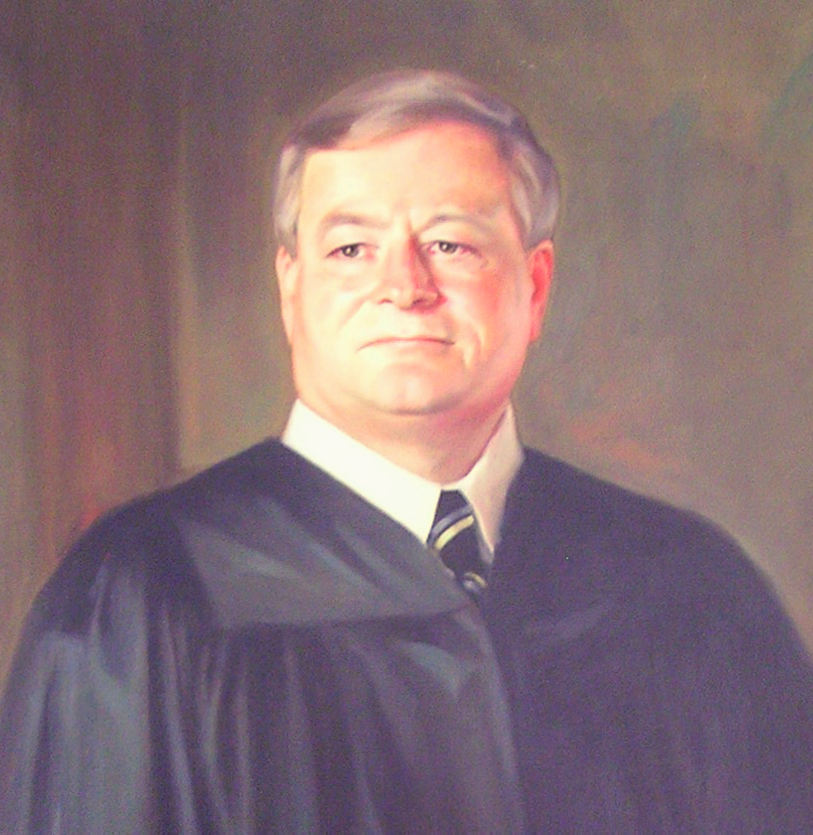
Currently serving · U.S. Court of Appeals for the Federal Circuit
Haldane Robert Mayer
Currently servingSenior status
Senior Circuit Judge · U.S. Court of Appeals for the Federal Circuit · 1987–present · Appointed by Ronald Reagan
Haldane Robert Mayer serves as a senior circuit judge of the U.S. Court of Appeals for the Federal Circuit (1987–present). Mayer was appointed by Ronald Reagan. Mayer assumed senior status in 2010 and continues to hear cases.
Key facts
- Full name
- Haldane Robert Mayer
- Court
- U.S. Court of Appeals for the Federal Circuit
- Office
- Circuit Judge (U.S. Court of Appeals)
- Status
- Senior circuit judge (still serving)
- Duty status
- Senior
- Appointment
- Senate-confirmed
- FJC seat
- CAFC0702
- Tenure
- 1987–present
- Confirmed
- 1987-06-11
- Born
- 1941
- Died
- —
- First year on the bench
- 1987
- Dataset version
- 1.20260705
Appointment & service record
U.S. Court of Appeals for the Federal Circuit · 1987–present
- Seat
- CAFC0702
- Appointment
- Senate-confirmed
- Appointing president
- Ronald Reagan
- Confirmed
- 1987-06-11
- Commissioned
- 1987-06-15
- Senior status
- 2010-06-30 (still serving)
- Chief Judge
- 1997–2004
Court, FJC seat, appointment type (Senate-confirmed or recess), appointing president, confirmation and commission dates, and senior-status date are drawn from the Federal Judicial Center Biographical Directory and Wikidata.[1][2][3]
Sources
- [1]https://www.fjc.gov/node/1384471fjc · retrieved 2026-07-05
- [2]https://www.fjc.gov/history/judges/biographical-directory-article-iii-federal-judges-exportfjc-directory · retrieved 2026-07-05
- [3]https://www.wikidata.org/wiki/Q5641234Wikidata · retrieved 2026-07-05
Biographical narrative
1,201 words · sourced from the Wikipedia REST extract
Haldane Robert Mayer is a senior United States circuit judge on the Court of Appeals for the Federal Circuit. Appointed by President Ronald Reagan in 1987, he served as an active‑service judge until assuming senior status in 2010 and continues to hear cases. His career spans military service during the Vietnam era, extensive legal practice, academic teaching, and leadership roles within the federal judiciary, including a term as chief judge of the Federal Circuit from 1997 to 2004.
Early life and legal career
Born on February 21, 1941, in Buffalo, New York, Mayer was raised in the public‑school system of Lockport, a nearby community. His early academic promise led to an appointment by Representative William E. Miller to the United States Military Academy at West Point, where he earned a Bachelor of Science degree in 1963. Following graduation, Mayer entered active duty with the United States Army, serving from 1963 until 1975. During his military tenure he was deployed to Vietnam and received multiple commendations, including the Bronze Star, Meritorious Service Medal, and Army Commendation Medal. He also earned the Combat Infantryman Badge, Parachutist Badge, Ranger Tab, and Ranger Combat Badge, reflecting a breadth of combat and airborne qualifications.
While still in uniform, Mayer took leave to pursue legal studies at the William & Mary Law School. There he distinguished himself as editor‑in‑chief of the William and Mary Law Review and graduated first in his class with a Juris Doctor in 1971. He subsequently attended The Judge Advocate General’s Legal Center and School at the University of Virginia, completing the specialized training required for Army lawyers.
After receiving his legal education, Mayer entered the federal judicial environment as a law clerk to Judge John D. Butzner Jr. of the United States Court of Appeals for the Fourth Circuit. This clerkship was followed by a three‑year appointment as special assistant to Chief Justice Warren E. Burger of the United States Supreme Court, where he assisted the nation’s highest court in various capacities.
Mayer then moved into private practice, first establishing a law office in Charlottesville, Virginia, during the 1970s and later practicing briefly in Washington, D.C., in 1980 and 1981. His experience in both regional and national legal markets was complemented by a stint in federal administration as Deputy and Acting Special Counsel at the United States Merit Systems Protection Board from 1981 to 1982. In that role he contributed to the oversight of civil service employment matters.
In 1982, President Ronald Reagan appointed Mayer to the United States Claims Court (now known as the United States Court of Federal Claims). He served on that court for five years, adjudicating monetary claims against the federal government and gaining extensive experience in complex statutory interpretation. During this period he also began a parallel academic career, serving as an adjunct professor at both George Washington University Law School and the University of Virginia School of Law, where he taught courses related to his judicial expertise.
Mayer’s personal life has been marked by long‑standing family ties. He married Mary Anne McCurdy on August 13, 1966; the couple raised two daughters, Anne Christian and Rebecca Paige. His familial commitments have run alongside a professional trajectory that blends military discipline, legal scholarship, and public service.
Federal appellate service
President Reagan nominated Mayer to the United States Court of Appeals for the Federal Circuit on February 3, 1987, filling the vacancy left by Judge Marion T. Bennett. The Senate confirmed his appointment on June 11, 1987, and he received his commission four days later. Upon joining the Federal Circuit, Mayer entered a court with nationwide jurisdiction over specialized areas such as patents, government contracts, and international trade.
Mayer’s tenure on the bench quickly evolved into a leadership role. In 1997 he became chief judge of the Federal Circuit, a position he held until 2004. As chief judge, he oversaw administrative functions of the court, guided policy development within the Judicial Conference of the United States—of which he was a member during the same period—and represented the circuit in interactions with other branches of government. His leadership coincided with significant developments in patent law and federal claims jurisprudence, areas central to the Federal Circuit’s docket.
On June 30, 2010, Mayer assumed senior status, transitioning from full‑time service while retaining the authority to hear cases and contribute to panel decisions. Senior judges on the Federal Circuit often handle a substantial portion of the court’s workload, and Mayer continues to participate in appellate proceedings, bringing decades of experience to complex legal questions.
Throughout his federal judicial career, Mayer has maintained an active presence in legal education. His adjunct appointments at George Washington University and the University of Virginia have allowed him to mentor law students and share practical insights from the appellate bench. These teaching roles complement his judicial responsibilities and reflect a broader commitment to the development of the legal profession.
Jurisprudence and legacy
Judge Mayer’s body of written opinions reflects a careful approach to statutory construction, an emphasis on procedural rigor, and a willingness to engage with emerging technological issues. Among his notable contributions is a concurring opinion in *Intellectual Ventures v. Symantec*, wherein he articulated a perspective that patents restricting essential channels of online communication may conflict with First Amendment principles, and that claims directed at software implemented on generic computers should be deemed categorically ineligible for patent protection. This viewpoint underscores his attention to the intersection of intellectual property law and constitutional rights, an area of growing importance as digital technologies evolve.
Mayer’s service on the United States Claims Court laid a foundation for his later work on the Federal Circuit, particularly in matters involving government contracts and monetary claims against the United States. His decisions have often been cited for their thorough analysis of statutory language and for setting precedential standards within the specialized jurisdiction of the Federal Circuit.
Beyond specific rulings, Mayer’s legacy includes his influence as chief judge during a period marked by significant legislative changes affecting patent law, such as the enactment of the America Invents Act. While the record does not attribute particular policy initiatives directly to him, his administrative stewardship helped guide the court through these transitions, ensuring continuity and stability in its jurisprudential output.
His contributions to legal education further extend his impact. By teaching at two prominent law schools, Mayer has shaped the perspectives of multiple generations of lawyers who may later appear before the Federal Circuit or practice in related fields. His dual role as practitioner‑educator exemplifies a tradition within the federal judiciary of judges contributing to scholarly discourse and professional development.
In sum, Haldane Robert Mayer’s career embodies a blend of military service, legal scholarship, and judicial leadership. From his early years in New York and West Point to his senior status on a court with nationwide authority over specialized legal matters, he has consistently applied disciplined analysis to complex issues. His tenure as chief judge, participation in the Judicial Conference, and ongoing involvement in academia collectively illustrate a commitment to both the administration of justice and the cultivation of legal expertise. As a senior judge continuing to hear cases, Mayer remains an active participant in shaping the evolving landscape of federal appellate law.
Sources & provenance
Every quantitative or attributable claim above carries a per-section [N] marker that resolves to the corresponding URL below. Each entry records the upstream provider, the canonical URL, and the timestamp at which the underlying source was retrieved.
Key facts
- https://www.fjc.gov/node/1384471fjc · retrieved 2026-07-05
- https://www.fjc.gov/history/judges/biographical-directory-article-iii-federal-judges-exportfjc-directory · retrieved 2026-07-05
- https://www.wikidata.org/wiki/Q5641234Wikidata · retrieved 2026-07-05
Biographical narrative
- https://en.wikipedia.org/wiki/Haldane_Robert_MayerWikipedia · retrieved 2026-07-05
Explore the federal judiciary
The U.S. Courts of Appeals are the intermediate appellate courts of the federal judiciary — thirteen circuits sitting between the district courts and the Supreme Court. Browse the full roster of judges on the U.S. Court of Appeals for the Federal Circuit, or explore how the appointed federal judiciary fits into the federal government.